


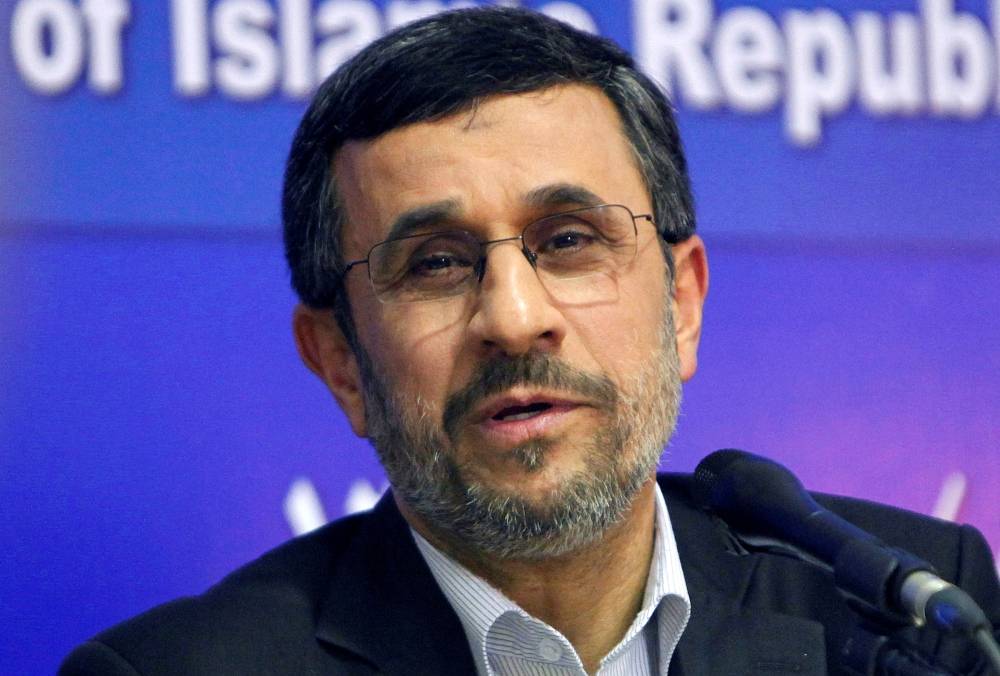
Iranian President Mahmoud Ahmadinejad speaks at a press conference following his visit to Cairo, Egypt, on Feb. 7, 2013. (Credit: Asmaa Waguih/Reuters)






BEIRUT — Weeks into the Iran war, the United States and Israel reportedly considered former president Mahmoud Ahmadinejad for a post-regime role in Tehran, according to The New York Times.
The plan, devised by Israel and reportedly involving Mahmoud Ahmadinejad, quickly unraveled, according to U.S. officials cited by The New York Times. The previously unreported initiative was part of a broader Israeli strategy to topple Iran’s leadership, as President Donald Trump had publicly suggested replacing it with "someone from within."
Ahmadinejad was wounded on the first day of the war in an Israeli strike on his Tehran home — an operation meant to free him from house arrest, officials and an associate told the NYT. He survived but became disillusioned with the plan. He has not been seen in public since, and his whereabouts remain unknown.

'Freeing' Ahmadinejad from house arrest
Although he had grown increasingly at odds with Iran’s leadership, Ahmadinejad was known during his 2005–2013 presidency for his hard-line stance, including anti-Israeli and anti-American rhetoric, strong backing of Iran’s nuclear program, and a crackdown on dissent.
In recent years, he clashed with senior officials, accusing them of corruption. He was barred from several elections, his associates were arrested, and his movements were largely restricted to his home in eastern Tehran.
Many questions remain about how the U.S. and Israel envisioned his return to power, as well as the circumstances of the strike that wounded him. According to officials, the Israeli airstrike on his home early in the war was meant to kill the guards holding him under house arrest and allow him to be freed.
A close associate said Ahmadinejad saw the strike as an attempt to liberate him and that U.S. officials viewed him as capable of leading Iran and managing its political, social, and military affairs, potentially playing a key role after the conflict.
Responding to questions, a White House spokesperson said the U.S. objectives were to destroy Iran’s missile capabilities, weaken its allies, and dismantle its military infrastructure, adding that efforts were now focused on securing a deal to end Iran’s nuclear program. Israeli intelligence officials declined to comment.

 7 p.m. recap: 1 person killed near border with Lebanon; 200 kilos of explosives carried by mules; Riyadh shuts its airspace