






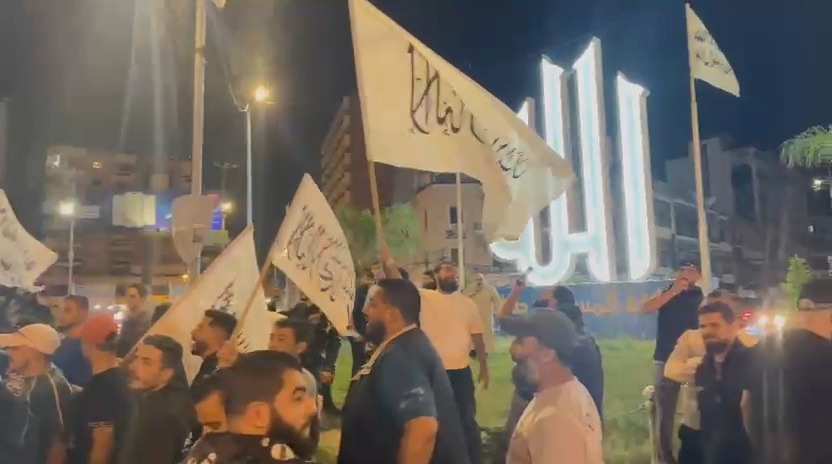
Relatives of Islamist detainees during a sit-in at al-Nour square in Tripoli, northern Lebanon, on May 19, 2026. Photo received by our correspondent Michel Hallak.






BEIRUT — In response to the proposed amnesty law, deemed "unjust and inequitable" by relatives of Islamist detainees, protest movements were reported Tuesday in several regions of Lebanon, notably in Tripoli, Akkar (North Lebanon), the border town of Arsal (Baalbeck-Hermel), as well as Khaldeh, south of the Lebanese capital, our correspondent in northern Lebanon.
After weeks of debate, mixed parliamentary committees adopted a proposed general amnesty law with amendments that take into account the demands of the stakeholders involved in this issue, including the Lebanese Army. The debate resulted in significant changes to the text, particularly for detainees sentenced to death (which has not been carried out since 2004). They will now serve 28 prison years (with each year calculated as nine months) behind bars. As for prisoners sentenced to life, their sentence is now reduced to 17 prison years. Naturally, several so-called Islamist detainees could benefit from this new provision of the law, as supported by some leading figures in the Sunni community. However, the proposed text stipulates that the law will not apply if the relatives of murder victims do not waive their personal legal rights.
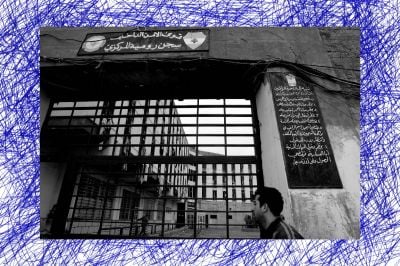
In Arsal, relatives of Islamist detainees blocked the road for a time in the late afternoon, before it was reopened after intervention by the army and security forces. In Khaldeh, demonstrators also temporarily cut off traffic by burning tires.
The largest mobilization, however, was recorded in the north of the country, particularly in Tripoli and Akkar. In Tripoli, young people blocked the Chalfe-Majdaliya road late in the evening with burning tires. This call to mobilize coincided with gatherings at al-Nour Square, which was the scene of demonstrations, sit-ins and motorcycle convoys waving black Islamist flags to denounce what protesters called "injustice" toward fundamentalist detainees. Traffic was also cut off at Palma Bridge, at the southern entrance to Tripoli.
In Akkar, demonstrators blocked the Minieh-Abdeh highway at Mhammara Bridge using vehicles, denouncing a proposed law deemed "unjust and inequitable." The road closure caused major traffic jams in both directions. The protesters then intensified their movement by setting tires on fire and called to strengthen the mobilization to maintain the blockade. The army eventually managed to partially reopen the highway to traffic in both directions, while efforts continued to fully restore traffic despite protesters remaining on the sides of the road.

 8 p.m. recap: Israel again threatens Beirut’s south suburbs; 2 ships hit near Hormuz; Riyadh football matches canceled