






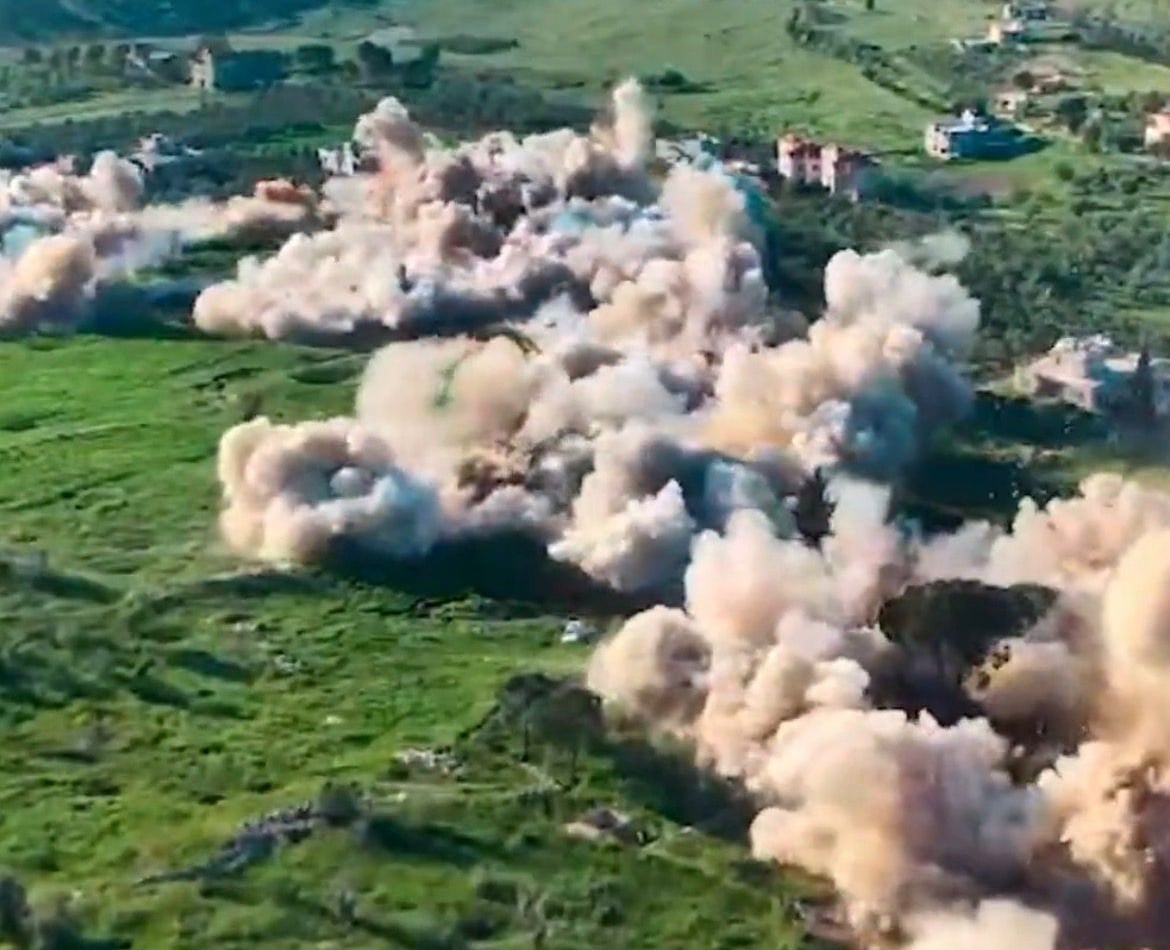
Massive explosions carried out by Israel in Qantara, southern Lebanon, on April 28, 2026. (Credit: Screenshot from a video released by the Israeli army)






The Israeli army has seized about 1,000 square kilometers of territory in Lebanon, Gaza, and Syria since the start of the war between Hamas and Israel on Oct. 7, 2023, British newspaper the Financial Times (FT) reported on Tuesday.
The calculations also indicate that the territory now under Israeli control is equivalent to roughly 5 % of Israel’s 1949 borders.
According to FT's analysis, more than half the total area is in southern Lebanon, where Israeli forces have advanced up to a dozen kilometers to establish a "buffer zone," following a cease-fire agreement reached on April 16. The remainder is split between Gaza, where Israeli forces now occupy more than half the enclave, and Syria, where they have taken positions several kilometers inside the country following the fall of the Assad regime.
The newspaper adds that in all three areas, "Israeli forces also exert control [through] airstrikes, artillery fire, raids and detentions."
In Lebanon, FT reports that Israeli officials have sent mixed messages regarding their intentions. Prime Minister Benjamin Netanyahu said publicly last month that Israeli forces were "not leaving," as the Israeli army continues to destroy entire villages. Meanwhile, Defense Minister Israel Katz compared recent destruction in Lebanon to the "Gaza model."
Diplomats, however, say that Israeli officials — including foreign minister Gideon Sa’ar — insist privately that Israel has no territorial ambitions in Lebanon.
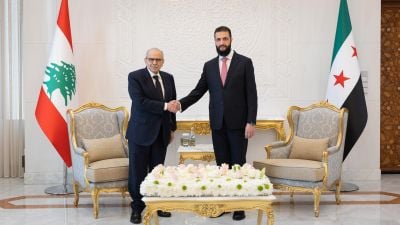
Other analysts say future developments could depend on U.S. President Donald Trump. "If he orders Netanyahu to withdraw from south Lebanon, or Syria or even from Gaza, I think he will have to obey," Michael Milshtein, a former military intelligence officer now at Tel Aviv University, told FT.
Regional officials, meanwhile, publicly insist that they will not accept an ongoing Israeli occupation on their territory. "Our goal is clear: achieve Israeli withdrawal," Lebanon’s president Joseph Aoun said last month after direct talks between the two sides. But in private, they "acknowledge the risk that the arrangements could become permanent," FT adds. "Israel keeps pushing and pushing on to our land and no one is stopping them," one Lebanese official told the newspaper. "They want to stay indefinitely and treat southern Lebanon as their backyard and they can do it so long as no one tells them no."
Israel occupies 233 sq km in Syria
In Syria, FT notes that Israel has not published maps of its positions, unlike in Gaza and southern Lebanon, and neither Israeli nor Syrian officials have been explicit about troop deployments. The newspaper estimated Israeli control at around 233 square kilometers by mapping confirmed bases, from Mount Hermon to an abandoned Syrian army base near Maariyah, more than 70 km south.
Amidror said that Israel could be "more flexible" in Syria than in Gaza, describing its presence there as aimed at preventing hostile actors from approaching the border. He added that any outcome "depends on what agreements we will have with the [new regime]." Tel Aviv and Damascus have tried to negotiate a security agreement throughout the past year, but talks have stalled over Israel’s insistence on maintaining a presence inside Syrian territory.
In Gaza, Israeli officials have said they intend to maintain a permanent buffer zone and have leveled swaths of land along the border. Its forces are enforcing an additional buffer zone beyond the so-called Yellow Line separating Israeli-controlled areas from those held by Hamas. A U.N. official said this strip is about 50–100 meters deep, leaving Gaza’s 2 million residents in roughly 40% of the territory.

