




A strike seen across Captain Bob's in Sour, southern Lebanon on May 1, 2026. (Credit: Elise Quéau-Boukhari)






The narrative of Lebanese resilience has been drilled into our heads since birth. I’ve heard it through successive presidents, political leaders, marketing teams behind the ads on the highway, and tour guides who never fail to mention that ''Beirut was rebuilt seven times."
As soon as the "cease-fire" came into effect, I decided to go South. I have no home or family there, but I do have "resilience" built into my bones, and a whole lot of survivor’s guilt.
"We’re lucky we’re not from there," some would say. But that "luck" translates to a heaviness we carry as we watch the headlines, feeling hopeless and helpless. It’s a part of the country that has been relegated to its own bubble, not even included in the sham "cease-fire."

I visited Sour on Labor Day. While everyone else was heading back to check on their houses, I went for the sea. The clear, untouched water. I jokingly told my friend I hoped the Israeli army would celebrate too, just so the strikes would stop.
The roads were mostly empty. We would point towards the destroyed buildings as we passed them, as though we were inspecting landmarks or relics. I called Captain Bob on the way. I’d heard he went to Africa to be with his children, and I think I woke him up. His motto was always that he never closes, but he actually did during this war. On the phone, though, he stuck to the lie: "Yes, we’re open, we never closed, even during the war."
Captain Bob’s is located on a simple wooden patio overlooking the shore with plastic tables and chairs, emanating the smell of grilled fish and spiced tawouk. The perfect setting for some tranquility, although nothing was calm about that day.
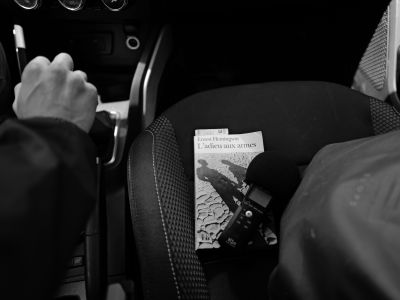
We arrived at Captain Bob’s around noon. Walking in, the first thing I saw was the massive expanse of blue sea with Naqoura right at the tip of Sour’s coastline. My eyes transfixed on that horizon, the crazy thoughts penetrated my brain. If I kept going South, I’d get to Naqoura before sunset. I’d see Israeli soldiers and drive my car straight into them, without a care for the consequences.
All the tables were set, perfectly arranged and ready, but the place was (still) empty. We sat at a table that hits the sun but stays in the shade. I ordered two Mexican beers before planning to take a dip in the crystalline blue.
That’s when the strikes began.
They felt both close and distant, a dull thud that resonates in your chest before you hear it. In just 10 minutes, I heard eight strikes. A concoction of sounds: bombs, a puppy crying, and Captain Bob’s parrot yapping away.
We later learned Israel had targeted Habboush, Zrarieh, and Ain Baal, killing 13 people.
Smoke was rising out of the Bayyada plain on the other side of the coastline. An Israeli drone was buzzing right above us, watching us tan. Were they collecting data of us in our swimsuits ? I didn't want to check the news. I was in total denial.
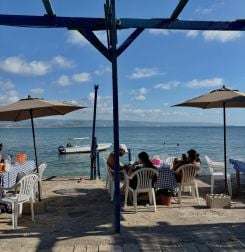
The strikes didn't stop. We just sat there with our beers, watching the plumes of smoke rise. One after another. I was reading L’Orient Le Jour’s paper from the day before, but the headlines were already old news compared to the scenes in front of me.
I couldn’t help but think of those videos I’d seen of Israelis sitting on the beach, watching bombs fall on Gaza with satisfaction. Except here it was a sick reversal of the scenes, where I was watching my own country getting bombed in real time, feeling a helpless pain in my chest every time the air vibrated.
The place started to fill up with families who seemed too used to it. I heard a man on his phone say, "Yes, we hear them all the time, but what can we do ?"
Every time there was a strike, a kid swimming would shout "Allahu Akbar." I lost track of how many times I heard how great God is.
Right next to us, a big, tanned, bald man was pouring prosecco and playing a remix of Adele’s "Set Fire to the Rain." He played it so many times. "I watched it burn as I touched your face."
I was three beers in, and the sun was strong, so I finally dived into the water. It was freezing, but the shock of it made the war feel a thousand miles away, for a cold moment.
I tried to swim further out in search of the sunken Roman columns a friend had told me about, but it was too cold. I went back to the sand and fell asleep, only to wake up to the sound of yet another strike. In the South, the clear blue sea comes with the sound and backdrop of war.

 7 p.m. recap: 1 person killed near border with Lebanon; 200 kilos of explosives carried by mules; Riyadh shuts its airspace