


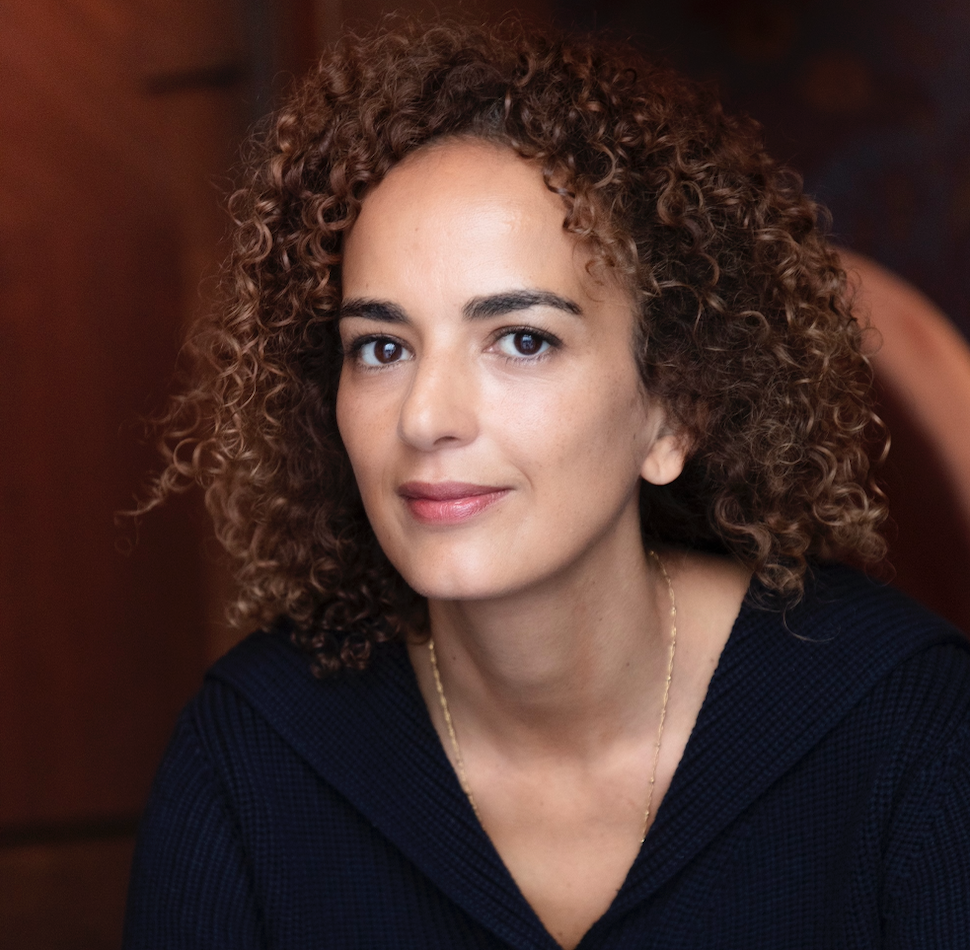
Franco-Moroccan journalist and writer, Leila Slimani. (Credit: Francesca Mantovani)






With Assaut contre la frontière (Gallimard, 2026), Franco-Moroccan novelist Leila Slimani offers a long-form intellectual journey reflecting on the Arabic language, its symbolic weight, and its status as a "phantom language" within an internalized cultural value system.According to the author, the central question of her trilogy is fundamentally linguistic: "Why don’t I speak my language? What does this Arabic language mean to me?"After focusing on the signifier, Slimani then turns to the meaning behind words, while also reflecting on what makes literature itself.She says: "What could be more subversive than saying that what exists could just as well not exist? Writers are suspicious of people who turn the accident of where they were born into something sacred or defining."But her idea of literary...
With Assaut contre la frontière (Gallimard, 2026), Franco-Moroccan novelist Leila Slimani offers a long-form intellectual journey reflecting on the Arabic language, its symbolic weight, and its status as a "phantom language" within an internalized cultural value system.According to the author, the central question of her trilogy is fundamentally linguistic: "Why don’t I speak my language? What does this Arabic language mean to me?"After focusing on the signifier, Slimani then turns to the meaning behind words, while also reflecting on what makes literature itself.She says: "What could be more subversive than saying that what exists could just as well not exist? Writers are suspicious of people who turn the accident of where they were born into something sacred or defining."But her idea of literary...
