


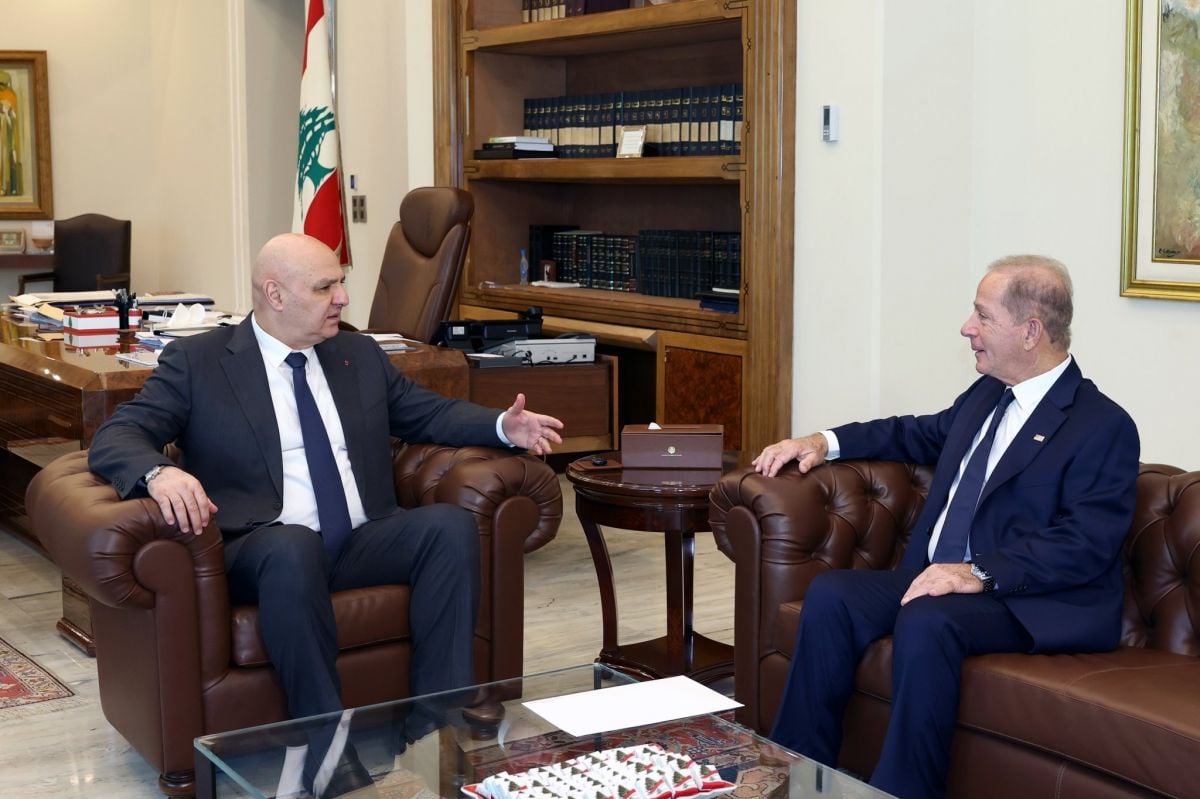
President Joseph Aoun (left) with the U.S. ambassador Michel Issa (right) at the presidential palace in Baabda on May 11, 2026. (Credit: @LBpresidency/X)






BEIRUT — U.S. Ambassador to Lebanon, Michel Issa, held separate meetings on Monday with Lebanese President Joseph Aoun, Parliament Speaker Nabih Berri, and Prime Minister Nawaf Salam, just days ahead of the first direct government-level negotiations between Beirut and Tel Aviv in Washington, under U.S. auspices.
These would mark the first direct negotiations between Beirut and Tel Aviv at the delegation level in decades. In April, Lebanese and Israeli ambassadors in Washington held two preparatory meetings for the talks.
Berri also welcomed Issa at Ain al-Tineh to discuss developments and latest updates in Lebanon and the region, the state-run National News Agency (NNA) reported.
Berri, however, continues to oppose direct negotiations with Israel and instead supports indirect talks, in line with Hezbollah’s position.
Aoun urged the U.S. to "pressure Israel to halt its military operations, cease-fire, and stop the demolition and bulldozing of homes" during talks with Issa at the Presidential Palace in Baabda, the Lebanese Presidency said in a post on X.
Aoun also called for an end to Israeli demolitions and explosive destruction of homes in southern Lebanon, where Israel has openly discussed establishing a buffer zone extending 8 to 10 kilometers into Lebanese territory.
Salam stressed the need to “consolidate the cease-fire.”
Aoun and Salam also discussed preparations for the planned tripartite Lebanese-American-Israeli meeting in Washington, which Hezbollah strongly opposes.
Iran, meanwhile, has reportedly included an end to the war in Lebanon among its demands in negotiations with the United States aimed at ending the regional conflict that began Feb. 28 with an Israeli-American offensive on Iran and later, before a cease-fire on April 17.
On Sunday, Hezbollah Political Council member Mahmoud Qomati sharply criticized Aoun, accusing him of sidelining Berri. Qomati asked how the president could “disregard a key pillar of the state.”
Meeting with Berri
Issa had already met Berri last week. According to Parliament’s media office, the two discussed developments in Lebanon and the wider region, though no further details were released.
Lebanese officials plan to focus the Washington talks on consolidating the fragile cease-fire, securing a full Israeli withdrawal from southern Lebanon, and obtaining the release of Lebanese detainees held in Israeli prisons.
Israeli officials, meanwhile, continue to insist that Hezbollah disarm before any withdrawal takes place.
The ambassador’s visit has angered Hezbollah. Speaking at a funeral in Labweh (Bekaa), MP Hussein Hajj Hassan criticized the view — shared by the United States and some Lebanese factions— that Hezbollah is primarily an Iranian-aligned movement.
He said: “Know, you U.S. terrorist ambassador in Lebanon, that we are Lebanese before many other Lebanese … our roots in this land go back to our grandparents and their grandparents, to our martyrs, wounded, prisoners, fighters, and martyrs in the resistance, the Lebanese Army, civil defense, and all fronts.”
He also criticized Lebanon’s leadership under Joseph Aoun and Nawaf Salam for pursuing U.S.-backed negotiations with Israel, arguing the cease-fire has not been implemented and that Israel continues daily strikes and partial occupation.
“If the cease-fire is not reached before Wednesday or Thursday, what will you do?” he asked. “Will you continue negotiations if Israel refuses it?”
Another Hezbollah MP, Hassan Ezzedine, also denounced the talks, saying they aim at “submission to the conditions and dictates of the enemy [Israel] in order to obtain political gains it failed to achieve on the ground.”
At a funeral in Jnah, MP Hassan Fadlallah accused the authorities of deepening internal divisions and failing to obtain any U.S. concessions, adding that each negotiation cycle is accompanied by an escalation of Israeli violence, according to remarks relayed by the NNA.
