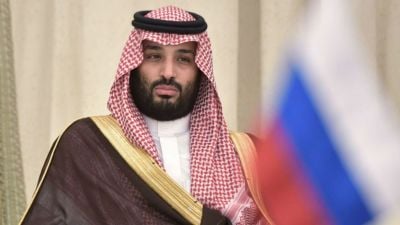
Saudi Prince Mohammed bin Salman, the de facto leader of the Kingdom of Saudi Arabia. (Archive photo: AFP)






Saudi Arabia's budget deficit widened in the first quarter to its highest level since 2018, as spending on economic diversification projects continues to rise, Bloomberg reported Friday.
According to the economic news outlet, citing the Finance Ministry, the kingdom posted a deficit of 125.7 billion riyals ($33.5 billion). By comparison, the deficit was 95 billion riyals in the last three months of 2025 and more than double the amount recorded one year earlier.
Oil revenues fell by around 3% year-on-year in the first quarter, while expenditures rose by about 20% to the equivalent of $103 billion. These figures confirm the pressures facing the Middle East's largest economy. Gross domestic product grew by 2.8% year-on-year in the first quarter, its slowest pace since mid-2024.
The financial impact of the war with Iran, which began at the end of February, should become clearer in second-quarter data, Bloomberg added. The war, now in its third month and marked by a precarious truce, has disrupted regional economies — especially Saudi Arabia's — by damaging infrastructure and closing the Strait of Hormuz to energy exports. The kingdom, however, has managed to redirect most of its oil exports to the port of Yanbu on the Red Sea, Bloomberg added.
If prices remain high — Brent crude has surged more than 80% this year to around $111 a barrel — and export volumes are maintained, the government could record a lower annual deficit than expected before the war, according to some economists.
Goldman Sachs notably considers that Saudi Arabia is currently earning about 10% more in oil revenues compared with before the war, thanks to higher prices and the ability to bypass Hormuz for the majority of its exports. “We expect stronger oil revenues starting in the first quarter, even though uncertainty remains high regarding the duration of the conflict,” said Monica Malik, chief economist at Abu Dhabi Commercial Bank.
If oil stays around $85 a barrel, the country’s deficit in 2026 could reach about 4% of GDP, compared to an estimate of 5% before the war, she added.
Saudi Arabia has been recording budget deficits since late 2022, which has pushed it to increase borrowing on international bond markets and to seek other forms of financing, including private markets. The kingdom’s National Center for Debt Management (NCDM) announced Tuesday it had finalized its borrowing plan for 2026, having secured about 90% of its needs before the conflict.
“If the ongoing coordination with the Finance Ministry identifies a need for additional funding, the NCDM plans to prioritize private channels and local markets,” it said in a statement.
JPMorgan Chase announced in April that it plans to add Saudi local-currency bonds to its benchmark emerging-markets index in early 2027. This inclusion should improve the liquidity of government securities and attract more passive foreign investment.