


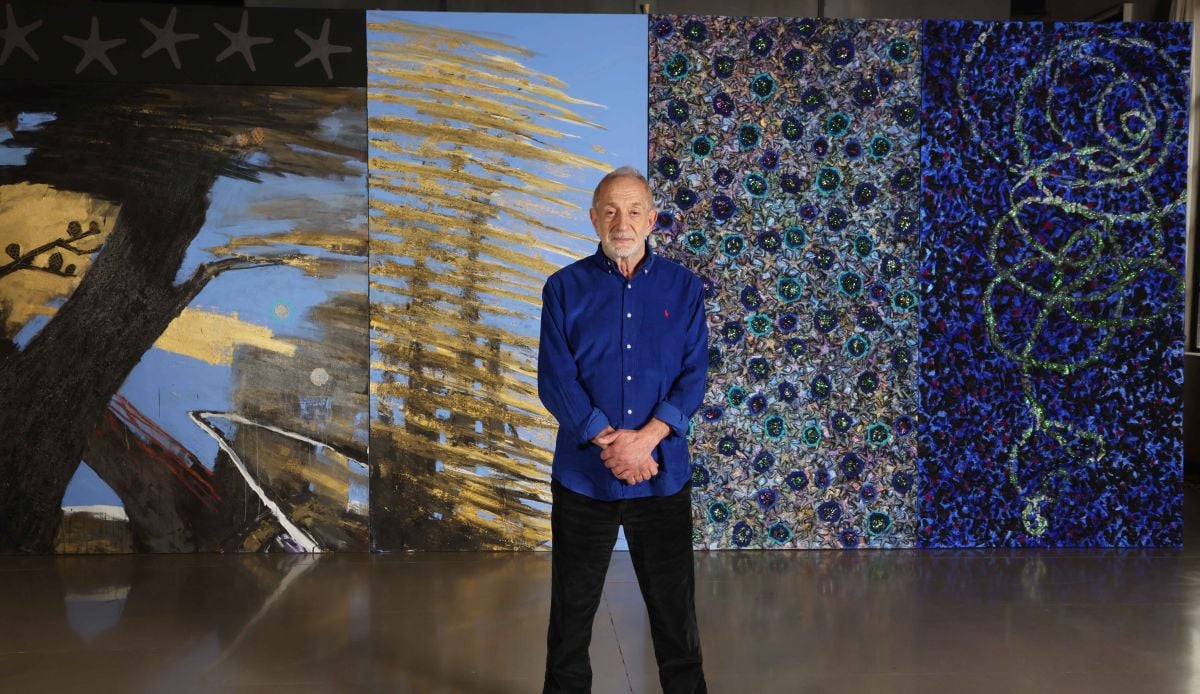
The Lebanese painter Nabil Nahas in front of his immersive pavilion "Don’t Get Me Wrong," conceived with curator Nada Ghandour for the Venice Biennale 2026. (Credit: Milad Ayoub © LVAA)






Given the country’s current turmoil, at a critical moment in its history, the stakes surrounding Lebanon’s pavilion this year were especially high — far more than in previous editions. Much anticipated, the country’s return to Venice required a presence capable of carrying that symbolic weight. Nabil Nahas, widely regarded as one of Lebanon’s greatest living painters, was chosen to represent the country at this year’s Venice Biennale with an installation that will likely stand among the most memorable of the biennale’s 61st edition.If the pavilion leaves such a powerful impression, it may be because Nahas answers — perhaps instinctively — a fundamental question: what can a country like Lebanon still present to the world today? And above all, how can Lebanese identity still be approached without reducing it to the clichés of...
Given the country’s current turmoil, at a critical moment in its history, the stakes surrounding Lebanon’s pavilion this year were especially high — far more than in previous editions. Much anticipated, the country’s return to Venice required a presence capable of carrying that symbolic weight. Nabil Nahas, widely regarded as one of Lebanon’s greatest living painters, was chosen to represent the country at this year’s Venice Biennale with an installation that will likely stand among the most memorable of the biennale’s 61st edition.If the pavilion leaves such a powerful impression, it may be because Nahas answers — perhaps instinctively — a fundamental question: what can a country like Lebanon still present to the world today? And above all, how can Lebanese identity still be approached without reducing it to the...
