



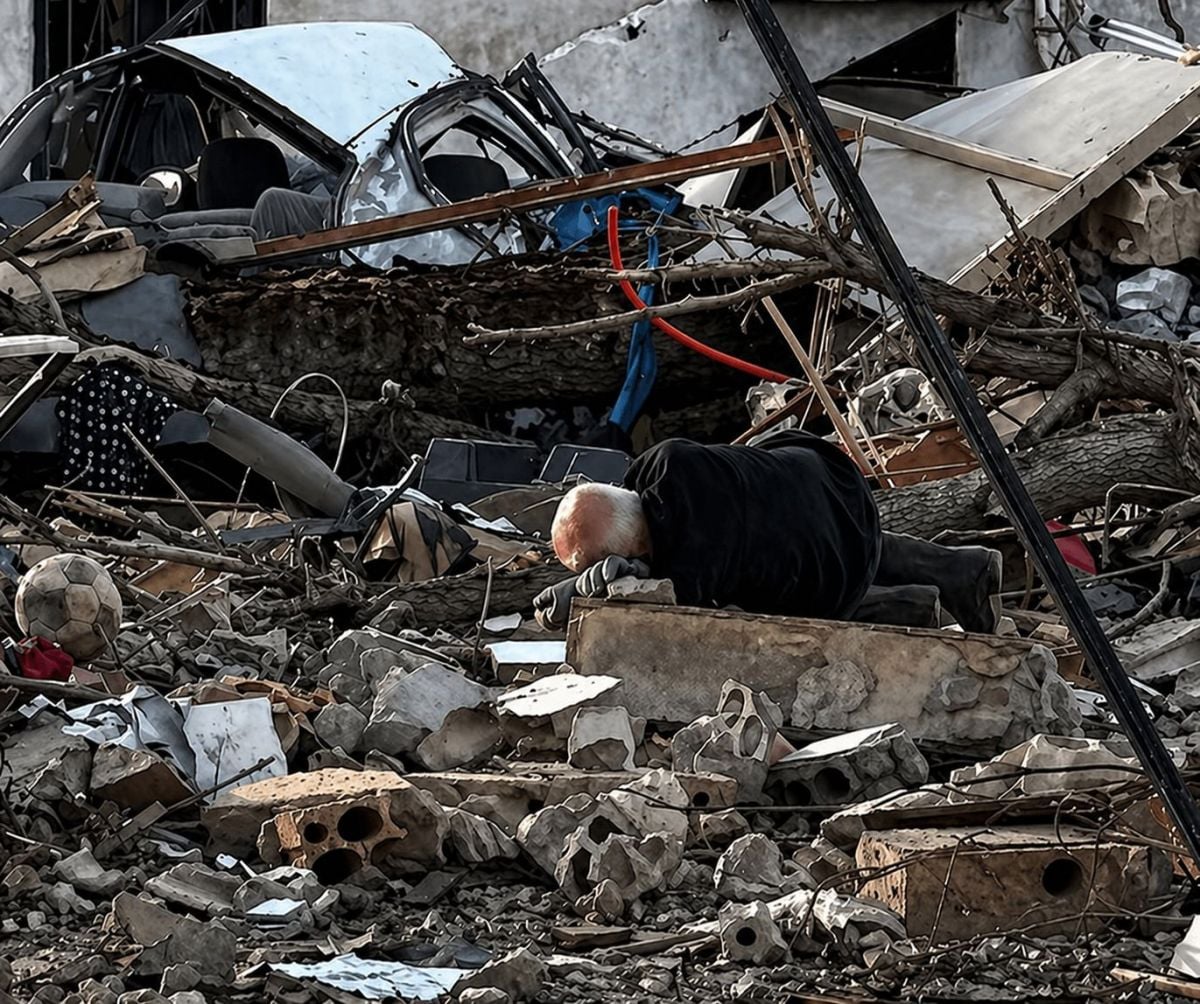
Hussein Fakih, aka Abou Ali, asleep on the rubble of his house in Srifa, south Lebanon. (Credit: Social media)






His photo went viral on social media and touched many people. Hussein Fakih, known as Abu Ali, an 87-year-old man from Srifa (Sour district), became known after a photo showed him sleeping on the ruins of his home.
He died on Monday after surgery, his son Adnan told L’Orient-Le Jour by phone. Some online reports wrongly claimed that he died of grief after losing his home.
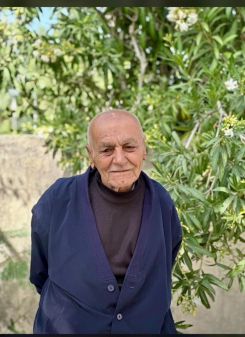
The funeral was held on Tuesday in his hometown while bombs were falling, after the Israeli army issued an evacuation order for Srifa followed by an airstrike in the area.
“The bombing started during the funeral,” his son Adnan said.
“Abu Ali was the typical image of an elderly man from south Lebanon. He had his garden and his workshop, where he spent most of his time. He was very open-minded,” he said.
‘He lay down as if nothing had happened’
After returning to the village following the April 17 cease-fire between Hezbollah and Israel, Abu Ali was searching through the ruins of his destroyed home, hoping to find some of his belongings when the photo was taken.
“He was trying to find his things. Then he got tired and decided to take a nap, like he usually did. He lay down on the rubble as if nothing had happened,” his son Adnan said.
In the photo, Abu Ali is seen lying on a concrete slab among the ruins of his home, surrounded by stones, metal, and a tree uprooted by the strike. A damaged car can be seen in the background.

The photo was widely shared on social media and in local and regional media, and became a symbol of the suffering of people of south Lebanon, many of whom lost everything due to the war. Another photo shows him sitting on the rubble, wearing gloves as he searches through the debris.
At 87, Abu Ali was a father and a former employee of Électricité du Liban (EDL), the state-owned power utility. He died on Monday after surgery, but his son believes his health had already been weakened by the after-effects of the strike that destroyed his home.
“His health got worse after he was exposed to smoke from the strikes,” he said. “Many people showed sympathy after his photo went viral, although some also expressed hate for sectarian considerations,” Adnan added.
While most online comments showed sympathy for Abu Ali, some mocked the situation of certain Shiite residents after Hezbollah entered the war against Israel on March 2.
Mohammad Nazzal, mayor of Srifa, told L’Orient-Le Jour he was saddened by Abu Ali’s death. “He used to go every day to sit on the ruins during the truce. This made people relate to him and feel sympathy,” he said. “Like many men of his generation, he lived through Lebanon’s better days,” he added.
Nazzal also said Abu Ali did not sleep on the rubble at night, as some online posts claimed, but went there during the day.
The town of Srifa has been bombed several times by the Israeli army and received repeated evacuation orders since the start of the war. Despite the 10-day cease-fire announced on April 17, later extended for three weeks, Israeli forces have continued carrying out near-daily strikes in south Lebanon.
This article was originally published in French in L'Orient-Le Jour and was translated by Joelle El Khoury

 7 p.m. recap: Netanyahu seeks mastermind behind Flydubai incident; Washington sanctions 2 French nationals; Ben Gvir's 'I want to kill you' threat