



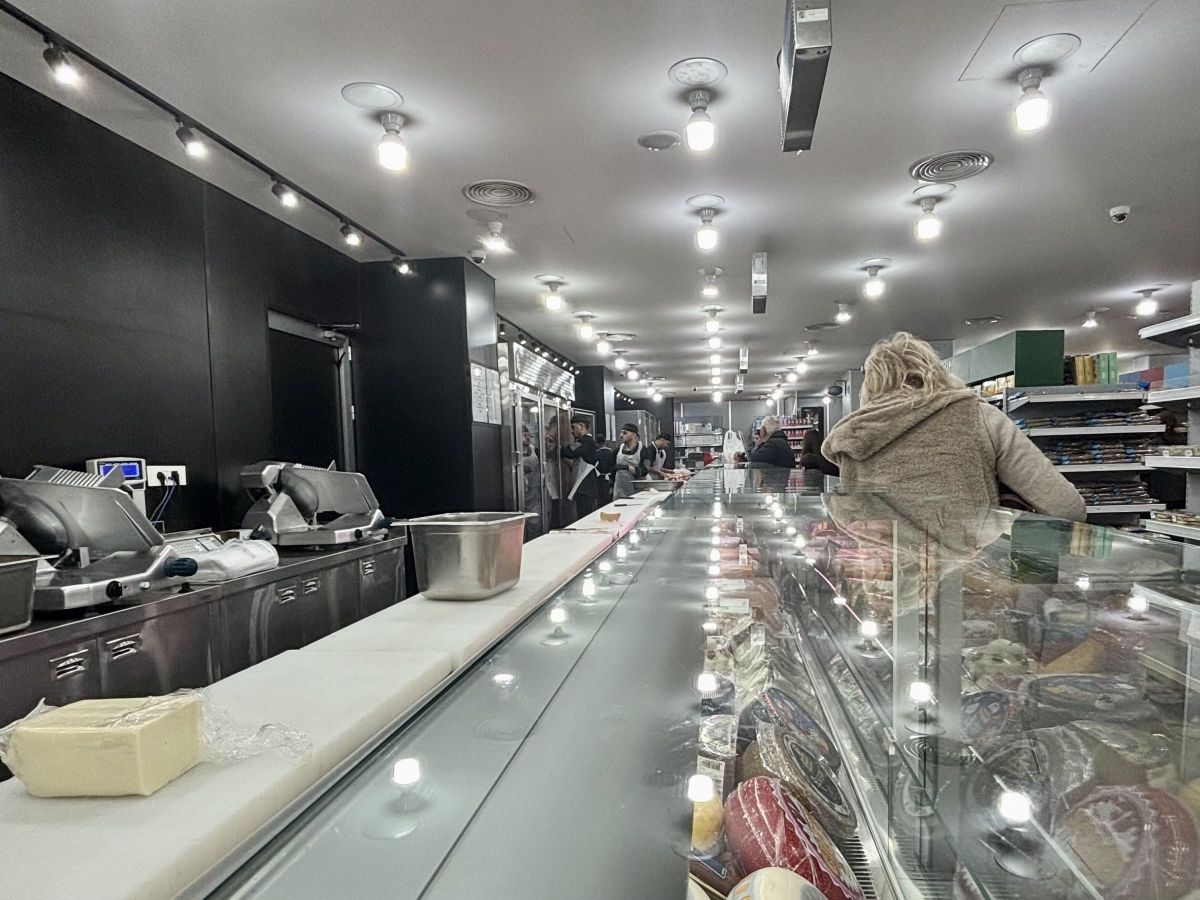
A cheese aisle in a supermarket in Mansourieh, on March 2, 2026 in Lebanon. (Credit: Philippe Hage Boutros/L’Orient-Le Jour)






BEIRUT — The week has been a busy one for the Central Administration of Statistics. The day after publishing updated national accounts, the agency — affiliated with the Cabinet — also released the latest Consumer Price Index (CPI) update.
The figures confirm what many households and businesses in Lebanon have been feeling since the start of the war: a sharp rise in inflation in March, which reached 4.91%, bringing the cumulative rate for the year to 17.26% at the end of March.
This marks not only an increase of more than five percentage points compared to the end of February, but also the highest annual CPI rate since December 2024 (+18.12%). To find a higher monthly increase, one has to go back to October 2023, when the CPI jumped 17.2% during a sharp adjustment in education prices linked to the new exchange rate of 89,500 Lebanese Liras to the dollar (+580.9%).
Even during the previous Israeli offensive in Lebanon, which lasted two and a half months between September and November 2024, monthly inflation remained below 3%. Annual inflation at the time still partly reflected the stabilization of the pound at its current rate.
In March, the rise in the CPI was driven mainly by transport prices (+12.40%), fueled by higher fuel costs following the U.S.-Israeli war against Iran. Recreation followed (+9.15%), ahead of food and non-alcoholic beverages (+6.19%). Housing costs (+5.69%), driven by a more than 13% rise in energy prices, as well as hospitality (+4%), also contributed significantly. Only telecom prices decreased.
On an annual basis, the pattern differs: recreation leads (+42.66%), followed by transport (+24.81%), education (+35.67%), housing costs (+20.26%), and food (+19.41%).
Across Lebanon’s governorates, March saw widespread increases, peaking in Nabatieh (+7.78%), followed by North Lebanon and the Bekaa (both +6.04%), then the South (+5.33%), Mount Lebanon (+4.30%), and finally Beirut (+2.88%).
