







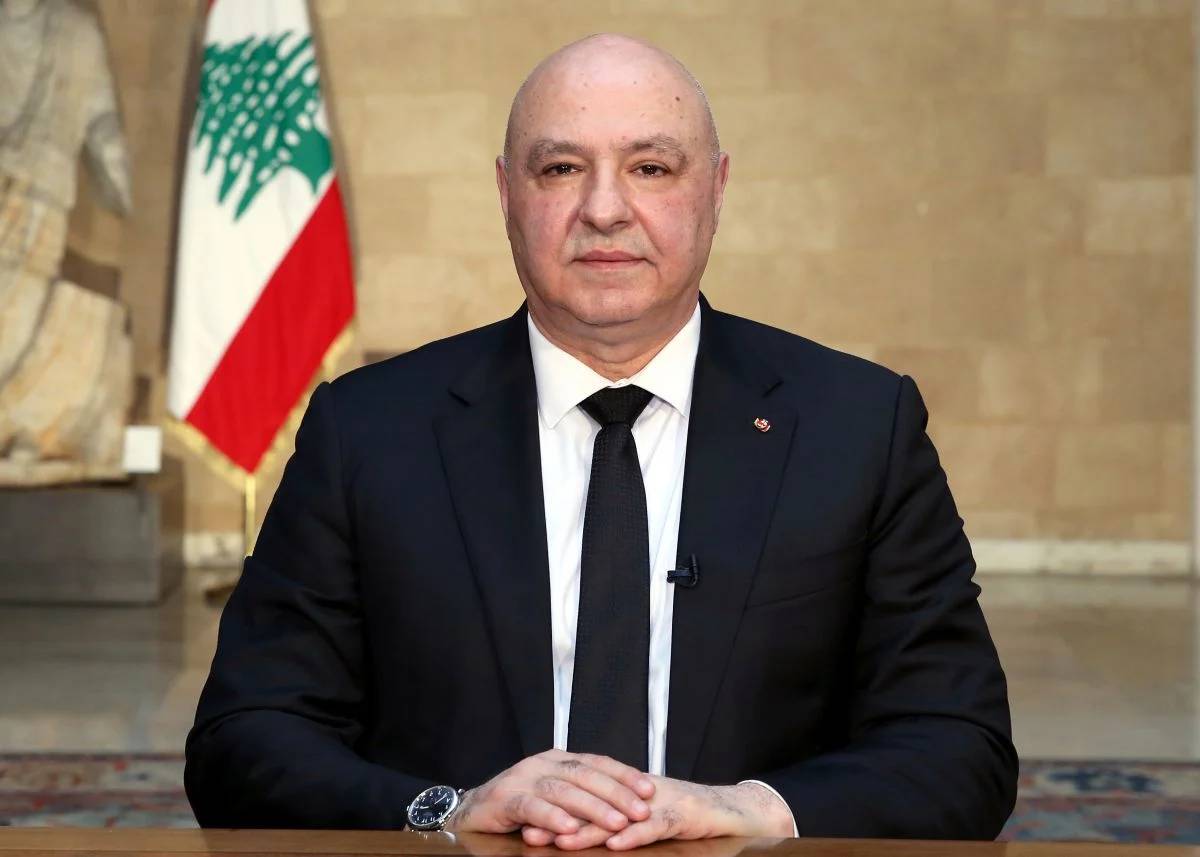
Lebanese President Joseph Aoun. (credit: Photo taken from the Lebanese presidency's X account)






BEIRUT — President Joseph Aoun said on Tuesday that direct negotiations with Israel "mean neither renunciation nor capitulation, but rather aim to resolve issues," calling on the Lebanese people, "who are exhausted by wars," to stand by their state amid a fragile, ten-day cease-fire that took effect Friday, a month and a half since the war between Israel and Hezbollah re-escalated.
This statement was made during a meeting at the Baabda Presidential Palace with a delegation of MPs and municipal leaders from the district of Jezzine. The head of state defended his choice of diplomatic means, saying, "diplomacy is a war without bloodshed, while war brings destruction and devastation," he said, justifying engaging in negotiations between conflicting parties, while stressing the need to preserve Lebanon's rights and to obtain "an end to the aggression, an Israeli withdrawal and the return of prisoners," as a prerequisite to any prospect of peace after "decades of violence." He added that "[my] duty and [my] responsibility is to do everything possible to ensure security and peace in Lebanon."
Yesterday, Aoun announced that the bilateral negotiations with Israel would be carried out by a Lebanese delegation led by former ambassador to Washington Simon Karam, while the first direct contact between the two countries, at the ambassadorial level in Washington, took place last week.
Domestically, Aoun insisted on the need to combine efforts between the Lebanese Army, the security forces, the municipalities, and the residents in order to strengthen security stability and fend off "any temptation for self-defense," which, according to him, "involves many risks even as the state is working to restore security and end the war."
He also praised the resilience of the residents of the South, stating that their continued presence in their villages and their welcome of displaced people from neighboring localities "illustrate the unity of the Lebanese people and their solidarity," constituting "a source of strength, awareness and faith in this country." The Lebanese president also assured that the authorities were continuing their efforts with international organizations and social and humanitarian agencies to increase aid destined for the populations of the South, whether they are displaced or hosts.
Later in the day, the emir of Qatar, Sheikh Tamim bin Hamad Al Thani, affirmed in a phone call with President Aoun his support for the president’s initiatives, particularly efforts to launch direct negotiations with Israel aimed at ending the "military escalation, securing the withdrawal of Israeli forces from occupied areas in the South, enabling the deployment of the Lebanese Army up to the border, and ensuring the extension of state authority over the entire territory."
The emir also renewed “his country’s support for the Lebanese people” and expressed Qatar’s readiness to help “bring an end to their suffering.” For his part, the Lebanese president thanked the Qatari emir for his supportive stance toward Lebanon and for Doha’s continued assistance, especially to displaced people forced to flee their homes and villages.
