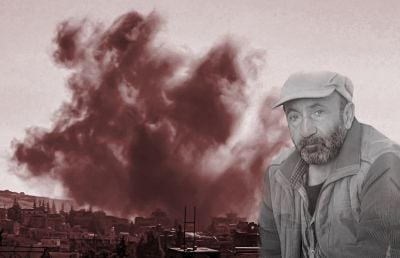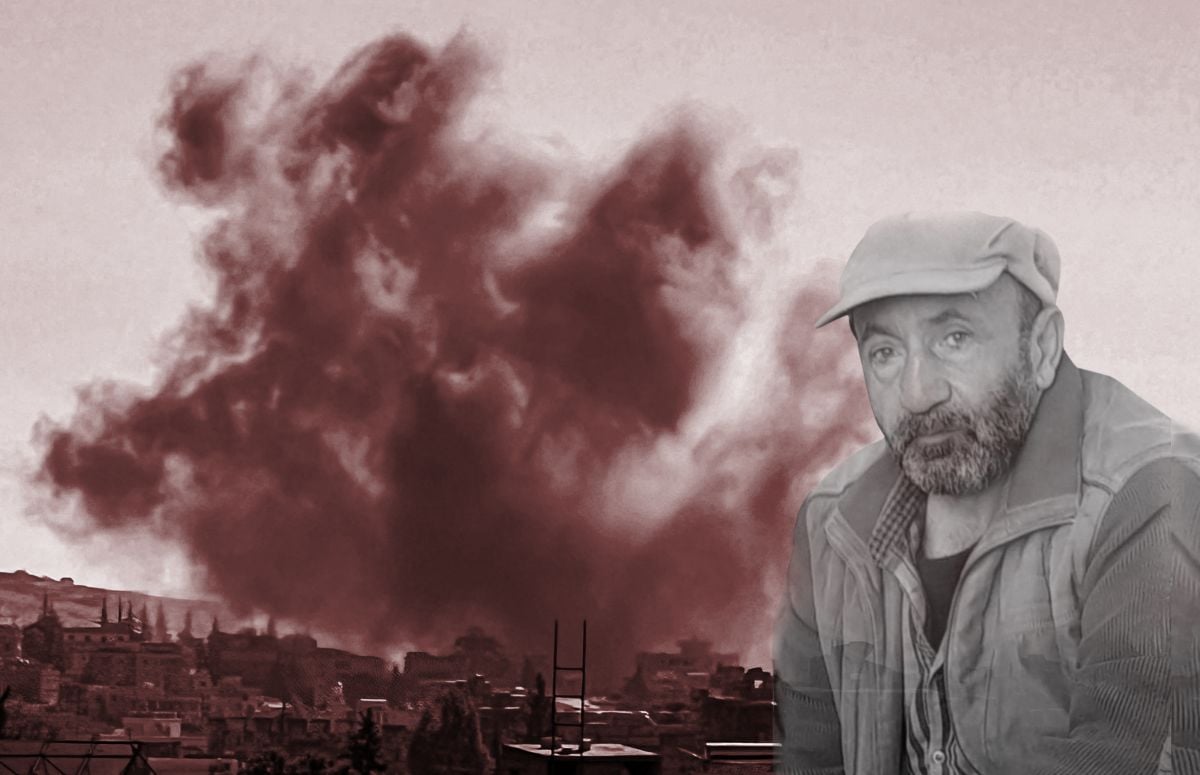
Clouds of smoke rise following an Israeli airstrike on the Bekaa, September 25, 2024. AFP archive photo accompanied by a portrait of Riyad Husseini provided by his brother. Montage by Céline Bejjani/L'Orient-Le Jour






"I'm digging a grave and I'll be back to have coffee with you." Those were the last words of Riyad Husseini, a retired soldier and gravedigger, to his brother Issa. The meeting would never take place, forever breaking the ritual of these two brothers, neighbors and above all "friends."
On Wednesday, April 8, 2026, around 2:40 p.m., the 55-year-old man was killed by an Israeli strike while he was digging a grave during a funeral at his home village cemetery in Shmustar, in the Baalbeck district. Nine other people were killed and at least three wounded in the Israeli attack. Among the victims were Ali Kassem, a 20-year-old soldier from Hay al-Sellom, in Beirut's southern suburbs, who had come to attend the funeral of his father's cousin, and Mohammad Bassam Shheitali, a 29-year-old private who lived in Beirut and was mourning the loss of his uncle. On Sunday, April 12, the Lebanese Army announced that Abbas Kassem, a chief warrant officer, was also killed after succumbing to injuries sustained in the attack.
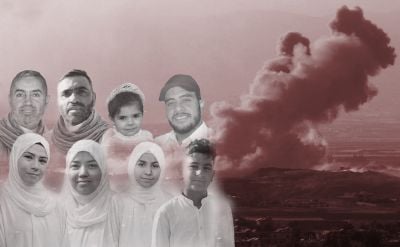
That Wednesday, dubbed "Black Wednesday," the chaos that swept across Lebanon did not spare Shmustar. In the span of 10 minutes, the Israeli war machine carried out a hundred strikes across the country, leaving at least 357 dead and more than 1,200 wounded, according to the Health Ministry.
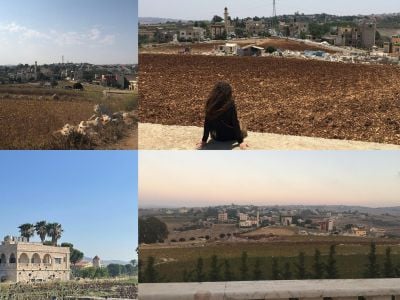
Riyad's house is located 200 meters from the village cemetery, Rawdet al-Janneh. "When I heard the explosion, I went straight to the place," Issa says quietly. His voice breaks as he recalls the scene: "The strike was so powerful that his shattered body was thrown 200 meters. I took him in my arms and held him close."
In this cemetery, everything was intertwined: the living, the dead and those who had come to bury a loved one only to become victims themselves. The ground is strewn with debris and fragments of destroyed graves. In this place of mourning, even the dead no longer rest in peace. "We saw bones among the rubble," confides a witness who arrived soon after the strike. "Israel doesn't even distinguish between the living and the dead anymore," says another. "We were taken by surprise by this bombing, they were all civilians," a resident says, adding, "A few were in Hezbollah's circle but had never taken up arms."
'It's a final goodbye'
Riyad had retired about 10 years ago. Because of the crisis, his pension was now worth very little. So, he took on several jobs to make ends meet: laborer, delivery man, scrap dealer, and gravedigger. He never stopped working "to provide for his family," says his other brother, Hussein. "These last few days, he kept telling us not to go out. And he's the one who was taken," he laments.
The former soldier, who attended every burial in Shmustar, was also known for taking care of others. He leaves behind his wife, Suzanne, and four children: Fatima, Khalwa, Zeinab, and Mohammad. They were all at home at the time of the strike. "I went out... then I took my children to Dar al-Amal hospital where his body was taken," recounts the widow. "Twenty-three years of marriage ... it can't be summed up. There are too many memories," she says in a low, halting voice.
In Shmustar, Riyad was buried on Thursday, April 9, in the same cemetery where he spent his final moments. "It's a final goodbye," whispers one of his relatives.
This article was originally published in French in L'Orient-Le Jour.