







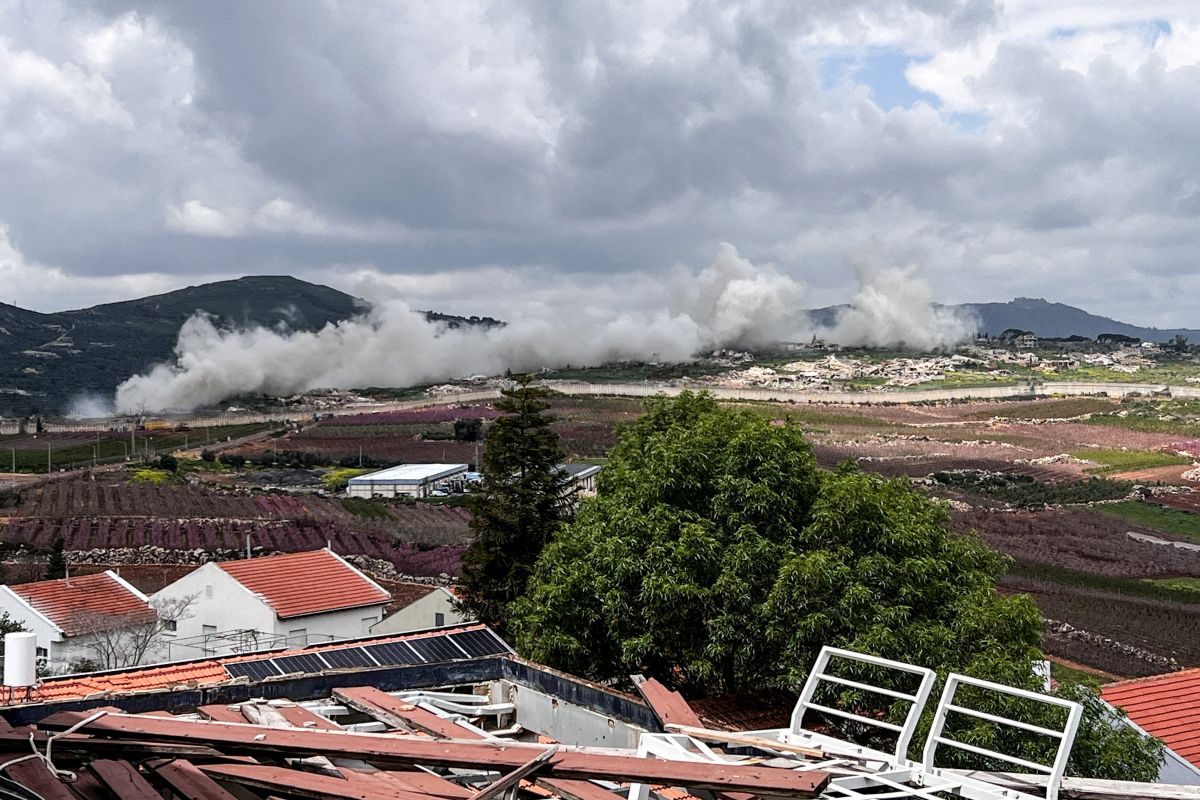
Smoke of an explosion is seen at Kafr Kila following Israel army activity across the border between Israel and Lebanon, as seen from Metula on the Israeli side of the border, April 8, 2026. (Credit: Avi Ohayon/Reuters)






BEIRUT — Residents from southern Lebanon’s border villages issued an appeal Thursday morning to Lebanese authorities, following a day of heavy Israeli shelling across the country, urging them to implement a sustainable national emergency plan for those displaced from war zones.
The group condemned what it described as "collective massacres" perpetrated by Israel against southern residents returning to their villages, as well as strikes that have caused "hundreds of deaths, injuries, and disappearances among peaceful citizens," according to a statement relayed by our correspondent.
According to the Ministry of Health's preliminary toll, Wednesday’s Israeli strikes on Lebanon killed at least 182 people and injured 890,which brings the total number of victims from the Israeli offensive since March 2 to at least 1,739 killed and 5,873 wounded. The Civil Defense, for its part, reported a higher death toll of at least 256 killed on Wednesday alone.
The group called for a broad campaign of solidarity with the victims, both locally and internationally. It also urged "Lebanese people to remain united, to resist any internal discord, and to support one another, especially those forced to flee their homes and regions."
"We call on the state and all relevant parties to implement a sustainable plan given the possibility of a prolonged war, including solutions for housing the displaced and ensuring their long-term resilience," the statement added. It noted that some displaced people are "left to fend for themselves, sleeping in the streets; others, in reception centers, are living in conditions that are inadequate for leading a normal life," while those who have been able to find apartments "rarely receive aid, facing high rents and the arbitrariness of many landlords."

 8 p.m. recap: Israel again threatens Beirut’s south suburbs; 2 ships hit near Hormuz; Riyadh football matches canceled