







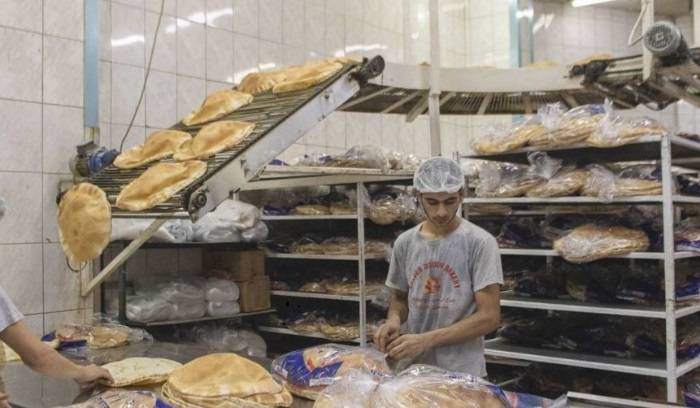
An employee preparing bread in a bakery in Lebanon. (Credit: Illustrative photo form NNA)






BEIRUT — The president of the Union of Bakeries and Ovens Syndicates in Lebanon, Nasser Srour, assured Thursday that Lebanon's wheat stocks are sufficient for four months, not counting upcoming imports, and there is no fear of a bread shortage, as the country has endured a month of renewed war between Hezbollah and Israel.
In a statement, Srour said, "Citizens do not need to worry about the availability of bread ... the results of the plan overseen by the Minister of Economy and Trade, Amer Bsat, in cooperation with the head of the Order of Mill Owners, Ahmed Hoteit, and the Union of Ovens Syndicates, have ensured a sufficient wheat stock for four months."
Srour added that any change in the price of bread, which is regulated by the authorities, will follow "specific criteria" and take into account the exceptional conditions the country is facing, particularly during wartime. He emphasized that "the majority of the cost is borne by mills and bakeries, except for certain essential elements related to fuel prices, which in turn affect the cost of flour, transportation, nylon, and raw materials."
The union leader also stated that bakeries located in areas exposed to Israeli attacks — specifically in southern Lebanon, the Bekaa, and the southern suburbs of Beirut — "continue their activity despite difficult circumstances," while those in other regions are able to fully meet market needs.
Bakeries do not have real room to maneuver when it comes to adjusting prices of so-called Arabic bread. In Lebanon, the government sets price ceilings, currently established at 65,000 pounds ($0.73) in bakeries and 77,000 pounds ($0.85) for a package in supermarkets, leaving producers with little flexibility.
