





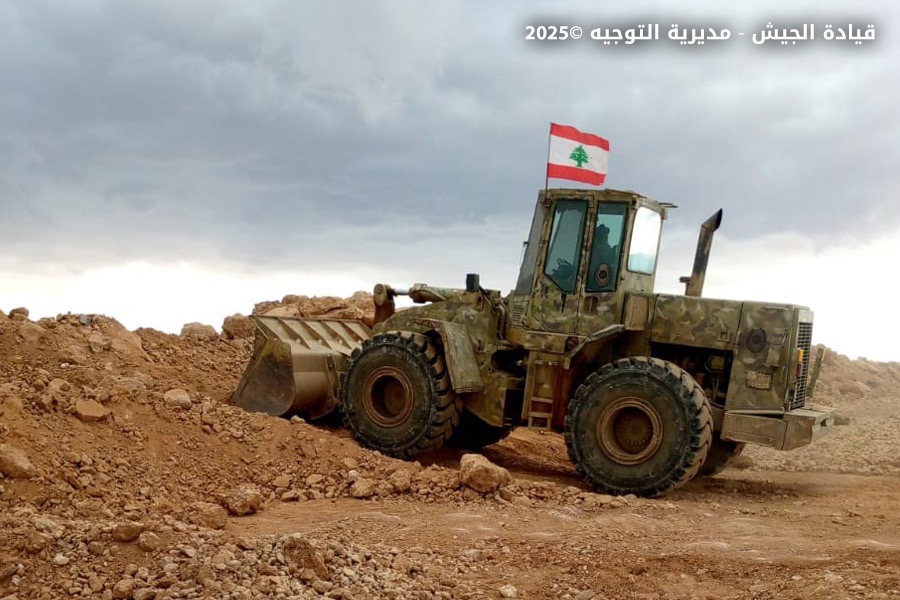
A Lebanese Army bulldozer building sand walls to block an illegal border crossing between Lebanon and Syria. (Credit: X/Lebanese Army)






BEIRUT — The Syrian army sent reinforcements to the Lebanese-Syrian border on Monday, including tanks, armored vehicles, and medium weaponry, security sources and residents told L'Orient Today's correspondent in the Bekaa.
Contacted by L'Orient Today, a security source said the Lebanese Army is verifying whether the circulating information is accurate.
Following the reignition of the war between Hezbollah and Israel on March 2, Syria increased its reinforcements along its border with Lebanon.
These include rocket units and thousands of troops, with Syrian officials saying that the move aimed at preventing arms and drugs smuggling as well as blocking Hezbollah or other militants from entering Syria.
According to our correspondent in the Bekaa, the reinforcements sent on Monday have been positioned behind newly constructed earth barriers, stretching from the Syrian village of Rablah to Hawsh al-Sayyed Ali in Hermel.
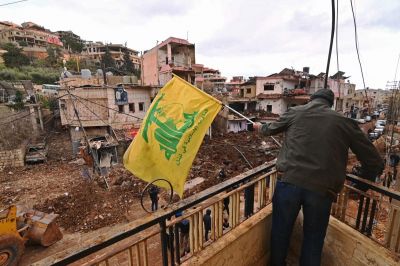
According to the same sources, Syrian forces have also prohibited the entry and exit of people to and from Syrian territory on foot, after illegal crossing routes had previously been open to both Syrian and Lebanese nationals.
On Monday, the Syrian Observatory for Human Rights reported that the reinforcements included rocket launchers, units of foreign fighters, missiles, and “Shaheen” drones.
According to SOHR's sources, the reinforcements arrived from Syria's Qusayr to "strengthen the Syrian army’s deployment along the border strip and to confront any potential threats, amid rising tensions in the region."
SOHR added that the area is witnessing a state of "tribal mobilization by clans loyal to Hezbollah," noting that this comes in an effort to "secure the border and keep pace with the movements of Syrian forces." Our correspondent's sources did not confirm these claims.
In February and March 2025, clashes between Lebanese clans aligned with Hezbollah and the Syrian army erupted along the Lebanese-Syrian border, killing at least seven people and wounding dozens.
Earlier this month, Reuters reported that the United States had encouraged Syria to consider sending forces into eastern Lebanon to help disarm Hezbollah, adding that Damascus is reluctant to embark on such a mission for fear of being sucked into the regional war and inflaming sectarian tensions.
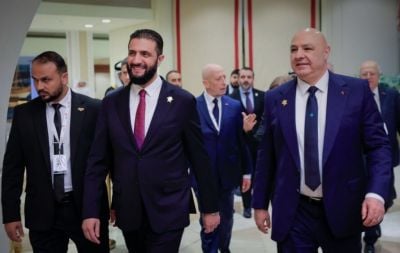
Following the report, U.S. envoy for Syria Tom Barrack posted on X, "Reporting regarding the United States encouraging Syria to send forces into Lebanon is false and inaccurate."
In early March, the Syrian army accused Hezbollah of firing artillery shells from Lebanon into Syrian territory. Following this incident, President Joseph Aoun received a phone call from Syrian President Ahmad al-Sharaa to discuss reinforcing the border between the two countries.
Hezbollah's supply routes from Syria have been cut off since former President Bashar al-Assad was ousted in December 2024 by a coalition of Islamist fighters. Lebanese and Syrian authorities have been working for years to curb smuggling across the porous border.
Additional reporting by Sarah Abdallah.

 7 p.m. recap: Iran warns Egypt, Israeli soldiers vote in south Lebanon, Haret Hreik responds to Kataeb