



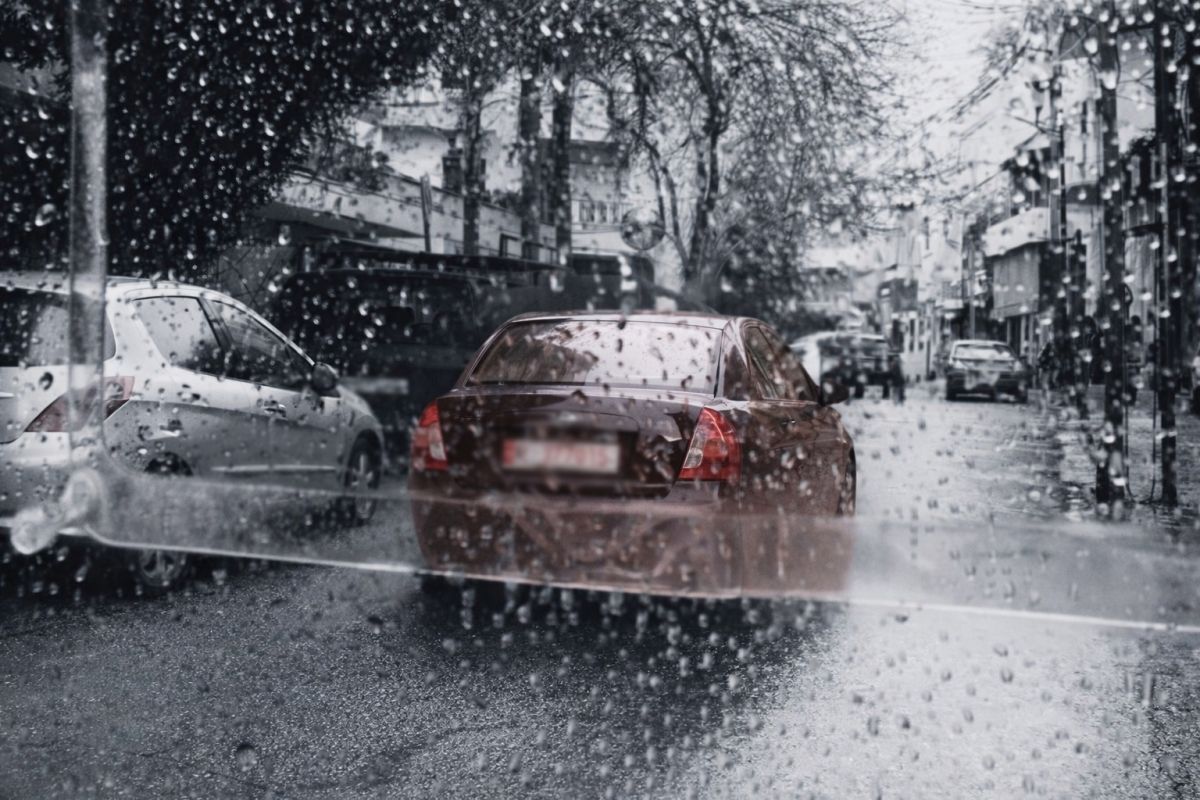
A taxi driving through Beirut on a rainy afternoon. (Credit: Yara Malke/L'Orient Today/Editing by Celine Bejjani)






I left the newsroom later than planned, a few hours after another Israeli strike on Beirut. Outside, a haze of fatigue consumes the city. It sneaks into the lungs with all the other air pollutants it harbors.
For the more “fortunate” among us, we try to leave places in the early evening. It offers us the path of least resistance, a calm between storms and Israeli strikes, before our mobility gets restricted again and we must shelter to stay in one piece. I call it “morbid hour.”
The rain stops pouring. My phone blinks — a message from the taxi driver.
I’m here. Blinkers on.
I pull my coat on and make my way to the compact silver cab, its sides streaked with rain and dust. I settle in.
Can we fix the app’s rate? I can’t make a living like this. If you could only see what’s happening to fuel prices.
I approve. He pauses. I brace for it, the conversation. What did we use to small-talk about in between wars? I can’t seem to remember.
You know, my wife and I were in Egypt before the war started, on holiday. On the last day there, we met a couple in a café. The man asked where we were from. I said Lebanon. He said, ‘Wow. Lebanon… the Europe of the Middle East.’ We landed in Beirut, and the next day, chaos began again.
The irony in his glee isn’t lost on me. He seems pensive for a moment before he resumes.
We don’t want to live like this anymore. None of us, I assure you. You’ve got a handful of people vying for power, and millions of people living out the consequences. I wish we could ship them all to their own planet. Let them settle it there. Maybe then we could live here. They don’t care if we live or die. But, we do. And we don’t want to survive, we want to live.
Roads are still as we make our way through the city. Everything looks like a movie prop, scenes that could be dismantled in between takes. Other people in the cars around us wear faces of apprehension or elsewhere. Buildings seem more exposed now than they used to.
He stops at our destination. The mist turns into rain again, and he rolls up his window and turns on his wipers. His demeanor changes from unassuming to solemn.
I just want to ask you for one thing before you go. If it is no bother.
A split second of tension. I say, of course. In this context, any request for help sounds urgent and unimpeachable.
Bas iza fikeh 5 stars.

 7 p.m. recap: Netanyahu seeks mastermind behind Flydubai incident; Washington sanctions 2 French nationals; Ben Gvir's 'I want to kill you' threat