






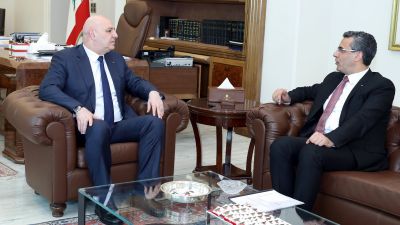
President Joseph Aoun and Agriculture Minister Nizar Hani in Baabda on March 18, 2026. (Photo: NNA)






Lebanon’s Agriculture Minister, Nizar Hani, assured Wednesday that farmland affected by Israeli strikes can still be cultivated without a risk of poisoning, based on tests conducted by the ministry.
"More than 1,000 soil samples were collected from different areas that were bombed with white phosphorus and by other means. Results showed that the soil is, to some extent, safe for the resumption of agriculture. In some limited cases, the presence of heavy metals was detected, but overall, the land remains usable. We also analyzed oil and olive samples, which showed no damage. A detailed report will be published very soon," the minister said.
Hani added: "We hope that, within the context of the ongoing war, these toxic substances do not increase, as their danger lies in their accumulation in case of repeated use."
Hani was speaking after a meeting with President Joseph Aoun at the Baabda Presidential Palace to update him on the measures taken by the ministry to support farmers and ensure agricultural production in the various regions of Lebanon since the resumption of war between Hezbollah and Israel on March 2.
"I informed the president about the response plan implemented by the Agriculture Ministry for the agricultural sector in general, particularly in areas exposed to attacks, especially concerning assistance to livestock breeders and beekeepers to move cattle and hives to safer areas. To this end, we are cooperating with the army on all aspects of the measures taken and are identifying alternative sites, particularly for cattle breeders, because it is not easy to move their livestock from one place to another," the minister explained.
"We also support farmers within the limits of available means, in collaboration with the ministry’s partners, including international organizations and United Nations agencies. All of this comes with measures aimed at ensuring the delivery of imported agricultural products, notably some vegetables from neighboring countries such as Syria and Jordan. We have taken a series of facilitation measures at the borders, and laboratories operate around the clock, every day of the week, to facilitate the entry of these products, whether by sea or land, and to ensure that markets have everything they need," he further explained.
"We monitor daily the availability of products across all Lebanese markets. I urge consumers not to rush to buy foodstuffs or agricultural products: they are available and imports are proceeding as usual. We are entering the spring season, during which agricultural production will increase, and greenhouses are intensifying their output day by day. We hope to achieve self-sufficiency by the end of the month, which will ensure the availability of all products in Lebanese markets," the minister added.
Hani finally stated that the Agriculture Ministry, in coordination with the Economy Ministry, has launched a survey among farmers in the affected areas to record their locations and needs. This is part of the response plan put in place by the ministry during this war.

 7 p.m. recap: Iran warns Egypt, Israeli soldiers vote in south Lebanon, Haret Hreik responds to Kataeb