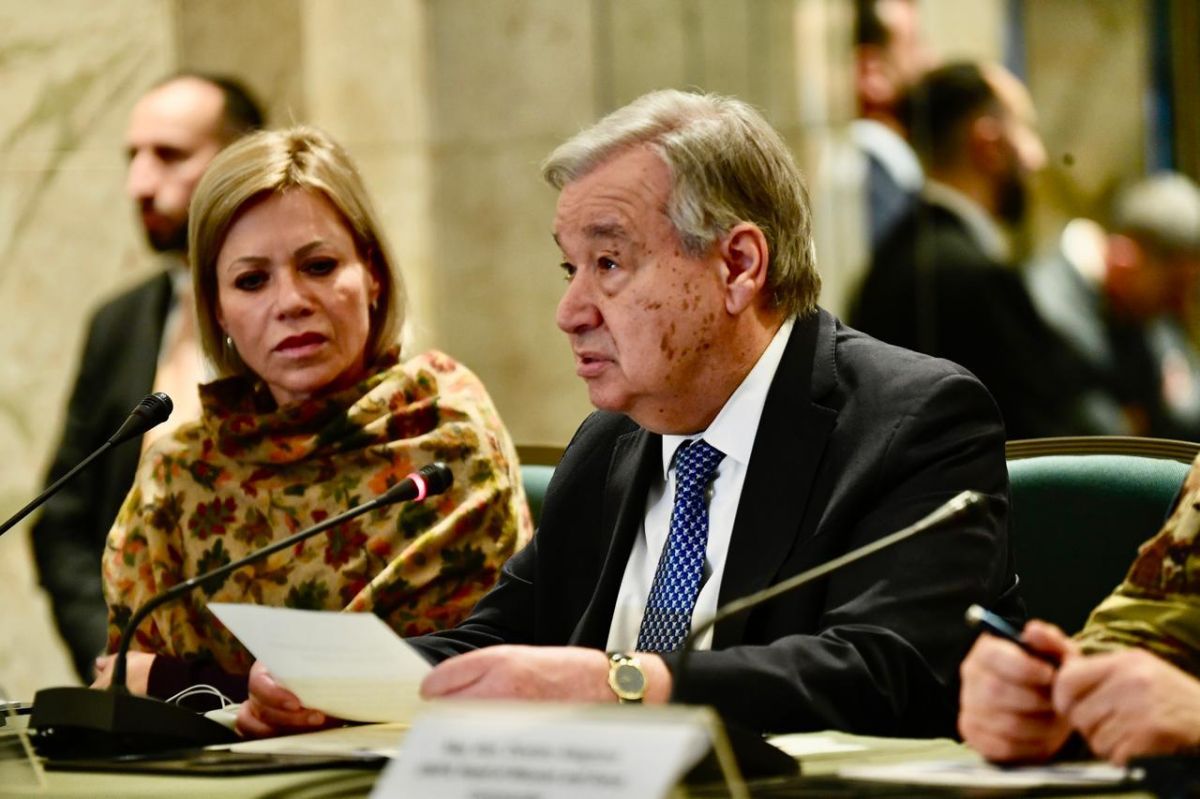
U.N. Secretary-General Antonio Guterres speaks at a press conference in Beirut, March 14, 2026. (Credit: Mohammad Yassin/L'Orient Today)






Two days after his visit to Lebanon, U.N. Secretary-General Antonio Guterres has once again warned of the volatility of the situation along the Lebanese-Israeli border in his latest report on the implementation of Security Council Resolution 1701.
This report, published as the war which broke out on Feb. 28 spread across the region, is to be presented behind closed doors on Tuesday, March 17, and covers the period from October 21, 2025, to February 20, 2026 — eight days before the Israeli-U.S. strikes on Iran and ten days before the Israeli offensive against Lebanon.
Israel has killed more than 800 people in Lebanon and is preparing to launch a major invasion in the south of the country. In the report, the U.N. chief calls for the urgent revival of diplomatic mechanisms laid out, particularly in the 2006 resolution.
In the conclusions of the report, Guterres expresses deep concern over the consequences of this escalation. According to him, these developments have seriously undermined the cessation of hostilities agreed in November 2024 and "once again put the Lebanese people in the crosshairs of the conflict." He warns that the situation could have "potentially catastrophic consequences for communities on both sides of the Blue Line."
In the face of this risk, the U.N. secretary-general stresses the need to preserve the "progress" made in recent months, including the government's decisions regarding the disarmament of Hezbollah, and to restart the diplomatic mechanisms provided for in Resolution 1701.
The document also sends clear messages to both sides in the war: Israel must respect the sovereignty and territorial integrity of Lebanon, while Hezbollah must respect the Lebanese government's decision of March 2 that made its military activities illegal.
In his report, Guterres welcomes the "progress made in implementing the plan to establish exclusive state control over weapons south of the Litani," although this progress appears to have been wiped out on the ground since Hezbollah entered the war on March 2. Hezbollah is in fact firing rockets and missiles from south of the Litani, where the Lebanese Army has withdrawn from many positions, notably along the border, and daily clashes are taking place in this sector between Hezbollah fighters and invading Israeli troops.
The report also recalls that the freedom of movement of the United Nations Interim Force in Lebanon (UNIFIL) remains essential to the full implementation of Resolution 1701.
As a reminder, the secretary-general condemneded the incidents targeting peacekeepers, notably the attack on March 6 that injured three mission personnel. A UNIFIL position in Mais al-Jabal was also fired at with Israeli artillery shelling last Friday.