






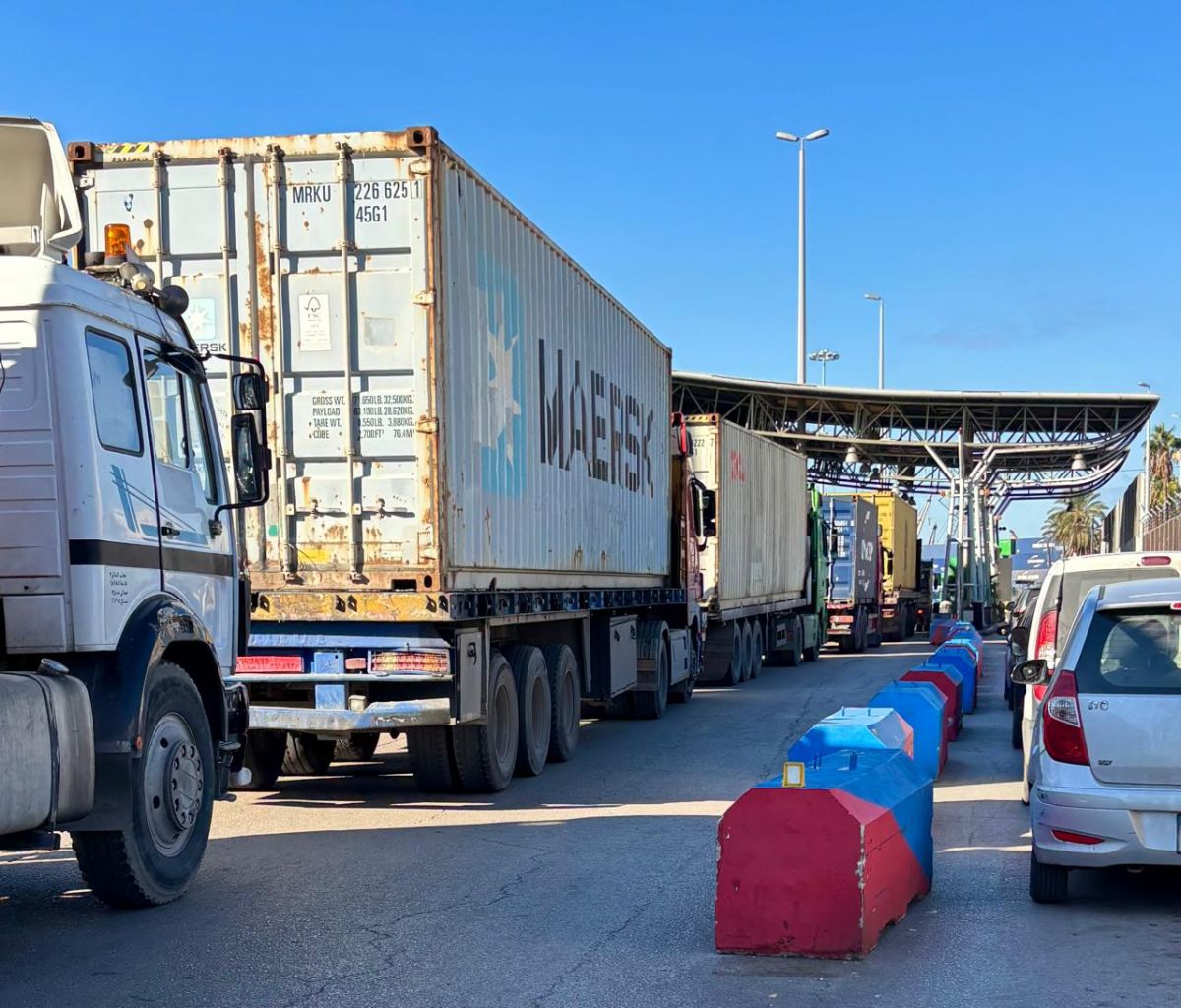
Trucks entering the Beirut Port. (Credit: L'Orient-Le Jour's archives)






With 51.2 points, the Purchasing Managers' Index (PMI), which surveys the sentiment of 400 businesses in Lebanon, had started to rise again and was still hovering above its threshold before the United States and Israel launched their war against Iran and before Hezbollah gave Israel a pretext to fully abandon the cease-fire of November 2024.
This is undoubtedly the main takeaway from the latest update of this index, published at the beginning of each month by Blominvest, whose lessons now seem secondary in light of the catastrophic worsening of the security situation.
Although not very high, the PMI therefore increased by more than 1 point, from 50.1 in January. This notably means that the tax adjustments adopted in the 2026 budget, or the additional taxes introduced by the government to finance salary and pension adjustments for civil servants, have not yet affected consumption.
"In February, the government announced increases in taxes on gasoline and Value Added Tax [VAT]. The gasoline taxes, implemented immediately, intensified inflationary pressures. It appears that the proposed VAT increases, which still must be approved, pushed consumers to buy in advance before prices rose, thus boosting new orders and production to meet demand," analyzed Blominvest's chief economist, Mira Said.
"Despite rising inflation, employment costs for businesses have remained virtually stable, so real wages have fallen compared to inflation," she added. Said also noted that "while the 12-month outlook index remained in contraction, it reached its highest level in six months [42.9 points]," at a time when tensions between Iran and the United States had peaked.
"Economic and political uncertainties continue to weigh on expectations, even if rising tensions between the United States and Iran seem to have revived hopes for a breakthrough in the Lebanese crisis," Said concluded.
In detail, the sub-index measuring output rose from 50 to 51.8 points between January and February, the new orders sub-index from 51.1 to 51.7, while the export new orders index fell marginally from 49.8 to 49.6 points.
A PMI below 50 points reflects contraction in activity, and conversely, a PMI above 50 points indicates expansion. The greater the month-to-month change in the PMI, the stronger the growth or contraction it reflects. In February, the PMI was above 50 points for the seventh consecutive month.

 8 p.m. recap: Israel again threatens Beirut’s south suburbs; 2 ships hit near Hormuz; Riyadh football matches canceled