







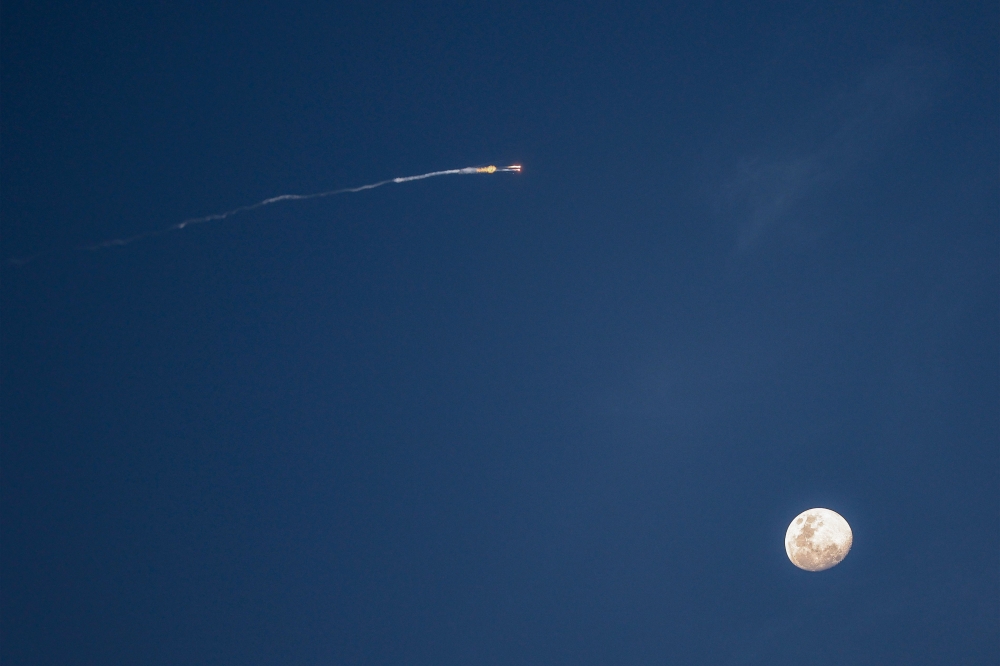
Rocket trails from an interception by the Israeli Iron Dome missile defense system over Tel Aviv, on Feb. 28, 2026. (Credit: Jack Guez / AFP)






The U.S.-Israeli attack on Iran, launched Saturday morning, has reignited concerns in Lebanese regions still deeply affected by the most recent conflict between Hezbollah and Israel, especially since Israeli strikes on Lebanese territory remain daily despite the cease-fire of Nov. 27, 2024. Several Israeli officials have already threatened Lebanon with a violent retaliation should the pro-Iranian Hezbollah open a new support front.
In south Lebanon, a cautious wait-and-see attitude prevails in the border villages with Israel, out of fear of military developments in this area already largely destroyed during the last conflict. Firas lives in the village of Houla, Marjeyoun district, south of the Litani. He describes "an atmosphere of anxiety hanging over the village, which is quite normal," saying that people prefer to stock up on essential goods and stay at home. He is not particularly afraid of Hezbollah launching a response from Lebanon because he says "it is not rational to consider such a probability." However, he does not rule out "the possibility of isolated incidents at the border that would cause trouble."
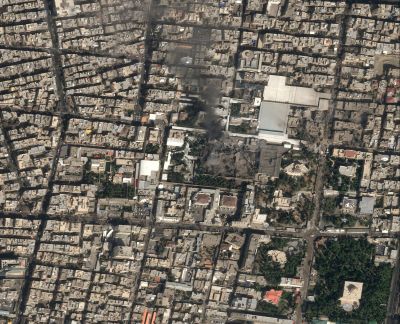
Ahmad al-Mohammad, mukhtar of the village of Wazzani in Marjayoun district, describes "explosions from interception missiles in the sky and drone movements at the border." Despite legitimate concern, he insists "there is no panic in the village, people go about their business and farmers are going to their fields. There is no movement of departures from the border regions yet."
Mohammad Assaily, mukhtar of the town of Bint Jbeil in the district of the same name, sees things differently. "Anxiety about a new war is at its peak, some families have already packed up to head to places considered safer, while many others stay simply because their economic situation does not allow them to contemplate moving again, especially since the 2024 war has already wiped out their meager savings," he says.
Only Zeinab, a resident of the city of Tyre, notes that "this strike against Iran is not a surprise, since all the indicators have been red for several days." Although there have been no truly worrying developments in Lebanon so far, she speaks of "a pervasive fear regarding the possibility of repercussions for the country."
'We all believe Hezbollah will not intervene'
A similar atmosphere prevails in the Bekaa, in localities also affected by the last war. Witnesses all confirm hearing the interception missiles.
Hassan, a civil servant living in Nabi Chit in Baalbek, says he is not particularly worried, assuring that he does not sense a wave of panic in the village so far. "We all believe here that Hezbollah will not intervene in this conflict," he says. The only risk, according to him, is if "Israel decides to attack Lebanon." Nabi Sheet was the target of more than 160 raids during the last conflict between Hezbollah and Israel.
In the Sunni village of Mashghara, Abbas, a father and teacher, does not hesitate to say that "the fear of a new conflict in the wake of the attack on Iran is at its peak." According to him, "no one is in the streets, people buy just what they need and barricade themselves at home, the festive atmosphere of the month of Ramadan has faded." He says he hopes "that Lebanon will not be dragged into another conflict, because the population is exhausted in every sense ... we can't take it anymore."

In the Shiite village of Ali Nahri, Zahle district, which was also targeted in the last war with Israel, Mohammad, an employee, takes a fatalistic tone. "We keep our hope in God because this is a very large-scale conflict in which the great powers are deciding to reshape the entire region, there is nothing we can do," he says. He adds: "We hope Lebanon will stay on the sidelines of this war."
Reine owns a shop in Zahle. She says that since Saturday morning, "customers have suddenly disappeared." "People are afraid, they prefer to buy food and go home; you can feel the panic in the rush to supermarkets, bakeries and gas stations," she explains. This anxiety has affected her too. "Since we learned about this new war in the region, we have been paralyzed. If there is retaliation from here, it will be our end," she fears.

 8 p.m. recap: Israel again threatens Beirut’s south suburbs; 2 ships hit near Hormuz; Riyadh football matches canceled