


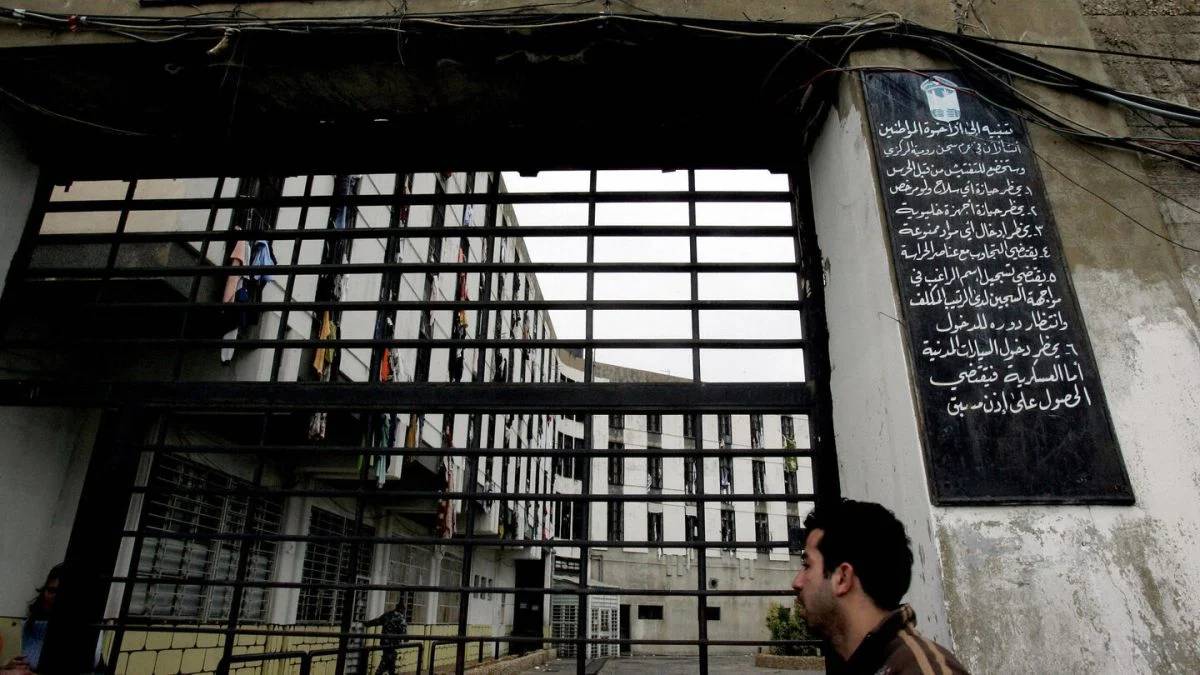
A Lebanese man coming to visit a detainee at Roumieh prison, northeast of Beirut, on April 7, 2006. (Credit: Ramzi Haidar/AFP)






The remarks by President Joseph Aoun, who opposes a general amnesty law and supports a "faster trial process," sparked outrage Friday from the Committee of Families of Detainees in Lebanon.
The group rejected this approach, insisting it is based on a "paralyzed" justice system and amounts to "speeding up injustice instead of fixing it."
With the fate of Islamist detainees held in Lebanese prisons at the center of debate, the committee denounced prolonged detentions without trial, sometimes lasting more than 15 years, as well as judicial case files that have been "buried."
"In a country where justice is paralyzed, where files are buried, and people are imprisoned for years, even decades, with no decision or hearing, this is neither rhetoric nor exaggeration but a well-documented reality, with names and facts, in the heart of real 'graveyards of case files,'" the detainees' families said.
On Thursday, Aoun said he favored "speeding up trials" rather than supporting a general amnesty law. He claimed, "Overcrowding in prisons is not solved by a general amnesty, but by speeding up trials, ruling on detainees' fates, and delivering justice to victims," stressing that "no one is above the law."
In response, the committee asked: "You speak of speeding up trials. But what of the Judicial Council, where files have been blocked since 2014, meaning nearly 17 years of detention without trial for some detainees?"
They added that some detainees are imprisoned without a formal indictment or a set court date, while others receive their indictments only after 15 years in detention.
The committee also denounced judicial procedures based on confessions extracted under torture, arguing that in this context, speeding up trials could only entrench unjust convictions.
The Committee of Families of Detainees called on authorities to declare a "judicial state of emergency," impose "legally binding deadlines on competent courts," activate "sentence reduction committees," and halt all proceedings based on confessions obtained under torture.
The committee also advocated a general humanitarian amnesty, presenting it as the only measure capable of immediately relieving detainees subject to prolonged detention while awaiting a thorough overhaul of the judicial system.
The issue of a general amnesty has resurfaced following an official agreement signed last Friday between Lebanon and Syria, which allows for the transfer of about 300 convicted and imprisoned Syrian detainees from Lebanon's overcrowded prisons.
This first arrangement comes as Damascus calls for the extradition of all Syrians held in Lebanese jails, including those facing charges for killing Lebanese soldiers.