






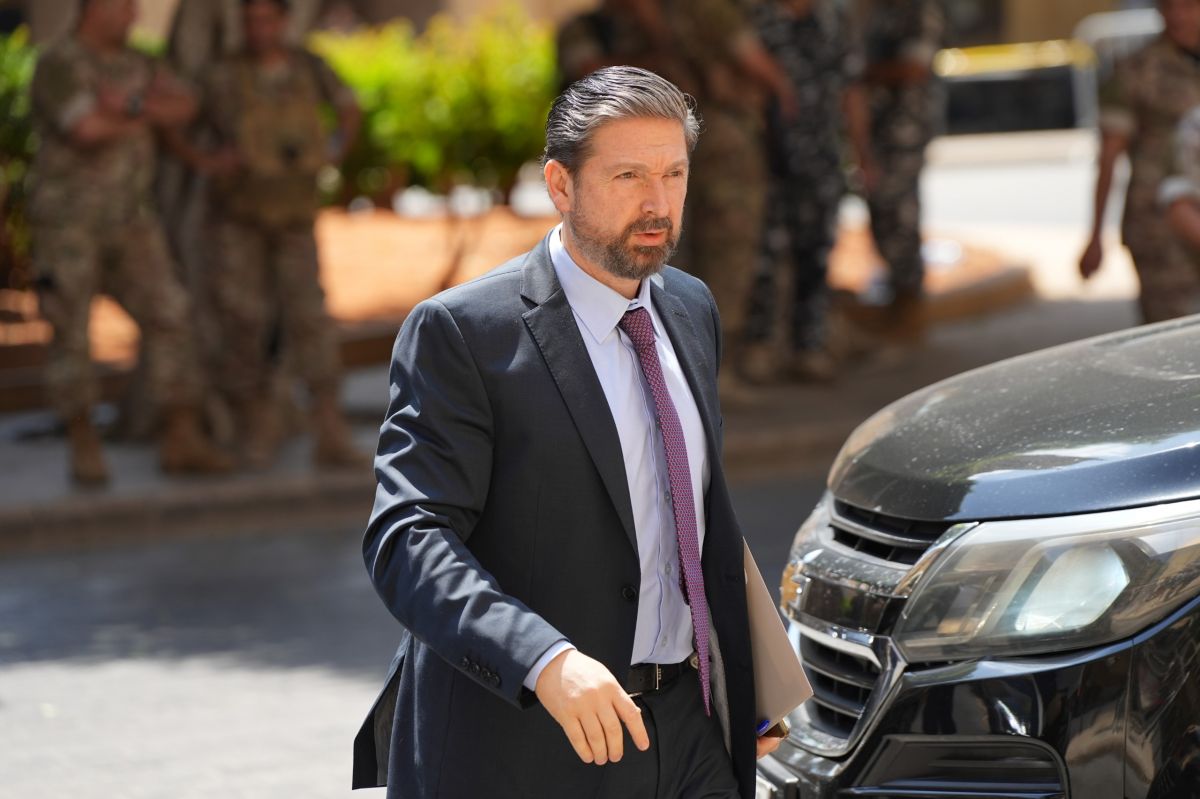
Faysal Karameh, Member of Parliament for Tripoli, entering Parliament on June 30, 2025. (Credit: Mohammad Yassine/L’Orient-Le Jour)






BEIRUT — MP Faysal Karameh announced Wednesday on his X account that he has submitted a general amnesty bill "because injustice is no longer bearable." "Amnesty is not a crime ... the crime is the continuation of injustice," he said.
"For many years, detainees have remained in prison without a trial, without sentencing, without justice ... until when?" Karameh asked. He specifically referenced Islamist detainees who have been "left as hostages of neglect and perpetual postponement, as if their rights are not the same as others'."
"Either we are a state of law that judges people quickly and fairly, or we must acknowledge that there is an injustice that must end now," he added.
The issue of general amnesty returned to the Lebanese spotlight after an official agreement was signed last Friday between Lebanon and Syria, providing for the transfer of about 300 Syrian prisoners convicted and incarcerated in Lebanon’s overcrowded prisons.
This issue is generally postponed by authorities for political and sectarian reasons, as each community in Lebanon demands amnesty for members connected to various controversial cases. According to figures obtained by L’Orient-Le Jour in February 2025 from the Interior Ministry, 50 percent of inmates in Lebanon have yet to be tried.
Among Islamists, 55 percent remain imprisoned without a judicial decision. Mohammad Sablouh, an attorney representing several of them, stated in February 2025 that there are 350 Islamist detainees in total, including 180 Lebanese and 170 Syrians.
Relatives of detainees have been holding protests for several years in Lebanon demanding their family members' release.
On Tuesday, several relatives of Islamist detainees held in Lebanese prisons blocked the North Lebanon highway at Beddawi, demanding a general amnesty for these prisoners. Some carried photos of Sheikh Ahmad al-Assir, who was arrested in 2015 for leading deadly clashes against the Lebanese Army in Abra, on the outskirts of Saida (South Lebanon), in 2013.
Sheikh Assir was sentenced to death for these acts, and to 20 years of hard labor by the military tribunal for other clashes in North Lebanon. The confrontations took place amid Hezbollah's intervention in Syria alongside Bashar al-Assad's regime, which was overthrown in 2024, and heightened tensions between Sunnis and Shiites in Lebanon.

 8 p.m. recap: Israel again threatens Beirut’s south suburbs; 2 ships hit near Hormuz; Riyadh football matches canceled