


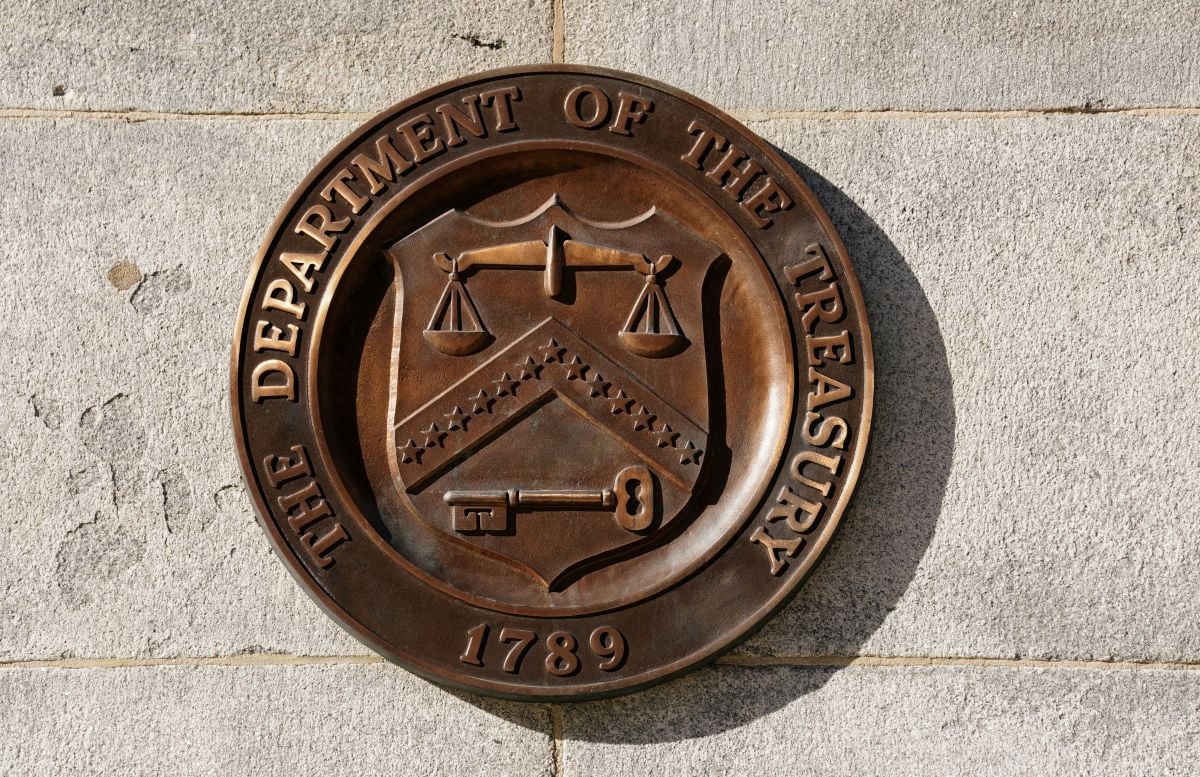
U.S. Department of the Treasury in Washington. (Credit: Kevin Lamarque/Archive photo)






BEIRUT — The U.S. Treasury sanctioned on Tuesday an alleged Hezbollah-linked gold exchange and international shipping network, accusing the group of raising funds through Lebanon’s cash economy and covert trade with Iran, the Treasury Department’s Office of Foreign Assets Control (OFAC) said in a statement.
The sanctions target companies and individuals accused of helping Hezbollah convert gold reserves into cash and evade existing restrictions to finance its activities, according to the statement.
“Hizballah is a threat to peace and stability in the Middle East,” said Secretary of the Treasury Scott Bessent. “Treasury will work to cut these terrorists off from the global financial system to give Lebanon a chance to be peaceful and prosperous again.”
The Treasury said Hezbollah continues to rely on Al-Qard Al-Hassan (AQAH), a U.S.-designated entity that operates under the cover of a nongovernmental organization licensed by Lebanon’s Interior Ministry. While registered as an NGO, AQAH provides bank-like financial services that go far beyond what was disclosed in its original filings, the statement said.
After facing funding challenges in early 2025, Hezbollah directed AQAH to “establish new mechanisms to ensure continued access to cash,” the statement said.
Senior AQAH officials then created a network of companies involved in gold trading in Lebanon and potentially overseas to ease liquidity pressures, the statement claimed.
As part of that effort, AQAH officials established Lebanese government-licensed gold exchange company Jood SARL, which the Treasury said is overseen by U.S.-designated Samer Hasan Fawaz. AQAH supervises Jood’s activities, and most of its branches are located in or near existing AQAH offices in predominantly Shiite areas, including Beirut, the Bekaa Valley, and Nabatieh, the statement said.
The Treasury identified senior AQAH officials Mohamed Nayef Maged and U.S.-designated Ali Karnib as co-owners and managing partners of Jood, saying they operate the company on AQAH’s behalf. The department described Jood as “the latest in a series of schemes” used to obscure AQAH’s financial activities and evade sanctions.
Jood SARL was designated under Executive Order 13224 for providing material support to Hezbollah. Mohamed Nayef Maged was also designated for providing support to AQAH.
The Treasury also announced sanctions against a separate network tied to Ali Qasir, a U.S.-designated Hezbollah finance team member based in Iran. The Treasury said Qasir works with associates across several countries to evade sanctions and raise funds for Hezbollah.
Among those designated is Moscow-based Russian national Andrey Viktorovich Borisov, whom the Treasury identified as an employee of Hezbollah-affiliated company Mira Ihracat Ithalat Petrol. The Treasury said Borisov worked with Qasir on projects including weapons procurement from Russia and commodities sales to generate revenue for Hezbollah.
In late 2025, the Treasury said Hezbollah financiers used Turkey-based Platinum Group International Dis Ticaret Limited Sirketi to export millions of dollars’ worth of fertilizer from Iran to Turkey while falsely claiming the cargo originated in Oman. The operation involved Turkey-based Sea Surf Shipping Limited and two cargo vessels, the Panama-flagged Brilliance and the Saint Kitts and Nevis-flagged Lara.
The Treasury said the Brilliance was owned by Panama-based Brilliance Maritime Ventures S.A. and was part of a fleet managed by a Syrian businessman affiliated with Hezbollah and Iran’s Islamic Revolutionary Guard Corps–Qods Force.
Borisov, the companies involved, and Brilliance Maritime Ventures S.A. were designated for providing material support to Hezbollah. The vessels Brilliance and Lara were identified as blocked property.
As a result of the sanctions, all property and interests in property of the designated individuals and entities that are in the United States or controlled by U.S. persons are blocked and must be reported to OFAC. Entities owned 50 percent or more by sanctioned persons are also subject to the restrictions, the statement concluded.

 7 p.m. recap: Netanyahu seeks mastermind behind Flydubai incident; Washington sanctions 2 French nationals; Ben Gvir's 'I want to kill you' threat