


Palestinian mother of three, Eatedal Rayyan, 29, shows a picture on her phone of her son, as she shelters in a tent set up inside her war-damaged home, following her return from medical treatment in Egypt after nearly two years away, in northern Gaza Strip, Feb. 6, 2026. (Credit: Dawoud Abu Alkas/Reuters)






Eatedal Rayyan reunites with husband in war-shattered Gaza, a moment she anxiously awaited for nearly two years.
In Gaza, she says yearning for family and homeland has persisted despite widespread destruction from Israel's two-year war on the enclave.
Rayyan, 29, left Gaza with her mother and three children after suffering a leg injury that doctors warned could need amputation if left untreated. She was one of tens of thousands who fled to Egypt in the early months of the conflict.
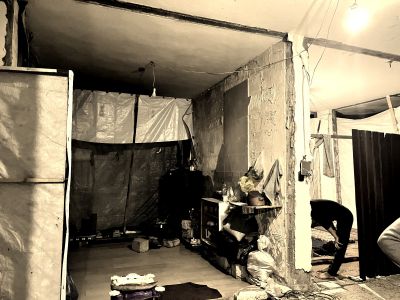
After months of treatment in Egypt, Rayyan was eventually able to walk again. And on Thursday, she, her mother and her children were among a small number of Palestinians allowed to return to Gaza after Israel reopened the Rafah border crossing, largely shut since the start of the fighting in October 2023.
"I long to return to my homeland, despite everything that happened ... and despite the fact that I will be returning to live in a tent," Rayyan, who fled the bombing in March 2024, told Reuters from Egypt before crossing back into the Strip on Thursday.
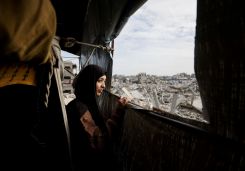
Reuters followed her journey from the Egyptian town of al-Arish, where thousands of Palestinians have taken refuge. Her children — Hanan, 8, Ezz, 5, and Mohammad, 4 — grinned from ear to ear as they packed their suitcases with blankets and winter coats.
Hanan put a bow in her hair in anticipation of the reunion with her father. "We are going to Gaza!" the kids chanted excitedly before heading off towards the border.
'No building is standing'
Rayyan and her children left midday on Thursday for the Rafah crossing, about 50 kilometers from al-Arish. Once there, they would have to clear three checkpoints: one run by Egypt, another by Palestinian and European officials, and a third by Israeli security forces.
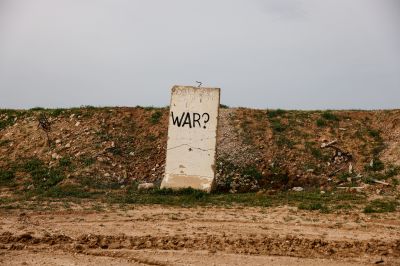
A bus would then carry them from Rafah, which Israeli forces have destroyed and depopulated after retaining control of the town following the October cease-fire deal, to the city of Khan Younis in the southern part of the Gaza Strip.
It was nearly midnight when Rayyan and her family arrived in Khan Younis, her husband Ahmed eagerly waiting. The two held each other in a long embrace. Ahmed kissed and hugged his children. The girl, Hanan, clung to her father's leg.
Rayyan said she knew much of Gaza had been demolished in the war but that re-entering still shocked her to the core.
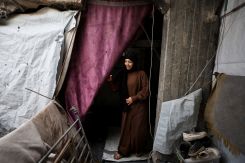
"No building is standing," Rayyan said. "Everything is destroyed. There is no electricity, there is nothing."
Their family used to have a large house in al-Saftawi, a district near Gaza City in the north, but Israel destroyed it, Ahmed said. They would now live together in a tent in a tented city near Gaza City.
"I tried in every possible way and managed to get three mattresses for five people to sleep on," Ahmed said.
'Life in Gaza is still beautiful'
The Rafah crossing is the only exit and entry point for nearly all of Gaza's more than 2 million residents. Its limited reopening on Monday Feb. 2 was a key element of U.S. President Donald Trump's plan to end the Israel-Hamas war.
Around 50 people had been expected to cross in each direction daily, but the actual numbers have been far fewer. On Thursday, only 21 Palestinians, including Rayyan and her children, re-entered Gaza, according to enclave authorities.
Those who have crossed back into Gaza say they were harassed and interrogated by Israeli forces and members of a local gang backed by Israel.

"There were some people [who were traveling] with us, like young men, they abused them — for example, they tied their hands, blindfolded them, humiliated them, they kept interrogating them," Rayyan said.
She said many people had asked her why she would want to leave Egypt for isolated, rubble-covered Gaza, where food and water are scarce, most of the population is displaced and frequent ceasefire violations have killed hundreds of people.
"It is true that life in Egypt was good, everyone was kind to us," Rayyan said.
"But still, you long for your country, your family, your relatives, your husband, your life. Being away from home is hard. Life in Gaza is still beautiful, even though it's been destroyed."
 Israeli army carries out demolition at Jabal Amel School in Houla as strikes continue