





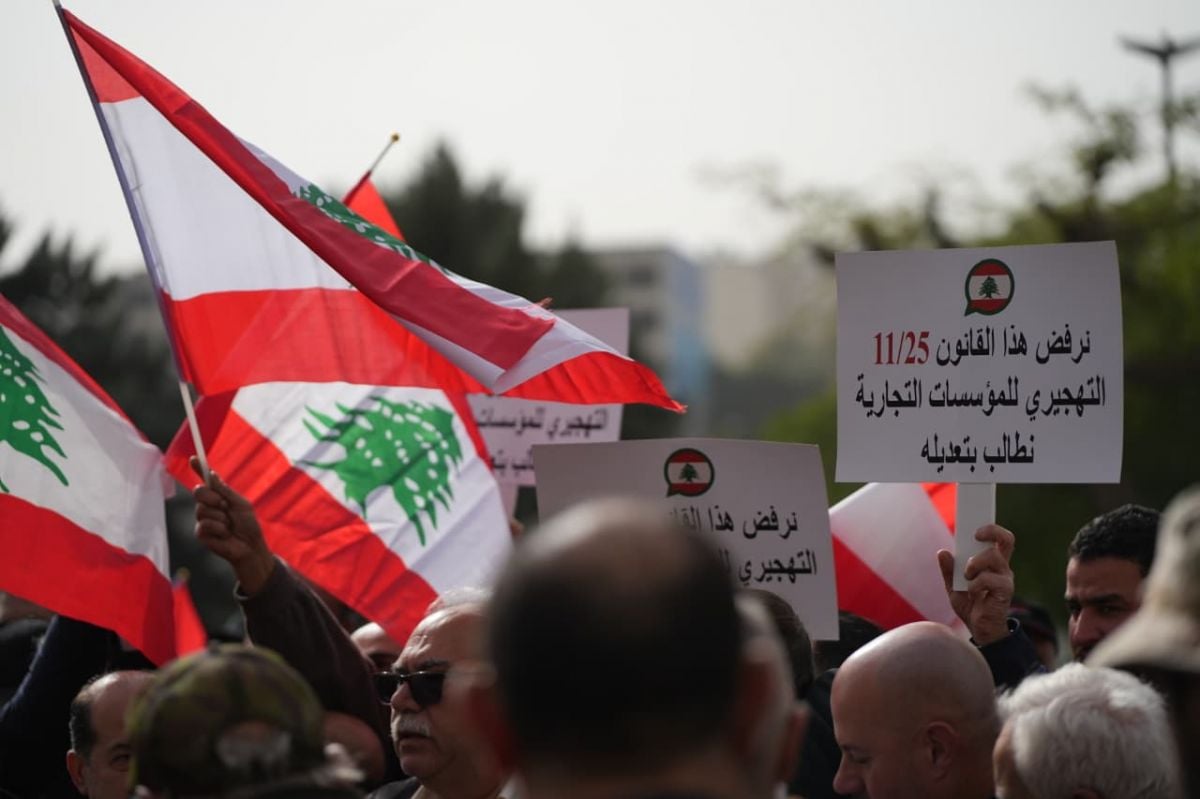
Demonstration outside Parliament against the 2026 budget bill being examined by lawmakers, Jan. 27, 2027. (Credit: Mohammad Yassin/L'Orient-Le Jour)






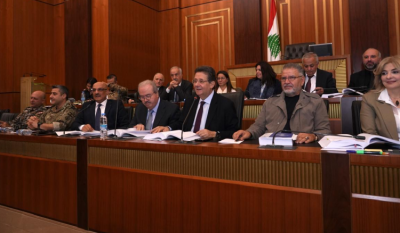
Thousands of protesters demonstrated Wednesday outside Parliament against the 2026 budget bill, which lawmakers are reviewing this morning and are expected to put to a vote after three days of deliberations.
Retired military personnel, public employees, public school teachers, and tenants are seeking improvements to their salaries or retirement pensions, which have been significantly outpaced by Lebanon's soaring inflation since the economic crisis began in 2019.
At Martyrs’ Square, dozens of retired soldiers, some joined by their families, were gathered in front of the al-Amin Mosque, where the army was deployed. "A soldier who served for more than 23 years can't survive without going into debt," lamented Majid Harb, who came from Rashaya.
The man now receives only $280, even though he's the father of three children. "I'm in debt, and now I work in construction. I had to learn this work. They've undermined all our rights," he said.
"We have nothing left. The 2019 crisis completely changed our lives," Hana’a Matar, from Ain Baalbeck, whose husband is also a retired soldier, told our reporter on site. "The state ignores us. We feel like we're not the children of this country. We pay electricity, water, and other bills, and we don't get any of it," added Amal Sbat, who came from the Bekaa region.
Retired soldiers blocked part of the Chekka highway in northern Lebanon with burning tires on Tuesday morning, just hours before the parliamentary session, our correspondent reported.
'My biggest fear is retirement'
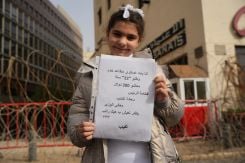
At Riad al-Solh, dozens of public school teachers called for salary adjustments.
Shadia, an English teacher and mother of two, is struggling to provide for her family's "basic needs." "My biggest fear is retirement. I'm afraid of the amount I'll receive," said the woman from Choueifat.
Bufayna, 42, an Arabic teacher and mother of two — one of whom has special needs and cannot enroll in a specialized institute because her salary is too low — echoed the sentiment. The 40-something is calling for a salary adjustment for retirement purposes.
In front of Parliament, tenants also criticized the commercial lease law passed by Parliament last year. "The rent law is void," "You have humiliated us," "We are closing down because of this law," chanted the protesters.
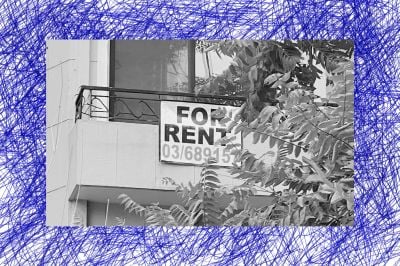
This law applies to leases for shops, offices, factories, and so forth, signed before 1992. It provides for a gradual liberalization of rents over a maximum period of four years from its entry into force. After a prolonged freeze during which rents became negligible because of inflation and currency devaluation, the landlords concerned have welcomed the law, while tenants harshly criticize it, arguing that higher rents threaten their economic survival.
Public sector pay remains one of the most urgent challenges in Lebanon. Wages have been far outpaced by inflation, while the civil service is often criticized for its size, inefficiency, and cost. Before the country’s economic collapse, salaries accounted for about a third of the state budget — roughly $15 billion — for a workforce estimated at 200,000 to 300,000 employees, including the armed forces.
