





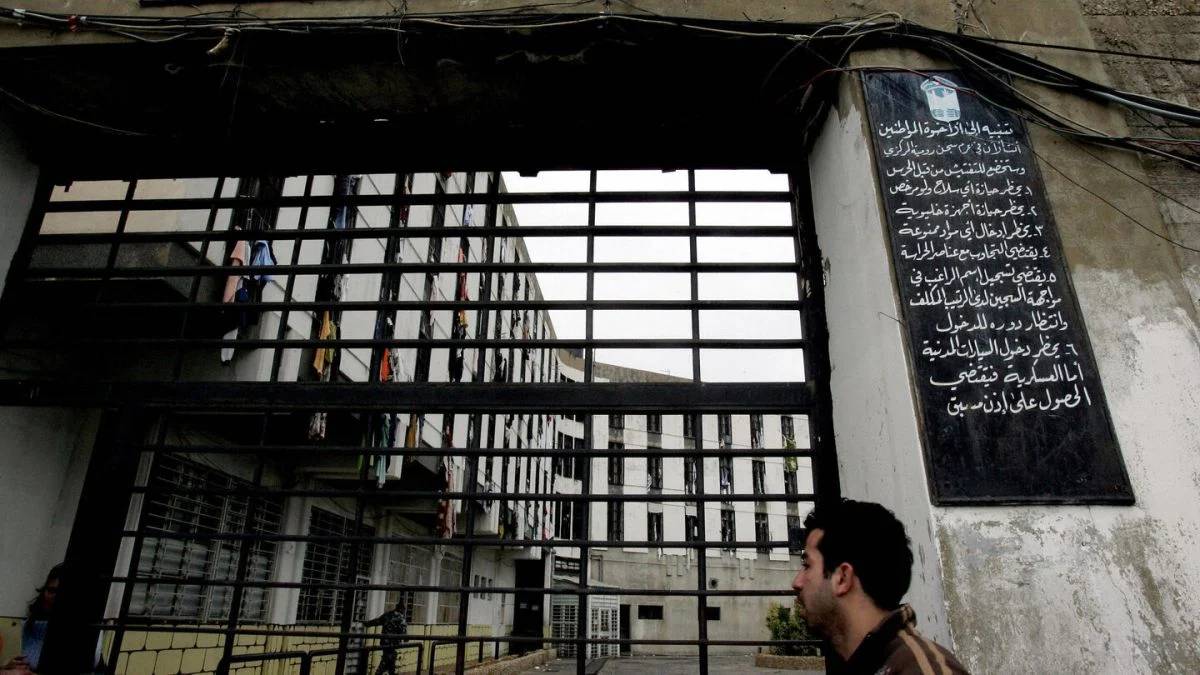
A Lebanese man arrives at Roumieh Prison, northeast of Beirut, to visit an inmate on April 7, 2006. (Credit: Ramzi Haidar/AFP)






The Internal Security Forces (ISF) on Tuesday denied any outbreak of tuberculosis, cholera or any other epidemic at Roumieh prison, after information circulated since late December about the deaths of two inmates one week apart.
These deaths had been portrayed online as likely linked to tuberculosis infection in the country’s largest detention center, located northeast of Beirut. The police say comprehensive medical tests came back negative, but nonetheless highlight 'dangerous practices.'
The ISF General Directorate said that one of the deceased inmates, H.B., a Palestinian national born in 1986, had been examined on Dec. 27, 2025, by the on-call doctor before being transferred to the hospital due to "general weakness and repeated vomiting." He died shortly after as a result of "an acute and sudden heart attack."
The statement specifies that "the autopsy concluded there was a sudden cardiac arrest, while laboratory tests were negative for any illicit substance use or infection with tuberculosis or cholera." Investigations by the ISF also found that "H. B. engaged in dangerous practices consisting of re-injecting his own blood mixed with crushed medication, leading to cardiac and pulmonary complications." Two other inmates using "the same practice presented themselves to the prison administration after the death," fearing for "their health," the statement added.
The ISF also said that specialized teams from the Ministry of Health reviewed the medical records at the end of December of inmates transferred to the hospital with cough or other symptoms, as well as conducted chest X-rays and screening tests for anyone displaying symptoms, and detected no outbreak. They further stressed that no transmission of tuberculosis, cholera or any other contagious disease has been found at Roumieh prison, adding that the investigation is ongoing under the supervision of the competent judiciary.
However, the ISF did not mention the second deceased inmate, Lebanese national M.H., who shared the same cell as H.B., according to attorney Mohammad Sablouh, who is following the inmates' case. "According to some inmates at Roumieh, M.H. was coughing up blood before his death. H.B. died a few days later. Either they were actually sick, or they died from an overdose — both are scandals," the lawyer said.
Inmates in Lebanese prisons often endure deplorable conditions due to chronic overcrowding and lack of basic needs or access to health care. Many remain behind bars for years, awaiting trial. Roumieh prison was designed to hold 1,200 inmates. A human rights report published in 2023 stated it then housed around 4,000 prisoners, in precarious conditions often denounced by inmates' relatives.

 Evening recap: Netanyahu announces West Bank offensive; 7 killed in Jordan church shooting; tents burned in south Lebanon
 US strike on Iran this weekend? ‘Absolutely,’ says Barrack; ‘I have no idea,’ says Trump