





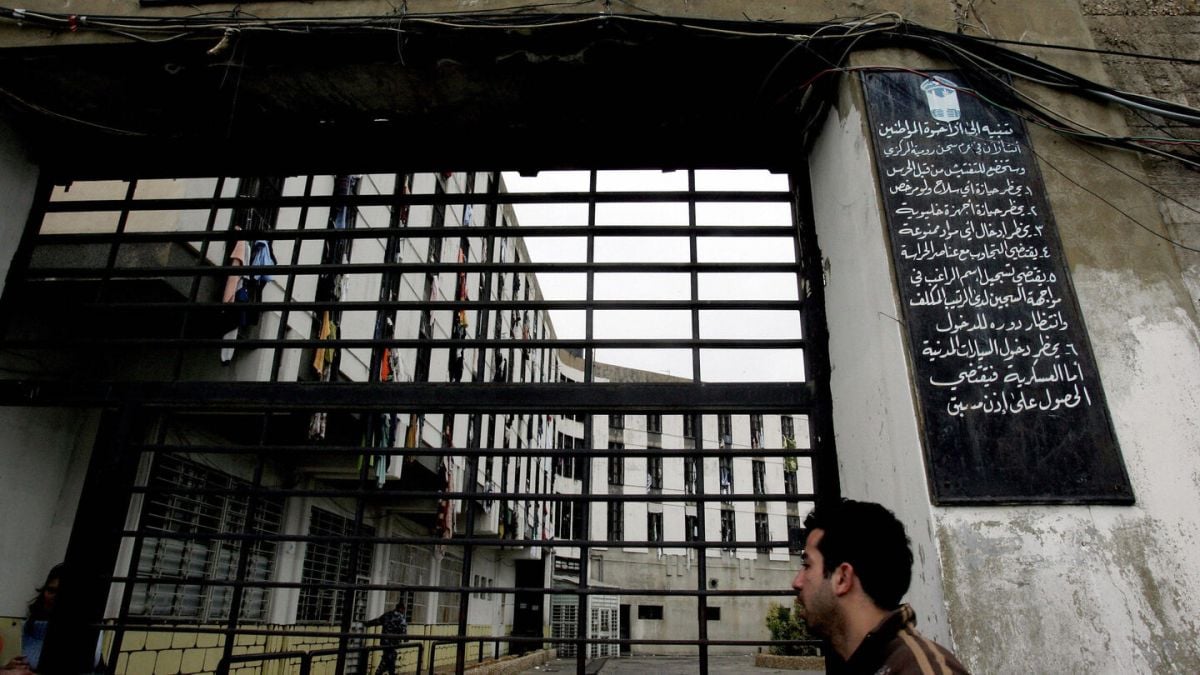
A Lebanese man arrives at Roumieh prison, northeast of Beirut, to visit an inmate on April 7, 2006. (Credit: Ramzi Haidar/AFP)






Information circulating online since last week reports the death of two prisoners in Roumieh prison, Lebanon’s largest, after they had apparently contracted tuberculosis.
According to posts on Facebook groups run by inmates’ relatives, around ten cases are said to have been reported inside the detention center, located northeast of Beirut and notorious for its deplorable sanitary conditions.
While the Internal Security Forces (ISF) have confirmed the recent deaths of the two prisoners, they told L’Orient-Le Jour that these deaths are not linked to a tuberculosis outbreak at the prison.
"We are trying to determine the cause of these deaths. We are looking into whether the inmates consumed something that led to their deaths," explains a source within the ISF.
According to the source, teams from the Health Ministry recently visited the site and found no evidence of tuberculosis.
'The prison situation is catastrophic'
The deceased prisoners, Lebanese national Mahmoud Hakim and Palestinian Hamza Balbasi, shared the same cell, according to lawyer Mohammad Sablouh, who closely follows the cases of the prison's detainees.
"According to some inmates at Roumieh, Mahmoud Hakim was coughing up blood before his death. Hamza Balbasi died a few days later. Either they were truly sick, or they died of overdoses, which is a scandal in either case," the lawyer said indignantly.
According to him, three other prisoners showing similar symptoms were isolated in a basement room. "The situation in the prison is catastrophic," Sablouh added, denouncing the venue’s "filth and overcrowding."
Father Najib Baaklini, president of the Justice and Mercy Association (AJEM), told L’Orient-Le Jour that his teams working with Roumieh inmates "have not heard of any such outbreak."
Meanwhile, the Mufti of the Republic, Abdellatif Derian, the top Sunni authority, announced Tuesday the creation of a committee dedicated to supporting prisoners and their families "in religious, scientific, health, and social matters."
This committee aims to "work on the reintegration of prisoners and support for their families through financial, educational, and health assistance," according to the state-run National News Agency (NNA).
Detainees in Lebanese prisons often endure deplorable conditions resulting from chronic overcrowding and the failure to meet their basic needs or provide access to healthcare.
Many remain behind bars for years awaiting trial. Roumieh prison was designed to accommodate 1,200 inmates. A human rights report published in 2023 stated that it was then holding about 4,000 prisoners, living in precarious conditions often condemned by inmates’ relatives.
At the end of October, a prisoner hanged himself in his cell at Roumieh. Last September, a minor took his own life in a rehabilitation center for young offenders in Warwar, Baabda district. Two months earlier, a 40-year-old Syrian national, who had been in custody for around two and a half years without trial, also ended his own life.

 Evening recap: Netanyahu announces West Bank offensive; 7 killed in Jordan church shooting; tents burned in south Lebanon
 US strike on Iran this weekend? ‘Absolutely,’ says Barrack; ‘I have no idea,’ says Trump