






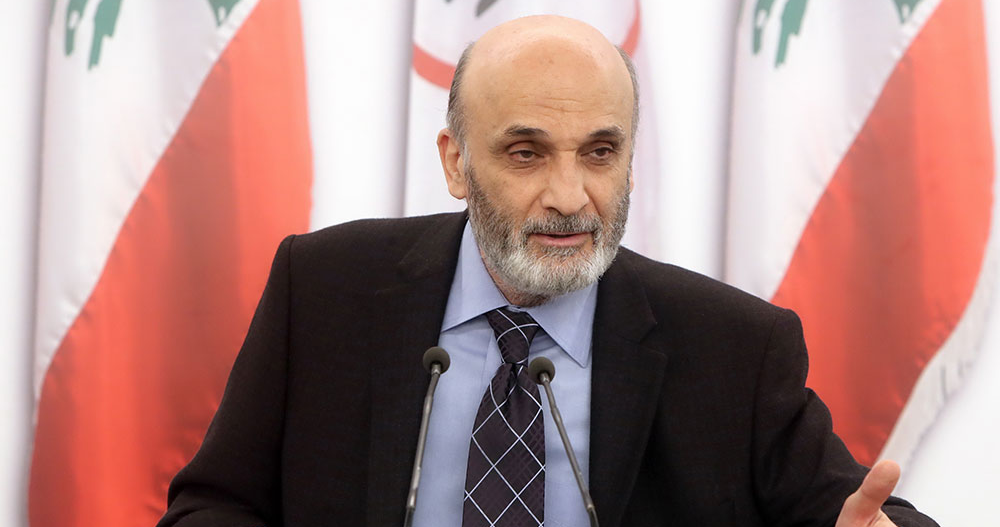
The leader of the Lebanese Forces, Samir Geagea. (Credit: Archive photo/NNA)






BEIRUT — The “Strong Republic” bloc of the Lebanese Forces said Tuesday that it held a lengthy remote meeting to prepare amendments to the financial stabilization and deposit repayment law, known as the “financial gap law,” adopted in late 2025 and now awaiting parliamentary review.
Reiterating its opposition to the text approved by the executive, the bloc tasked MP Georges Adwan, chairman of the Parliamentary Administration and Justice Committee, with contacting the Banque du Liban and the Finance Ministry to obtain data to accurately determine each party's responsibilities.
"The only correct approach to adopting this law is to clearly define the responsibilities of each party so that everyone assumes their obligations to cover the deficit, whether it is the Lebanese state, the Banque du Liban, or the banking sector, while also specifying the amounts, commitments, repayment mechanisms, the required timeframe, and the guarantees ensuring this repayment," the bloc said in a statement relayed by the state-run National News Agency (NNA).
The bloc also emphasized "the necessity and importance of the swift adoption [of the law] to protect the rights of all depositors without exception, within a reasonable timeframe, with the goal of restarting economic activity and establishing a sound banking system."
Stalled almost since the beginning of the crisis, the draft law has attracted much criticism and many reservations, notably from the banking sector.
On Monday, the Association of Banks in Lebanon denounced a text that seeks to "liquidate the banking sector" and "destroy the national economy." Since the start of the crisis, the banks have advocated for a solution in which the state bears the bulk of the tens of billions of dollars in losses accumulated by the Lebanese financial system, arguing that the crisis is systemic.
Their opponents argue that the banks cannot rely on this defense, given that they massively placed depositors' money with the Banque du Liban and in other state debt in dollars — highly remunerated — despite early signs of the system's fragility.
The International Monetary Fund, which Lebanon approached after the 2020 default on eurobonds, considers that banking restructuring must first require contributions from core shareholders before considering any concessions or haircuts imposed on depositors.
