






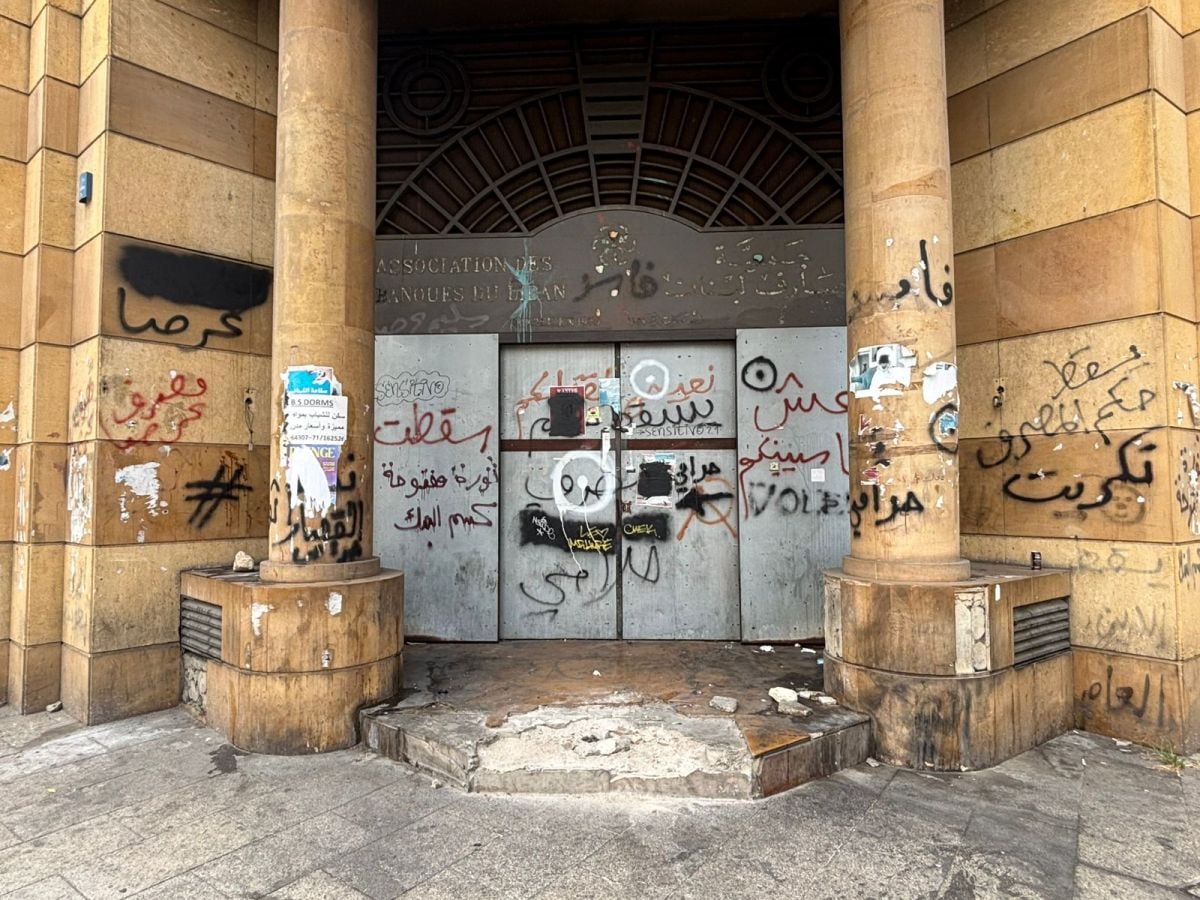






BEIRUT — The Association of Banks in Lebanon (ABL) once again denounced on Monday the draft law on financial stabilization and the reimbursement of deposits (FSDR), commonly referred to as the “financial gap law.”
The organization accused the bill of seeking to “liquidate the banking sector” and “destroy the national economy,” more than six years after the outbreak of Lebanon’s economic and financial crisis.
The association’s statement was issued following a meeting dedicated to reviewing the draft law approved by Cabinet on Dec. 26 and sent to Parliament three days later.
However, it has not yet been put to a vote. The text is at the center of particularly heated debates, with several stakeholders — chief among them the banking lobby — strongly opposing it.
In the past, the ABL had slowed efforts to reach a consensus on the distribution of losses, describing the crisis as “systemic” and calling on the state to bear the bulk of the burden—a stance widely seen as an attempt to shield banks from absorbing significant losses.
International standards, particularly those of the International Monetary Fund — with which Lebanon is still negotiating a financial assistance program — are nevertheless clear on the sequencing of restructurings: losses should first be absorbed by shareholders, through the wiping out of banks’ equity, before determining the respective shares to be borne by the state and by depositors.
While reaffirming its support “for the principle of adopting a law more than six years after the start of the crisis,” the ABL nonetheless raised a series of objections, arguing that the text violates several “constitutional principles,” notably the inviolability of ownership of deposits and the principle of equality in the distribution of public burdens.
The ABL claims that a substantial share of the “financial gap” caused by the Banque du Liban (BDL) and the state is being shifted onto “a single segment of society,” namely the banking sector.
“The draft law was prepared without any serious study of the figures necessary for its implementation,” the association said, adding that its adoption should have been preceded by a comprehensive assessment of the size of the “financial gap” and its impact on the BDL and commercial banks.
The association also believes that the guarantees granted to depositors mentioned in the text “may not be honored.”
Furthermore, the ABL accused the Lebanese state of shirking its responsibilities, arguing that it has been “the main beneficiary of the crisis.”
Salam and CGTL meeting
By contrast, the head of the General Confederation of Lebanese Workers (CGTL), Beshara al-Asmar, welcomed the draft law.
“We reaffirmed our positive assessment of this project, as it is the first serious text to follow a clear legal path since 2019,” he said after a meeting on Monday with Prime Minister Nawaf Salam.
According to the trade unionist, the text “guarantees the repayment of deposits — even if spread over a maximum period of four years, or less — for around 85 percent of the Lebanese population, including military personnel, civilians, retirees, workers, the most disadvantaged, and low-income individuals.”
