


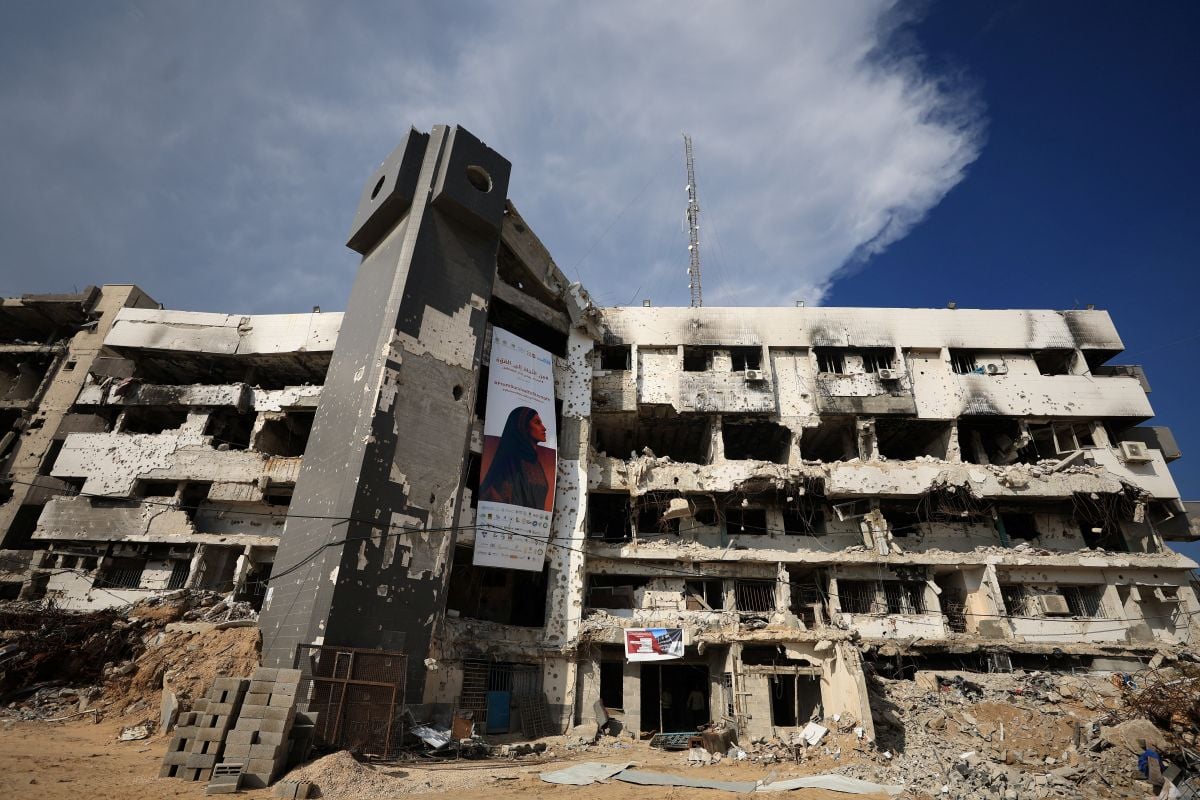
The medical complex of al-Shifa hospital, heavily damaged by Israeli strikes during the war, on December 15, 2025, in Gaza City. Dawoud Abu Alkas/Reuters The Al-Shifa Medical Complex, which was heavily affected during the war, stands amid ongoing shortages of medical equipment and supplies in Gaza City, December 15, 2025. REUTERS/Dawoud Abu Alkas






A new U.S. reconstruction plan for Gaza, dubbed “Project Sunrise,” and subtitled “Building a new and unified Gaza,” envisions luxury resorts, high-speed rail, and AI-optimized energy networks for the Palestinian enclave, but faces major hurdles as Hamas refuses to fully disarm and Israel hesitates to withdraw, according to a Wall Street Journal (WSJ) report. The plan, only a draft “subject to revisions,” is labeled “sensitive but not confidential,” and aims to transform Gaza into a regional Riviera, reviving President Donald Trump’s controversial postwar vision first proposed last February.
An investors’ project
The 32-slide PowerPoint plan, reviewed by the WSJ, makes no mention of the more than two million Palestinians living in Gaza. Instead, it envisions luxury resorts, large modern buildings, a high-speed rail network, and AI-optimized energy systems.

The plan was prepared by two of Trump’s confidants: his Middle East envoy, real estate developer Steve Witkoff, in charge of the Gaza portfolio, and his son-in-law Jared Kushner, head of Affinity Partners, a private equity firm with notable Gulf funding. White House adviser Josh Gruenbaum, a Federal Acquisition Service commissioner, and other U.S. administration representatives also helped design the project in 45 days, reportedly with input from Israeli officials and private-sector actors.
Altogether, Project Sunrise is estimated to cost $112.1 billion over 10 years, including humanitarian aid, particularly in the early years, and salaries for civil servants. Nearly $60 billion would be funded through aid ($41.9 billion) and debt ($15.2 billion), with contributions from the World Bank and the United States, which is reportedly willing to cover 20 percent or more. The plan envisions the enclave eventually self-financing these projects once local industry and the economy develop. Anticipated long-term returns could exceed $55 billion, with profits potentially realized after 10 years. The project is to be updated and figures revised, roughly every two years, according to the WSJ.

While the plan does not specify which companies or countries would fund reconstruction, it has been presented to potential donor states, including wealthy Gulf monarchies, Turkey and Egypt, U.S. officials told WSJ.
Witkoff, Kushner and Gruenbaum met with Egyptian, Qatari and Turkish mediators on Friday, Dec. 19, in Miami to discuss the next steps for the Trump plan.
Concrete obstacles to implementation
Implementation faces serious challenges. Israeli attacks continue in Gaza — six people were killed last Friday in a school sheltering displaced persons — and Hamas has yet to fully surrender, particularly in terms of disarmament. “You won’t convince anyone to invest money in Gaza if they think there will be another war in two or three years,” Secretary of State Marco Rubio warned on Dec. 19, suggesting that Hamas’ disarmament could be limited to heavy weapons. Full dismantling of Hamas’ arsenal and tunnels remains a prerequisite for the reconstruction plan.
While some U.S. officials are skeptical of Project Sunrise under these conditions, others believe the Trump vision of a Gaza Riviera could lift the enclave out of underdevelopment and its persistent humanitarian crisis. Although international aid is included in the plan, the amount currently reaching Gaza remains insufficient, despite the international food insecurity index being downgraded this week from famine to acute malnutrition since the cease-fire on Oct. 10.
Beyond political and security conditions required to achieve sustainable stability and realize such a vision, the physical devastation in Gaza presents enormous challenges. Most of the enclave is destroyed; tens of millions of tons of debris must be cleared; nearly 10,000 bodies remain reportedly buried under rubble; the land is contaminated with toxins; and unexploded bombs litter the territory. Reconstruction would begin with clearing debris and ordnance, neutralizing Hamas’ tunnels, and providing temporary shelters, field hospitals and mobile clinics, before moving on to permanent construction of healthcare facilities, schools, places of worship, roads, power lines and more.
Once security conditions are met, the project could launch within two months, U.S. officials said. The plan is divided into four phases, starting in the south at Rafah and Khan Younis, then moving to northern camps and finally Gaza City. On a map released by the WSJ, a strip along Gaza’s border with Israel and Egypt remains unplanned, suggesting the formation of a “security perimeter” where Israeli forces would withdraw “until Gaza is properly protected against any resurgent terrorist threat,” according to the Trump plan.
 Israeli army carries out demolition at Jabal Amel School in Houla as strikes continue