





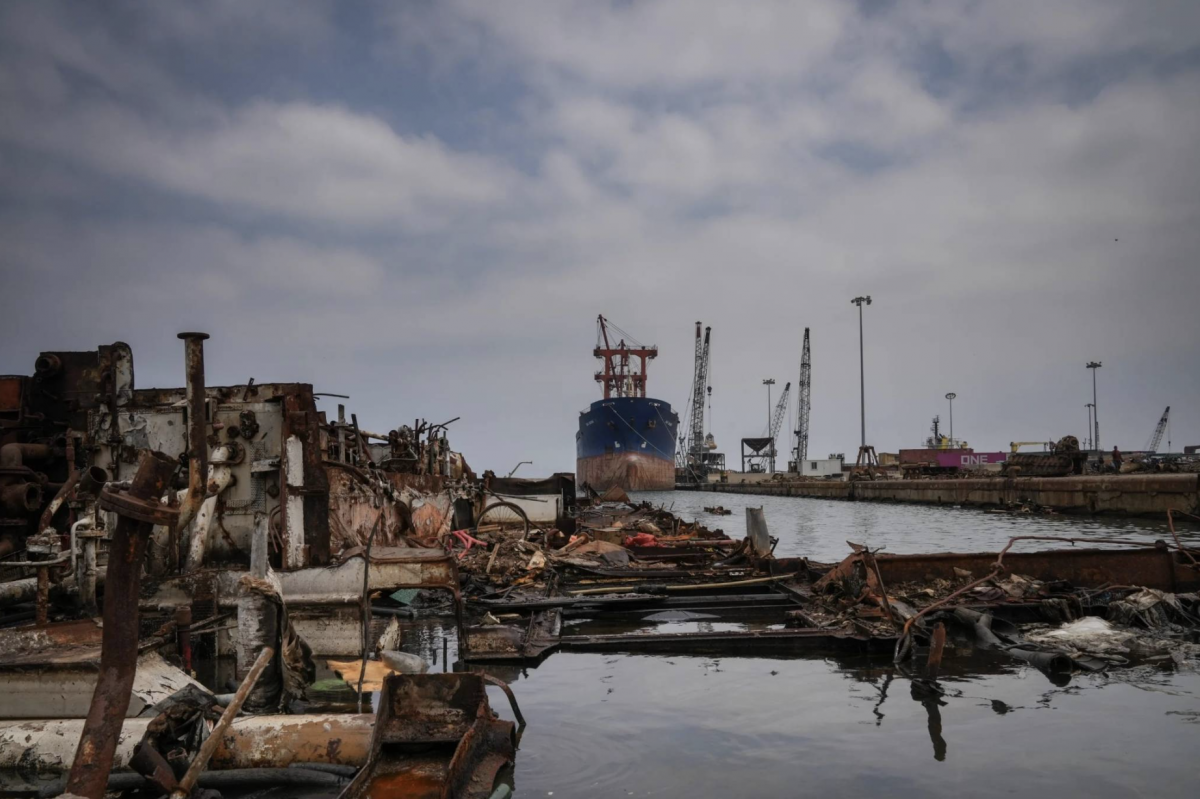
Debris from the port of Beirut, June 27, 2024. Photo Mohammad Yassine / L'Orient-Le Jour Capturedecran2025-12-10a15439PM_124421_673301






Beirut’s port blast captain said he warned Lebanese authorities about the dangers of storing ammonium nitrate, six years before the deadly August 4, 2020 explosion, as the investigating judge returned from a failed attempt to question the ship’s owner abroad.
Tarek Bitar, the investigating judge leading the probe into the Beirut port double explosion, returned Friday from Bulgaria without obtaining testimony from Igor Grechouchkine, the owner of the Rhosus — the ship that carried the ammonium nitrate at the heart of the Aug. 4, 2020, explosion.
Meanwhile, the vessel’s captain, Boris Prokochev, spoke Saturday to UAE-based news channel Al Mashhad. Prokochev said he was “surprised” when Lebanese authorities unloaded the ammonium nitrate into a port warehouse, claiming that he had warned about the risks of storing such chemicals. He also said he was “shocked” to have witnessed similar cargo being offloaded at the site.
In a phone call with Al Mashhad, Prokochev recalled that the Rhosus was originally destined for Mozambique but had stopped in Beirut “in an emergency” at the owner’s request. Grechouchkine, citing an inability to pay Suez Canal transit fees, allegedly asked the crew to pick up extra cargo. Prokochev refused, and the owner ultimately “abandoned” the ship, leaving the crew unpaid for 10 months, the captain explained.
Prokochev stated further that the responsibility lies with those who kept these products stored for all those years. "No one explained to me in what way I am responsible for the port explosion," he said.
In October 2020, Bitar’s predecessor, Fadi Sawan, issued arrest warrants for both Grechouchkine and Prokochev, with Interpol issuing red notices against them months later. Prokochev is no longer listed on Interpol’s site.
Grechouchkine, 48, a Russian-Cypriot, was arrested Sept. 5 at Sofia Airport based on an Interpol notice. Lebanese authorities are prosecuting him for “bringing explosives into Lebanon, a terrorist act causing the deaths of a large number of people, and disabling equipment with the aim of sinking a ship,” according to Bulgaria’s prosecutor’s office. Bitar had traveled to Bulgaria seeking information about the ammonium nitrate cargo, including who ordered it and its intended destination, but Grechouchkine refused to answer questions, a Lebanese judicial source confirmed.
The Aug. 4, 2020 explosion, one of the most powerful non-nuclear blasts in history, killed more than 235 people, injured thousands and devastated entire neighborhoods of Lebanon’s capital.

 Evening recap: Netanyahu announces West Bank offensive; 7 killed in Jordan church shooting; tents burned in south Lebanon
 US strike on Iran this weekend? ‘Absolutely,’ says Barrack; ‘I have no idea,’ says Trump