






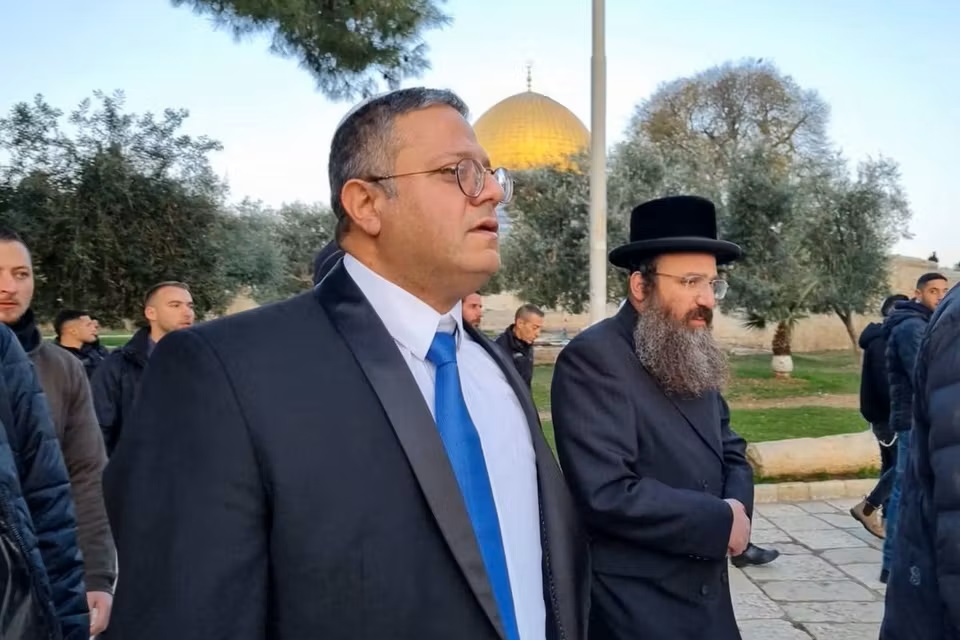
Israeli minister Itamar Ben-Gvir at the al-Aqsa mosque in Jerusalem on Jan. 3, 2023. (Credit: Minhelet Har-Habait/AFP)






BEIRUT — Israeli National Security Minister Itamar Ben-Gvir vowed Thursday to destroy the grave of Arab nationalist activist Ezzedine al-Qassam, who is buried in Israel and whose name was given to Hamas’ armed wing.
The minister, known for his controversies, posted on X a video showing him accompanying security forces as they dismantled a prayer tent next to the tomb of the activist of Syrian origin, who fought in Palestine before the creation of Israel in 1948.
Ben-Gvir, a leading figure of Israel's far right, wrote that Quassam's grave in Nesher "must be removed" and that "yesterday at dawn, we took the first step"
He had already called in August during a parliamentary debate for the demolition of the tomb of this forerunner of Palestinian nationalism, who was killed in a shootout with British soldiers in 1936.
Hamas condemned in a statement what it called an "unprecedented violation of holy sites" and an "attempt to erase the memory of a nation." "Extremism has become an official government policy, requiring an international stance to stop this barbarity," commented Hamas official Mahmoud Marawi, quoted in the statement.
The grave of Qassam, near Haifa, has been vandalized several times over the decades by extremists. Qassam is regarded as one of the pioneers of armed resistance against British rule and the Zionist movement in British Mandate Palestine.
According to the right-wing Israeli daily Israel Hayom, security forces also removed surveillance cameras around the gravesite and arrested a person responsible for the location.
Contacted by AFP, police said they were not involved and referred questions to the authority in charge of cemeteries.
Ben-Gvir, leader of the Jewish Power party, is known for his incendiary and often provocative statements.
Earlier this week, Israeli media reported on him wearing a golden noose lapel pin in the Knesset, the country’s parliament.
A statement from his office said the brooch is a symbol of support for a bill to introduce the death penalty for Palestinian "terrorists," which is currently being considered by lawmakers.
Several lawmakers, including opposition leader Yair Lapid, condemned the wearing of this pin.

