


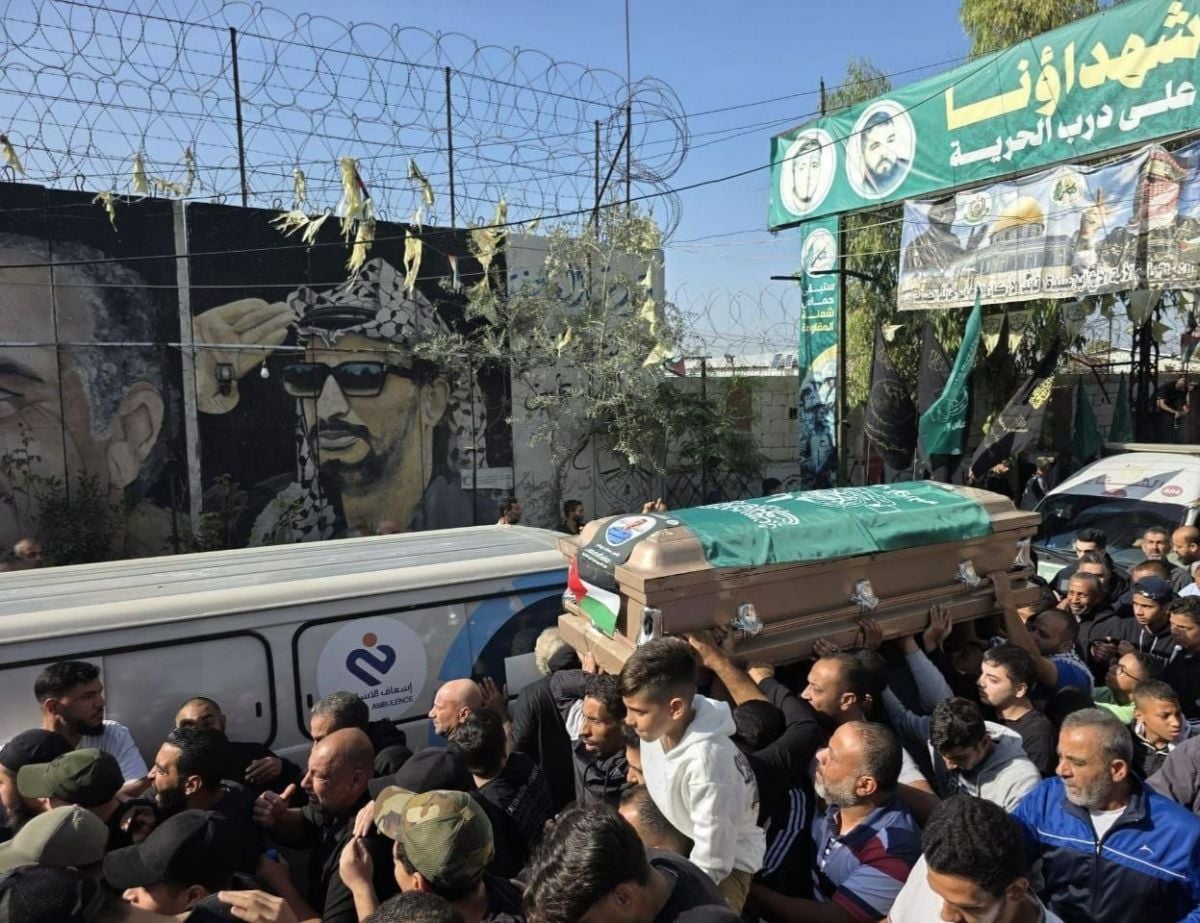
The coffin of one of the 13 Palestinian teenagers killed in the Israeli strike on Ain al-Hilweh on Tuesday is brought into the camp during a public funeral procession on Nov. 20, 2025. (Photo credit: Muntasser Abdallah/L'Orient Today)






The funerals for the 13 Palestinian teens, all aged either 16 and 17, killed Tuesday night in three Israeli strikes targeting a football field in the Ain al-Hilweh refugee camp in southern Lebanon, took place Thursday at 3 p.m., after the afternoon Muslim prayer, according to our correspondent in the region.
The bodies were transported from the Hamshari Hospital, managed by the Palestinian Red Crescent outside the camp, in 13 ambulances belonging to the al-Shifaa organization. Each vehicle displayed a photo of one of the victims.
At the camp entrance, the convoy was met by a large crowd and scouts, amid songs and music, and flowers were laid in tribute to the dead. The ambulances drove through several neighborhoods around the city of Saida before entering the camp.
'They killed kids': Ain al-Hilweh in shock after Israeli strikes killed 13 youths
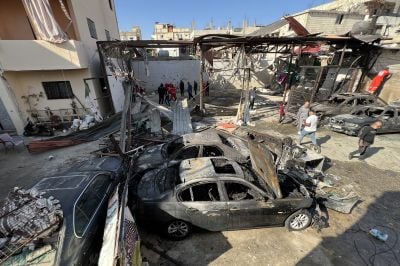
The families of the victims held private condolences at their homes prior to prayers and collective ceremonies. Shops and schools remained closed as a sign of mourning. The coffins were draped in Palestinian and Hamas flags, while angered chants and calls echoed, reports our correspondent. The burial was held at Darb al-Sim cemetery inside the camp.
Commenting on the Hamas flags placed on the coffins, Israel's Arabic-language army spokesperson, Avichay Adraee, said the movement "made no effort to hide its actions."
Later in the day, France said it was "concerned" by the intensification of Israeli strikes, a representative of the French Foreign Ministry told Reuters. "We are concerned by this intensification of Israeli strikes in southern Lebanon. We condemn strikes that kill civilians in the south. Our position is to respect the cease-fire that went into effect on Nov. 27, 2024," the spokesperson added.
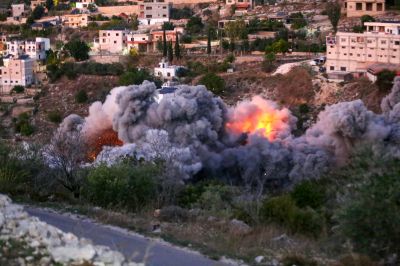
A year after the truce brokered by the United States and France between Israel and Hezbollah went into effect, tensions remain high. The Israeli state pounded southern Lebanon on Wednesday, hitting several localities after issuing warnings and evacuation calls online.
The Israeli army still occupies at least six hilltops on the Lebanese side of the border and continues near-daily strikes — in this region and in the Bekaa.

 1 p.m. recap: Salam in Nabatieh; up to 10,000 more US troops heading to Middle East