


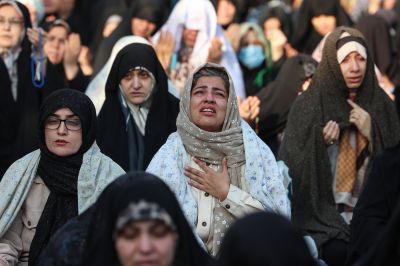
Iranian women pray for rain at the Saleh Shrine in Tehran on Nov. 14, 2025, as the country faces a severe water shortage. (Credit: AFP)






The head of Iran’s judiciary, cleric Gholamhossein Mohseni Ejei, has called on his institution to take stronger action against “social anomalies,” local media reported, in a country where the mandatory wearing of the headscarf is increasingly ignored.
Under rules imposed after the 1979 Islamic Revolution, all women in Iran must cover their hair with a hijab (headscarf) in public and wear modest, loose-fitting clothing. However, in major cities, especially Tehran, many women now openly go out without a headscarf, wearing jeans and sneakers. Some even choose low-cut tops or light clothing that exposes their midriff — outfits that would have been unthinkable in Iran just months ago.
“I have ordered the Attorney General and all prosecutors in the country to instruct security and police forces to identify … social anomalies,” said Gholamhossein Mohseni Ejei, accusing these new trends in Iran of being “organized” deliberately under “foreign influence” as part of “a war of infiltration.” He added, “One of the enemy’s efforts is expressed in the issue of nudity and failure to comply with the hijab,” as cited Friday by Etemad newspaper and Fars news agency. The term “nudity” generally refers to clothing deemed inappropriate.
This phenomenon has become more visible in Iran since the protests that erupted following the death in custody of Mahsa Amini in September 2022. The young woman had been arrested by the morality police for allegedly violating the dress code.
“We certainly cannot force women to wear the hijab,” said government spokeswoman Fatemeh Mohajerani last month, echoing President Massoud Pezeshkian, and drawing criticism from conservatives. Last year, her administration refused to enact a law that would have drastically increased penalties for women not wearing the headscarf.
In recent months, authorities have closed several cafes and restaurants for violations of the mandatory hijab or for serving alcohol, which is banned in Iran. “The hijab is the first bulwark of Iranian women’s Islamic identity. If this bulwark collapses, other cultural and heritage elements will gradually fall,” warned the ultra-conservative newspaper Kayhan on Thursday.
Hundreds of people, including dozens of security forces members, were killed during the 2022 nationwide protests, and thousands of demonstrators were arrested.
 The 7 p.m. recap: Houthis advance, government announces counteroffensive; Iran raises stakes; Israeli shells hit close to journalists in south Lebanon
 2 Israeli soldiers injured in 'operational accident,' as army continues attacks in the South