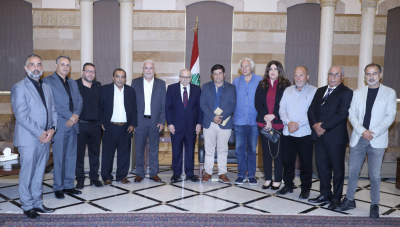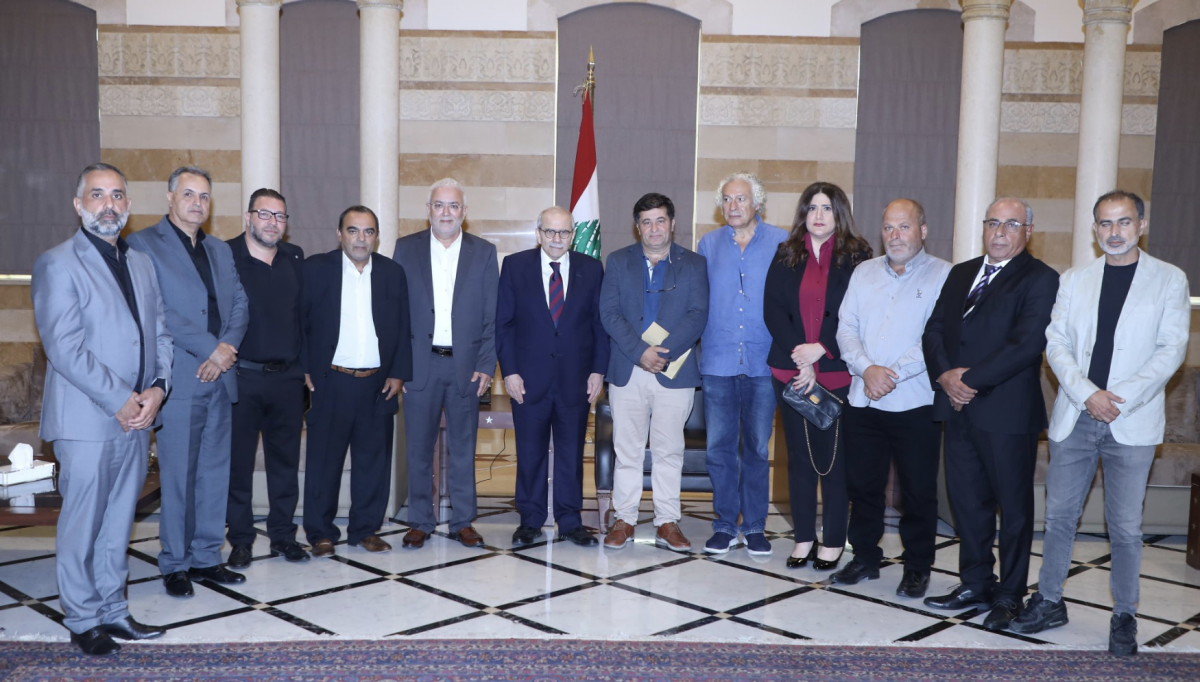
Prime Minister Nawaf Salam receives a delegation from the Gathering of Residents of Southern Border Localities at the Grand Serail on Nov. 5, 2025. (Photo posted on the Grand Serail’s X account: @grandserail)






Prime Minister Nawaf Salam has stated that the government "has completed the list of infrastructure and basic service projects in the southern regions," which he hopes will be realized "as soon as possible," noting that "reconstruction is a national priority for the entire government," according to a post Wednesday from the Grand Serail on its X account.
These projects "are ready to be launched as soon as the expected funding, especially from the World Bank, is secured," Salam announced before a delegation from the Gathering of Residents of Southern Border Localities, a group presenting itself as unaffiliated with Hezbollah. During a visit to Saida in mid-October, his second tour of South Lebanon after February, Salam recalled that Lebanon has a "$250 million World Bank loan" pending Parliament's approval, and repeated that the sum is "insufficient." The total cost of rebuilding areas destroyed in Lebanon by the latest Hezbollah-Israel war amounts to $11 billion, according to a WB report published last March.
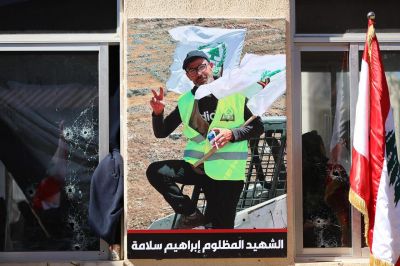
On Tuesday, a high-level meeting on reconstruction was held in Msayleh in South Lebanon, at the initiative of Parliamentary Speaker Nabih Berri, who has repeatedly urged the government to initiate reconstruction and accused it in early October of neglecting the matter. The meeting provided an opportunity for the Hezbollah-Amal duo to insist on including, in the 2026 state budget, a clause to fund reconstruction projects in the south, or else Hezbollah and Berri’s Amal Movement will refuse to adopt it.
'The government is not relying solely on foreign loans'
While the international community is conditioning its reconstruction aid on the effective disarmament of Hezbollah, Salam affirmed that "the government is not relying solely on external loans, but continues its efforts by its own means through projects carried out by the relevant ministries."
He listed: the Social Affairs Ministry, "which continues to support the people of the south and returnees through the Aman program [a World Bank-funded social assistance program] and other social initiatives"; the Energy and Water Ministry, which is "making great efforts to improve water and electricity networks in southern villages"; the Education Ministry, which is "working to bring students back to their schools located in border areas and restore damaged buildings"; the Health Ministry, which is "overseeing the rehabilitation of dispensaries and health centers"; the Agriculture Ministry, which is "continuing support programs for farmers and strengthening local agricultural production thanks to the World Bank GATE loan"; the Ministry of Public Works and Transport, which "has repaired part of the road networks and cleared debris."
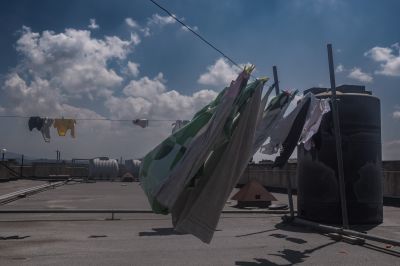
Salam concluded by stating that he "will review with the relevant ministries the list of demands received from the delegation, especially those related to families still forcibly displaced from their villages," emphasizing "the government's willingness to ensure their dignified return as soon as possible," according to the Grand Serail's message on X.
Tens of thousands of residents have still not been able to return to the border villages since the cease-fire between Hezbollah and Israel on Nov. 27, 2024. Israel continues to occupy at least six positions in Lebanese territory, attacks the south on a near-daily basis, and has stepped up military maneuvers in the border zone.