





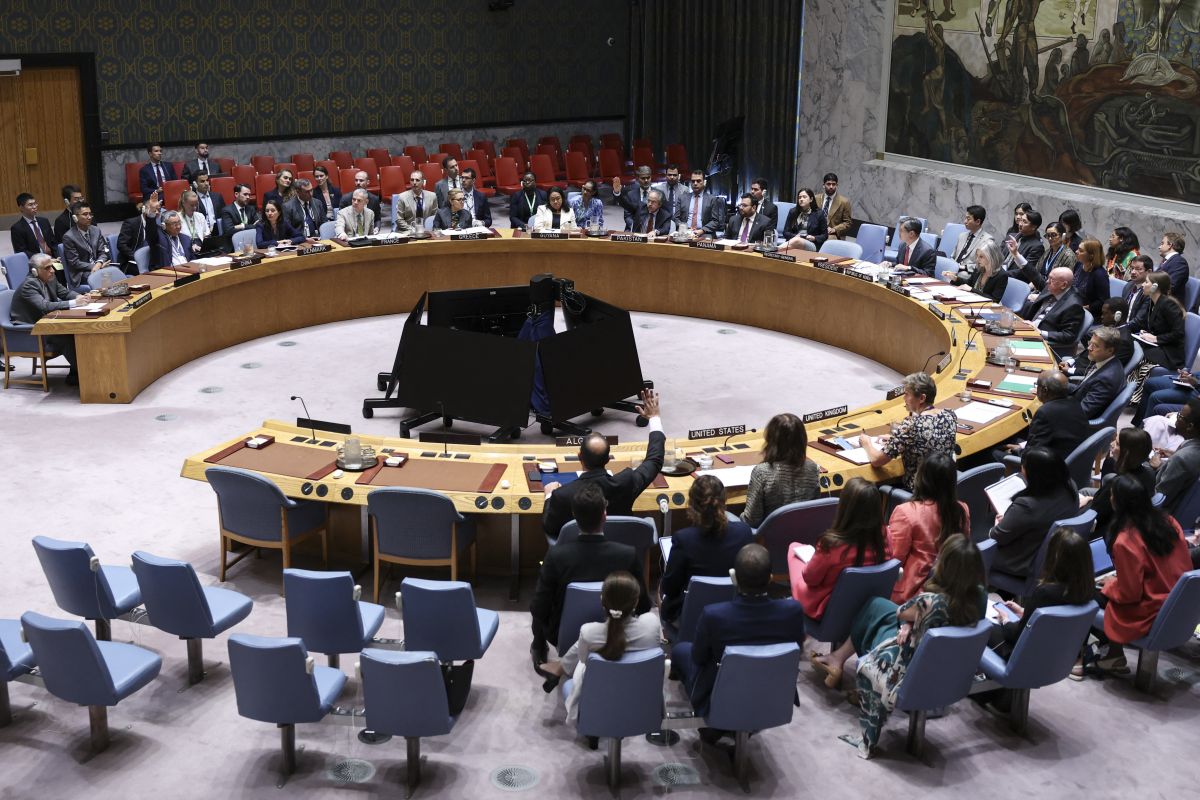
The United Nations Security Council holds a meeting on Iran at the U.N. headquarters on Sept. 19, 2025, in New York. (Credit: Angela Weiss/AFP)






The U.N. Security Council on Friday welcomed the Lebanese government's efforts to exercise its sovereignty over the entire territory, calling on the international community to increase its support for the Lebanese Army as tensions with Israel remain high despite the November 2024 cease-fire.
"The members of the Security Council welcomed the efforts and commitment of the Lebanese government to exercise its sovereignty over its entire territory, through the Lebanese Army, and not to recognize any authority other than that of the Lebanese state," the statement said.
They also urged the international community "to strengthen its support for the Lebanese Army in order to ensure its effective and lasting deployment south of the Litani River."
The Council reiterated its "full support" for the United Nations Interim Force in Lebanon (UNIFIL), calling on "all parties to take all necessary measures to ensure the safety of its personnel and facilities," and reminding that the peacekeepers "must never be targeted."
This follows several recent incidents in southern Lebanon, where U.N. patrols have been obstructed or targeted by gunfire.
In early October, UNIFIL said the Israeli army had dropped grenades near its peacekeepers, calling for an end to such attacks.
The Council members also insisted that "all parties respect their commitments under the Nov. 26, 2024, cessation of hostilities agreement between Israel and Lebanon, as well as their obligations under international humanitarian law, in particular regarding the protection of civilians."
This cease-fire, brokered by the United States, ended more than a year of conflict between Hezbollah and Israel, including two months of open warfare.
The agreement provides that only the Lebanese Army and UNIFIL are to be deployed in southern Lebanon, at the border with Israel, excluding both Hezbollah and the Israeli army.
However, the latter continues to maintain troops in five strategic border positions in southern Lebanon and regularly carries out strikes, mainly against Hezbollah sites and leaders.
Finally, the Council members welcomed "the willingness of the Lebanese government to demarcate its border with Syria and its efforts to prevent smuggling."
Last week, Syrian Foreign Minister Assaad al-Shaibani — the first high-ranking official to visit Beirut since the fall of the Assad regime — expressed the new Syria's willingness to “open a new page” with Lebanon.
Controlling the porous borders between the two countries, the borderline demarcation, and strengthening cooperation in security and intelligence were among the issues he discussed.

 7 p.m. recap: Iran warns Egypt, Israeli soldiers vote in south Lebanon, Haret Hreik responds to Kataeb