






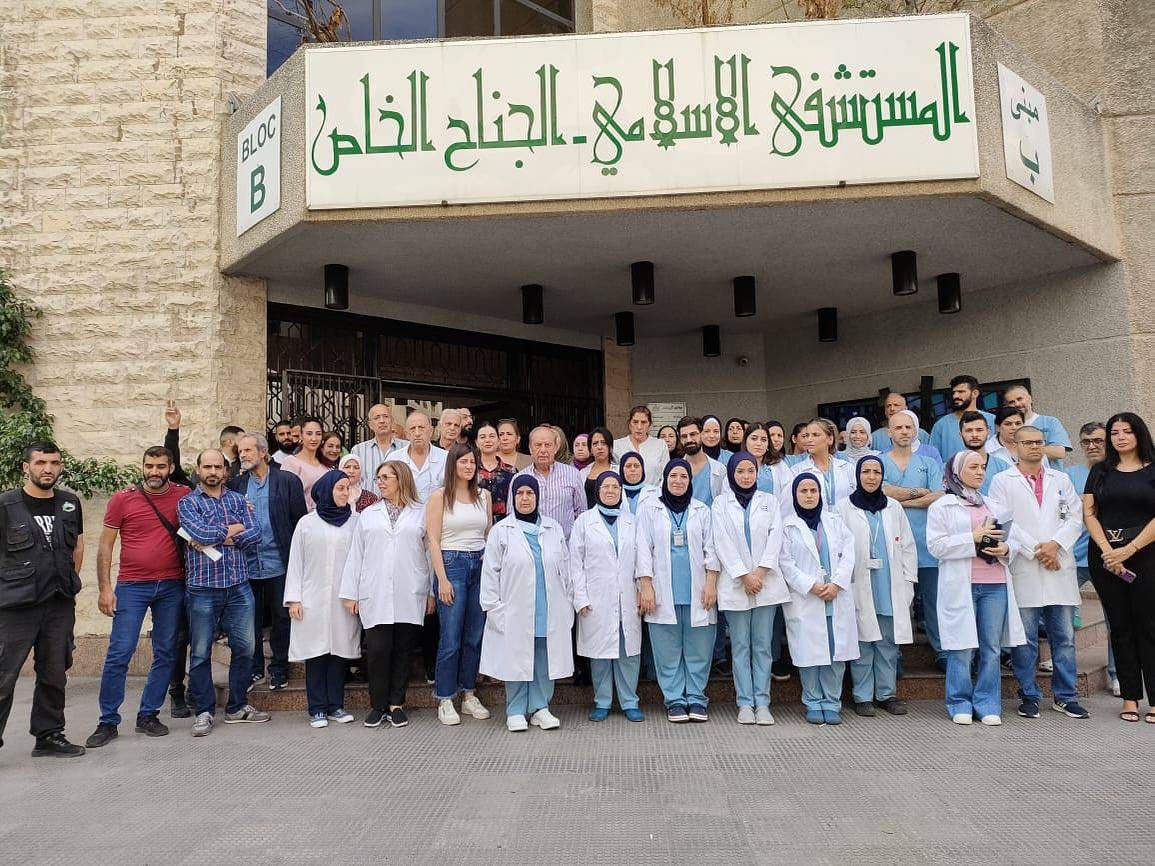
The entrance to the Islamic Hospital of Tripoli with its staff. (Credit: The hospital's Facebook account)






BEIRUT — Public hospitals in northern Lebanon expressed deep concern on Friday over the decision by the United Nations High Commissioner for Refugees (UNHCR) to halt health coverage for Syrian patients starting next month, according to our correspondent in the North.
They warned that this move would "double the financial and operational burdens on public healthcare institutions, which are already under severe strain."
In May, UNHCR said it will end coverage for hospitalization costs of registered Syrian refugees in Lebanon by the end of 2025, citing significant funding cuts.
The hospitals' statement was signed by Tripoli Governmental Hospital, Miniyeh Governmental Hospital, Abdallah Rassi Governmental Hospital in Halba–Akkar, Sir Dinnieh Governmental Hospital, and Orange Nassau Governmental Hospital.
In a statement, the hospitals cautioned that stopping the coverage would "deprive a large number of Syrian patients, particularly those in critical and life-threatening conditions, of essential medical care, placing medical staff in difficult humanitarian and ethical situations."
The hospitals called on the United Nations and donor entities to reconsider the decision and to continue covering emergency and humanitarian medical cases for Syrians residing in Lebanon, in order to "preserve their right to healthcare and to prevent further pressure on Lebanon’s already struggling healthcare system."
The statement concluded by affirming the public hospitals’ "readiness to cooperate with international organizations and Lebanese authorities to ensure the continued provision of medical services to all those in need, within the available means."
UNHCR is one of the many U.N. agencies affected by the U.S. President Donald Trump's administration freeze on foreign funding. Already in May 2024, UNHCR had announced a sharp reduction in its spending on medical coverage, limiting support to emergency hospitalizations where "an immediate risk to life" was established. The move was attributed to a decline in international funding.
Months after Bashar al-Assad’s fall on Dec. 8, 2024, convoys carrying Syrian refugees and migrants living in Lebanon started returning to Syria as part of a “voluntary return” plan coordinated by the UNHCR. While the number of returnees from Lebanon remains limited, the Lebanese government aims for 400,000 returns by the end of the year.
