






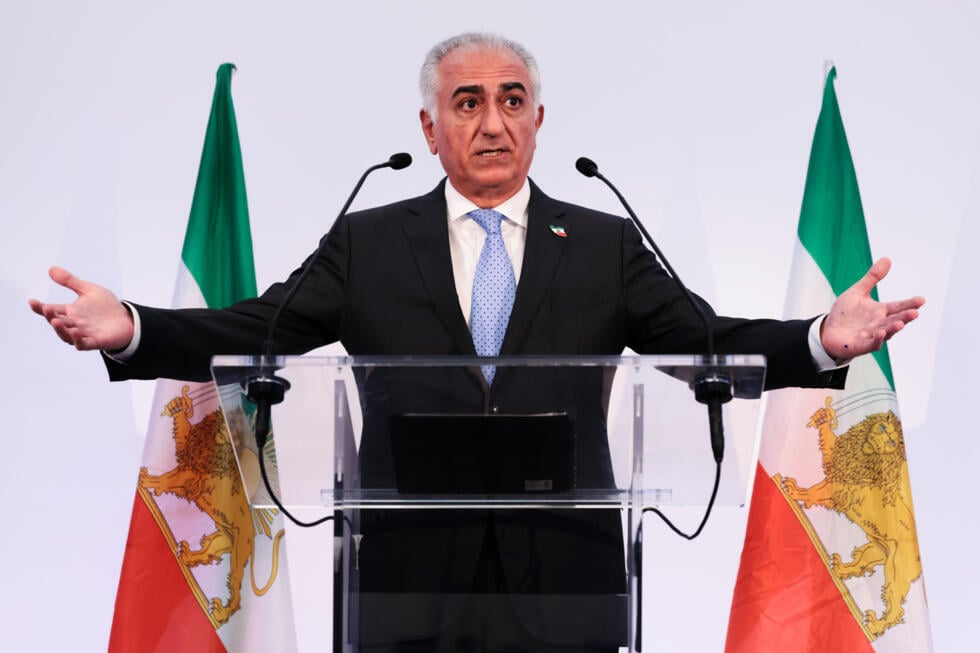
Reza Pahlavi, son of the former Shah of Iran, during a press conference in Paris, on June 23, 2025. (Photo Joel Saget/AFP)






A joint investigation by media outlets Haaretz and TheMarker, supported by research from University of Toronto's Citizen Lab, has revealed a vast digital campaign supported and funded by Israel to promote the return of the monarchy to Iran with Reza Pahlavi at its head. Pahlavi was the son of the last Shah of Iran, overthrown in 1979 during the Islamic Revolution that led to the formation of the Islamic Republic of Iran.
A whole network of recruits
According to the investigation, this influence operation, carried out with the help of native Persian speakers recruited for the purpose, used a network of fake accounts and avatars to spread pro-Pahlavi content, coinciding with the start of Israel’s 12-day war against Iran in June. The report points to “about fifty accounts identified with a high degree of certainty as inauthentic,” often determined by “the detection of profile photos generated by artificial intelligence (AI).”
These fictional Iranian users were reportedly created by a private contractor independent from the Israeli state, the article specifies, while highlighting that the entity in question enjoyed support from Tel Aviv. “All the accounts catalogued by Citizen Lab were opened in 2023, but remained inactive until their simultaneous activation in early 2025, which points to planned coordination,” the investigation adds. It specified that “their activity intensified during the war against Iran,” during which the desire for regime change or the threat to assassinate Iran’s Supreme Leader Ali Khamenei was repeatedly raised by Israeli officials or even by U.S. President Donald Trump.

These fake accounts, all linked to a broadcasting platform called “@TelAviv_Tehran,” for example, spread the hashtag #KingRezaPahlavi, sharing photos and speeches by the Shah’s son, and advocating for the restoration of the monarchy.
They also coordinated their efforts to amplify posts from Gila Gamliel, a Likud member and former Israeli intelligence minister, who presents herself as Reza Pahlavi’s main ally in Israel. She also hosted the man she calls the Iranian “crown prince” in early 2023 and organized a meeting with Israeli Prime Minister Benjamin Netanyahu.
Viral video from Evin Prison
To bolster their findings, Haaretz and TheMarker detail the disinformation operation that surrounded the Israeli strike on Evin Prison in Tehran, known for holding many opponents of the clerical regime. These fake accounts began posting messages about “explosions in the prison area” even before Iranian local media reported it, along with fabricated images immediately after the attack.
For instance, they were the first to circulate a video purportedly showing the bombing of the prison gate, which went viral globally and was picked up by numerous television channels. The video was later verified as AI-generated, according to another investigation by the New York Times.

Researchers at Citizen Lab also uncovered a fake news report and a doctored video of an Iranian singer performing a protest song. A fake “BBC Persian” article claiming that senior Iranian officials had fled the country also circulated. The BBC Persian channel confirmed it was a complete fabrication.
Additionally, the campaign piggybacked on genuine protest movements led by Iranians, such as one which urged citizens to shout from their balconies: “Death to Khamenei” and “Death to the dictator.”
The fake Israeli accounts amplified those messages, sometimes spreading fake videos of real slogans, and using the same hashtags as the demonstrators. This initiative had the effect of reinforcing the Iranian government's narrative that protest movements are manipulated by outsiders, whether Israel or the United States, where Pahlavi currently resides in exile.
Another example of the cyber-war between Tel Aviv and Tehran: An Israeli hacker group, “Predatory Sparrow,” also claimed an attack on several Iranian banks, causing a temporary paralysis of many financial institutions’ systems.
