


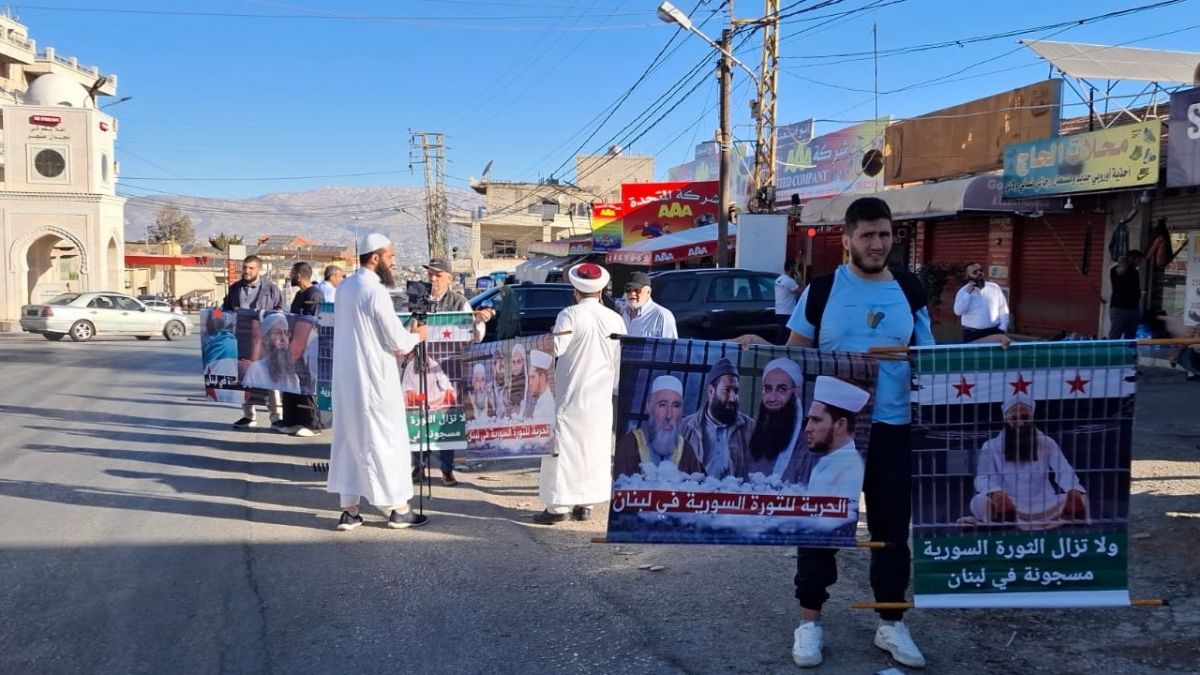
Relatives of Islamist detainees in Lebanon carry signs, including images of the Lebanese Salafist sheikh Ahmad al-Assir, near the Masnaa border crossing in the Bekaa, on Wednesday, Oct. 1, 2025. (Photo sent by our correspondent in the Bekaa, Sarah Abdallah.)






A Syrian diplomatic delegation arrived in Lebanon on Wednesday via the Masnaa border crossing in the Bekaa to discuss a number of key issues, including the fate of Syrian detainees in Lebanese prisons, our correspondent in the region reports.
Around twenty relatives of detainees, holding signs with images of Lebanese Salafist sheikh Ahmad al-Assir and the flag of the Syrian revolution in the background, were waiting near the border crossing. However, the convoy reportedly continued on to Beirut without stopping, according to our correspondent.
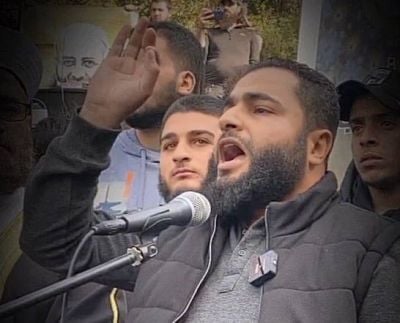
Arrested in 2015 for leading deadly fighting in 2013 against the Lebanese Army in Abra, a suburb of Saida in southern Lebanon, Assir was sentenced to death for those acts and to 20 years of hard labor by the military tribunal for other clashes in North Lebanon.
The issue of Syrian detainees in Lebanon has become prominent again since the arrival to power in Damascus in December 2024 of a rebel coalition led by Ahmad el-Chareh.
In mid-September, two Lebanese delegations traveled to Damascus to discuss the matter, following a visit to Beirut on September 1 by a Syrian delegation that met with Lebanese Deputy Prime Minister Tarek Mitri, marking the first such meeting since the fall of Bashar al-Assad's government.
According to figures obtained by L'Orient-Le Jour in February from the Interior Ministry, 50 percent of detainees in Lebanon have yet to be tried. For Islamists, 55 percent are being held without a verdict. Mohammad Sablouh, an attorney defending several of them, also said in February that there are about 350 Islamist detainees in total: 180 Lebanese and 170 Syrians.
Calls for a general amnesty for these prisoners have been made several times. However, such a move carries the risk of incorporating Lebanon's confessional power-sharing arrangements into the process and could result in the simultaneous release of tens of thousands of people jailed for drug offenses or other crimes.

 1 p.m. recap: Salam in Nabatieh; up to 10,000 more US troops heading to Middle East