


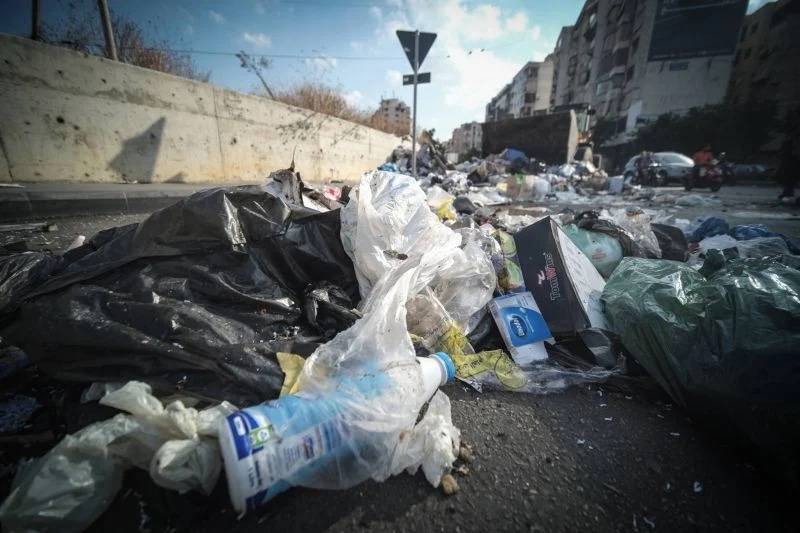
Road waste in Lebanon. (Credit: João Sousa/L'Orient Today)






BEIRUT — Parliament’s Finance and Budget Committee approved on Wednesday a law that would allow municipalities to collect and process waste in exchange for a symbolic fee, committee chair MP Ibrahim Kanaan said, in comments cited by the state-run National News Agency. The law still needs to be approved by parliament.
“[The law] concerns empowering municipalities to manage waste, granting local authorities the powers to collect and process waste in exchange for a symbolic fee," Kanaan told the press after the meeting.
The MP told L'Orient Today that the decision gives municipalities the authority to impose a symbolic fee on citizens who want their waste to be collected and treated, although it was not specified how often the fee would be collected.
According to Kanaan, industrial enterprises, depending on their size, would pay somewhere between 10 and 300 percent of the minimum wage (28,000,000 LBP, around 313 dollars at the market's rate). The rate ranges between 100 and 400 percent for tourist resorts and between five and 20 percent for public institutions.
Lebanon's waste management system has operated since the 90s, notably in the densely populated areas of Beirut and Mount Lebanon. It is highly centralized and dependent on big contracts supervised by the Council of Development and Reconstruction, awarded to private sector stakeholders on behalf of the municipalities, and financed by the Local Fund for Municipalities.
In 2015, the sudden closure of Lebanon's most important landfill, the Naameh landfill in Chouf, caused a garbage crisis across the country. Waste management is often affected by the state's irregular payments to the key waste collection companies, Ramco and City Blu. The current law, if approved, will open the door to decentralization and allow municipalities to finance their own local plans for collecting and treating waste.
After Wednesday's meeting, Kanaan said that these latest developments include "ongoing negotiations with the World Bank to provide a comprehensive solution to the waste issue, rather than partial measures that do not lead to the desired result.”
Kanaan also revealed that the committee had received a promise from the Environment Ministry that a national-level plan to find solutions for landfills is being prepared with urgency.
"There is ongoing communication between the government, municipalities, and international institutions to reach the necessary solution," he added. "After 30 years, it is time to end landfills and stop imposing financial burdens on citizens in the absence of serious treatment, forcing them to accept landfills or dump waste in their vicinity," he added.
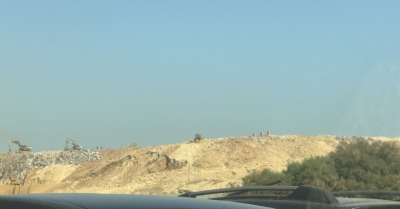
The Jdeideh-Burj Hammoud landfill (serving a part of Beirut and north Mount Lebanon) has reached full capacity, and SGK, the company burying trash there, will halt operations onsite starting Oct. 1, while the Costa Brava landfill (serving Baabda, Aley and the other part of Beirut) was recently enlarged. Should an agreement not be reached soon, Lebanon could face another waste crisis comparable to that of 2015.

 7 p.m. recap: Netanyahu seeks mastermind behind Flydubai incident; Washington sanctions 2 French nationals; Ben Gvir's 'I want to kill you' threat