





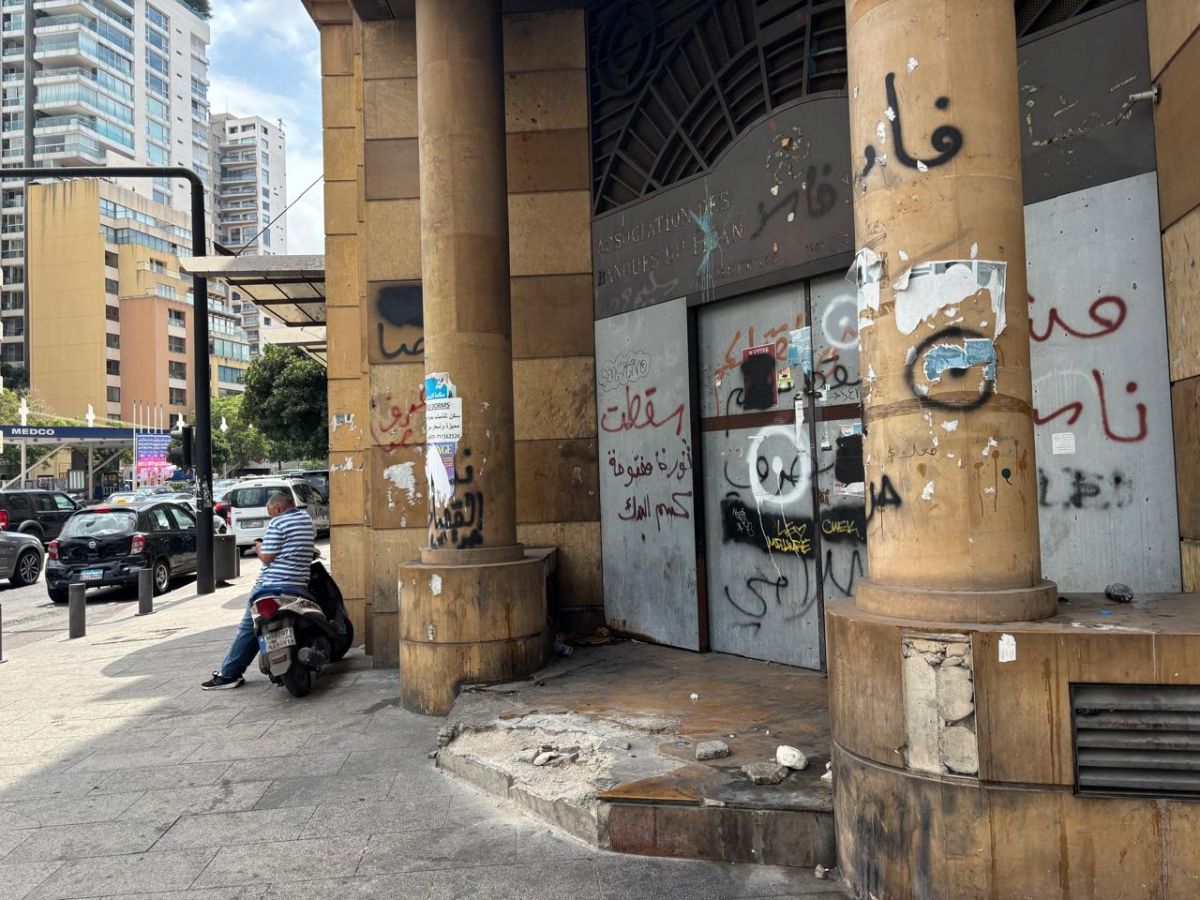
The entrance to the headquarters of the Association of Banks in Lebanon, on Aug. 7, 2025, in Beirut. The facade was damaged during the popular protests of October 2019, amid the economic crisis. (Credit: Philippe Hage Boutros/L'Orient Today.)






BEIRUT — The bank employees’ union threatened on Monday to mobilize if mediation with the Association of Banks in Lebanon (ABL), under the auspices of the Labor Ministry, fails to update the sector’s collective labor agreement.
No date has yet been set for the announced sit-in, according to a statement released via the state-run National News Agency (NNA.)
Justifying its position, the union said, "The position of the ABL representative during mediation is a continuation of the policy of procrastination and postponement adopted by the association’s board since the start of negotiations to renew the collective agreement in 2022."
Praising the “impartiality” of the Labor Ministry mediator, the union also warned that the ABL’s behavior on this issue "will inevitably lead to the failure of mediation." The union accused the ABL of handling this matter just as it handled the unresolved issue of depositors’ funds, while thousands of employees are themselves depositors whose assets remain frozen in banks, including end-of-service indemnities.
The union also stated it is considering mobilizing “bank employees for protest actions in institutions that are depriving their staff of basic rights such as salary adjustments or access to educational grants above the levels recommended by the board for 2024.”
According to a source at the ABL speaking on condition of anonymity, the collective agreement file is stalled in part because “some smaller banks are unable to provide significant adjustments to employees’ salaries and benefits, which have been severely eroded since the onset of the crisis.”
The banking system has been paralyzed since the start of the economic and financial crisis that erupted in the summer of 2019, after which banks in the country froze tens of billions of U.S. dollars in deposits due to a lack of liquidity. This financial crisis remains unresolved by the authorities, despite the adoption of some key reforms, including the bank resolution law passed this summer.
According to several employees contacted, most salaries in nearly all banks have not returned to their pre-crisis levels, in contrast to the public sector and the rest of the private sector, where wages have been substantially adjusted.

 Evening recap: Netanyahu announces West Bank offensive; 7 killed in Jordan church shooting; tents burned in south Lebanon
 US strike on Iran this weekend? ‘Absolutely,’ says Barrack; ‘I have no idea,’ says Trump