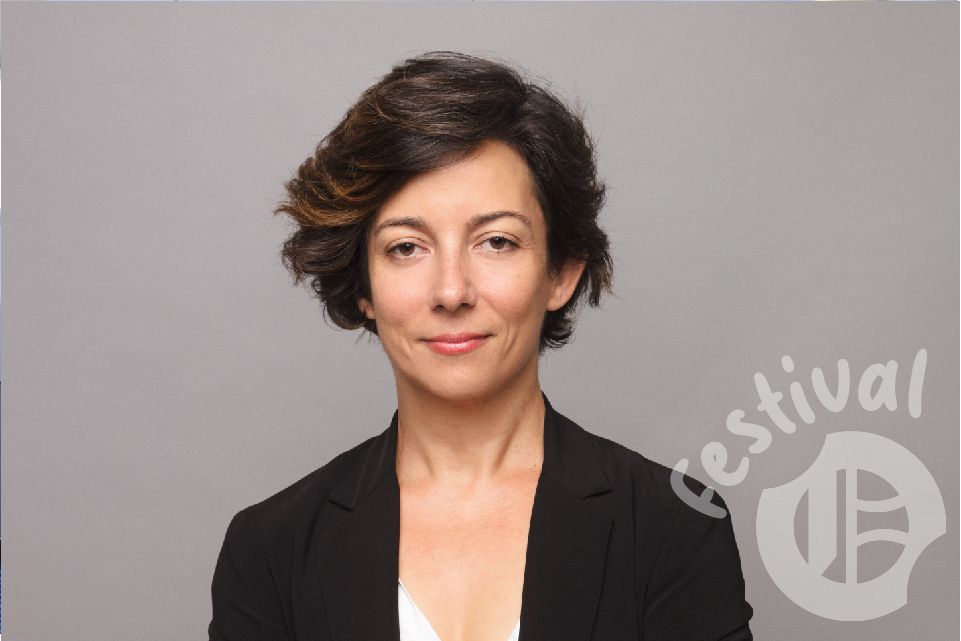
Journalist Kim Ghattas. (Credit: Tarek Moukaddem)






There are those who cover the news, and those who step back to ask what it all means. Kim Ghattas has done both. She decided she would be a journalist at 13, growing up in Civil-War Beirut, convinced that if people only understood better, the war might stop.
After more than 20 years reporting for the BBC, the Financial Times, and de Volkskrant — collecting an Emmy along the way — she turned to writing books: “In a lot of ways, it’s writing for posterity,” she tells L’Orient Today.
Her work has become indispensable for anyone trying to understand the region: The Secretary, her account of traveling with Hillary Clinton, and Black Wave, which traces how 1979, through the Iranian revolution and Saudi Arabia’s turn toward religious conservatism, reshaped the Middle East.
An exacting chronicler, she traces how that year set off a rivalry between Tehran and Riyadh that still reverberates today, fueling intolerance, silencing cultural expression, and redrawing the political and religious map from Egypt to Pakistan.
She is currently writing her third book, exploring how the Iranian revolution collided with the 1982 Israeli invasion of Lebanon, producing the Iranian axis and four decades of U.S.-Iran enmity.
On Sunday, Sept. 14, at 5 p.m., as part of L’Orient-Le Jour’s "Un vent de liberté" festival, Ghattas will sit down for a one-on-one conversation moderated by Iva Kovic-Chahine, head of L’Orient Today.
Expect an open discussion that moves between the trenches of daily journalism and the longer horizons of books: Why she stepped away from the news cycle, what it means to connect the dots across decades, and how one tracks the ripple effects of decisions past and present.
The conversation will also draw on Ghattas’s dual vantage point: A Lebanese who lived the consequences of foreign policy, and a White House correspondent who reported from the heart of the machine that makes it.
A contributing writer at The Atlantic and contributing editor at the Financial Times, she is also a regular voice on CNN, NPR, and MSNBC. Born and raised in Beirut, she sits on the board of the American University of Beirut and the Global Centre for Pluralism, among other roles.
At the Hippodrome this September, she will do what she does best for her first public event in Lebanon: cut through the noise with analysis that is sharp, unsentimental, and — yes, — sometimes unsettling.
The conversation will be held in English. Free entry.