


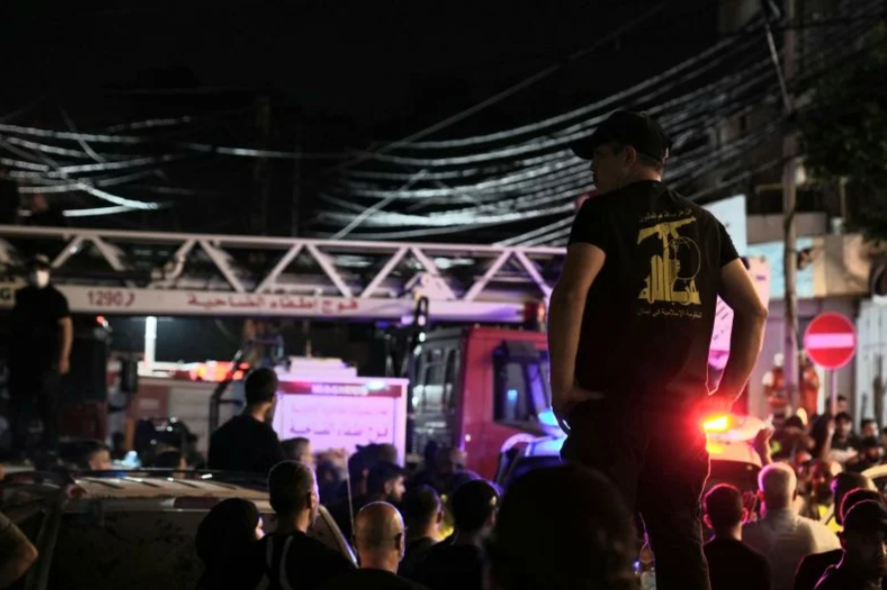
Residents of the southern suburbs of Beirut gathered on July 30, 2024, after the Israeli strike that targeted a high-ranking official of Hezbollah, Fouad Shukur. (Credit: Mohammad Yassine/L'Orient Today)






BEIRUT — On the first anniversary of the assassination of Hezbollah's senior commander Fouad Shukur, the Israeli army's Arabic spokesperson, Avichay Adraee, recalled on Wednesday his assassination and the subsequent killings of Hezbollah's leaders, noting that "those who threaten the security of Israel's citizens will find no safe haven in the Middle East."
Shukur was killed in an Israeli airstrike that targeted the southern suburbs of Beirut on July 30, 2024, almost two months before the escalation of the war between Hezbollah and Israel.
"On this day a year ago, [the Israeli army] eliminated the terrorist Fouad Shukur, the right-hand man of the terrorist Hassan Nasrallah. And since then? The dominoes in Hezbollah began to fall one after another until we dealt a fatal blow to him and his leadership, which dragged Lebanon into this war to support (...) Hamas," Adraee said in a video posted on his X account.
"And from that moment on, everything changed. The message of the operation was as clear then as it is today: Israel will not hesitate to protect the security of its citizens. Those who threaten the security of Israel's citizens will find no safe haven in the Middle East. Even if it takes time, we will find them," he added.
Shukur was the first high-ranking Hezbollah official to be killed in a targeted Israeli strike in Beirut southern suburbs during the 13 month-war, in a context of increasing tensions after a strike killed a dozen children in the Israeli-annexed Golan heights.
After the assassination of Shukur, Israel carried out a series of assassinations against Hezbollah's leadership, including the group's former Secretary-General Hassan Nasrallah on Sept. 27, 2024.
In a televised speech for the anniversary of Shukur's assassination, Hezbollah's Secretary-General, Naim Qassem, said on Wednesday evening that any request for his party to surrender its weapons would amount to “serving the Israeli agenda,” while the issue of disarming the pro-Iranian movement remains at the heart of political debates in Beirut and internationally.

 1 p.m. recap: Salam in Nabatieh; up to 10,000 more US troops heading to Middle East