






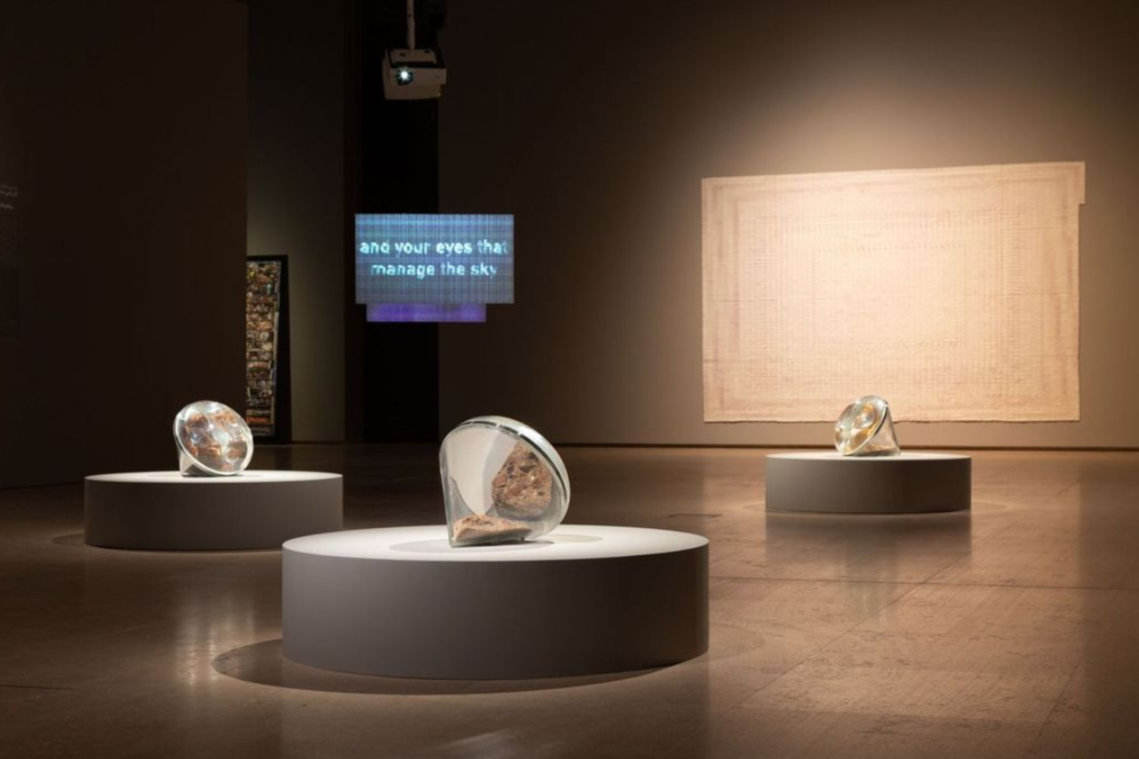
One of the works on display as part of the "Where is my Mind" exhibit by artists Joana Hadjithomas and Khalil Joreige at Sursock Museum. (Credit: Christopher Baaklini/Sursock Museum)






For “Night of the Museums,” 24 museums across five cities (Tripoli, Jbeil, Jounieh, Beirut and Saida) will open their doors for free entrance tonight from 7 p.m. until 11 p.m., with buses shuttling visitors around Beirut.
Ahead of the event, L’Orient Today asked curators to break the sacred vow of loving all their work equally and name the one piece that can’t be missed…
The Colossus of Byblos at the National Museum
Unearthed in Byblos in 1926, the Colossus is a towering Egyptian-style statue that has watched over the National Museum of Beirut since it opened in 1942. Once part of a collection of figures guarding a sacred temple, it’s the only one to survive intact from the Bronze Age.
“It’s the guardian of the sanctuary,” says Tania Zaven, Director of North Mount Lebanon at the Directorate General of Antiquities. “And the [National] Museum is a sacred place too. Lebanon’s past is here and we are all trying to protect it. At least, this is what I feel whenever I enter the museum.”
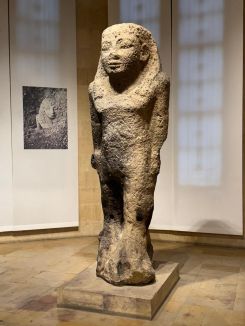
The broad-shouldered limestone Colossus was burnt during the Civil War, then sealed in cement cases for its protection. “Covered then uncovered and covered then uncovered and it’s still standing, it’s still there!” Zaven says. “It’s protecting us… and it witnesses everything.”
Artifacts and art at Sursock Museum
At Sursock Museum, Joana Hadjithomas and Khalil Joreige use history as their metaphorical paintbrush in a new collection that spans nearly 10 years of multi-media artwork.
Coming in parallel to a retrospective of their films at Metropolis Cinema, Hadjithomas and Joreige’s “Where is my Mind?” springs from extensive research and collaboration with archeologists, geologists and historians.
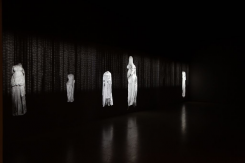
It’s their first showing since 2012 and a rare solo exhibition, says curator Karina al-Helou, despite the Lebanese duo’s international recognition. Born into a lineage of Palestinian, Greek and Syrian refugees, the versatile artists’ work is nonetheless rooted in Lebanon’s heritage, and the vast collection of work is shaped by their knack for storytelling.
The exhibit is a natural continuation of the history on display at the National Museum, Helou says. Initially planned before the 2020 Port explosions, the exhibit was reimagined to explore art as a form of transcendence. “It’s about poetry, beauty and art as a way of getting over chaos.”
The broken glass of AUB’s Archeological Museum
The Beirut Port blast of Aug. 4, 2020, one of the largest non-nuclear explosions in history, reduced much of the glass collection at the American University of Beirut’s Archeological Museum — located about three kilometers from the epicenter — to dust.
“Instead of trashing everything, we sifted through the shards, which were mixed with debris from the showcases and windows,” says curator Nadine Panayot. Out of the 72 glass artifacts that had been thrown to the floor, they managed to restore 28, eight of which were sent to the British Museum to be pieced back together and then featured in an exhibit, “The Shattered Glass of Beirut,” which drew in record-breaking crowds before traveling to China and Japan.
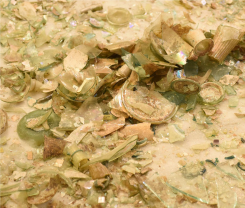
“They’re just glass vases, nothing special, ranging from the Roman to the Medieval period,” Panayot says. It wasn’t the artefacts that people came to see, but the story of their cracks, which Panayot chose to leave visible, rather than masking with resin. “I wanted to keep the scars,” Panayot says. They are now back on display in Beirut.
Participating museums in Beirut: National Museum of Beirut, Sursock Museum, AUB Archaeological Museum, AUB Geology Museum, USJ Minerals Museum, USJ Prehistory Museum, USJ's Oriental Library, Banque du Liban Museum, Gallery of the Institut Français du Liban, Villa Audi, and the Nuhad Es-Said Pavilion for Culture.
Participating museums outside of Beirut: In Tripoli, Saint Gilles Citadel Museum; in Jbeil, the Aram Bezikian Museum of Armenian Genocide Orphans, the Byblos Site Museum, the Marine Fossil Museum, the Pepe Abed Foundation, MACAM and LAU’s Louis Cardahi Foundation; in Jounieh, the USEK Museum; and in Saida, Debbane Palace, Khan al-Franj, the Soap Museum, Hammam al-Jadeed, and Khan Sacy.
