






Syrian government security forces man a checkpoint to prevent Bedouin tribal fighters from reaching the city of Sweida, along a road in Sweida province, southern Syria, on July 19, 2025. (Credit: Sam Hariri/AFP)






The Syrian government on Saturday announced a cease-fire in the southern province of Sweida and said its forces had begun deploying there, following days of deadly intercommunal fighting that left hundreds dead and forced tens of thousands to flee.
Violence between tribal Sunni Bedouin fighters and Druze groups — an esoteric offshoot of Islam — has killed more than 700 people since July 13, according to a monitoring group. Sporadic clashes were still reported Saturday.
In a statement, the Syrian presidency announced an “immediate cease-fire” and urged all parties to fully respect it. The office of interim President Ahmad al-Sharaa also said Syrian government forces would return to Sweida following a cease-fire agreement brokered under U.S. auspices with Israel, which had previously opposed their deployment in the region.
The province lies near the Israeli-occupied Golan Heights, and on Saturday morning, witnesses reported renewed gunfire and shelling in parts of Sweida despite the truce.
“The internal security forces have begun deploying in the province of Sweida (...) to protect civilians and restore order,” Interior Ministry spokesman Noureddine al-Baba said in a statement on Telegram.
On Friday, U.S. special envoy for Syria Tom Barrack announced that Israeli Prime Minister Benjamin Netanyahu and President Sharaa had agreed to a cease-fire.
“We call on Druze, Bedouins and Sunnis to lay down their arms and, together with other minorities, to build a new and united Syrian identity, in peace and prosperity with its neighbors,” Barrack wrote on X.
More than 700 killed, tens of thousands displaced
According to the Syrian Observatory for Human Rights (SOHR), at least 718 people have been killed in Sweida since July 13. The clashes erupted between local Druze fighters and Bedouin tribes, whose tensions have simmered for years.
The government hospital in the city of Sweida — the only one still functioning — has received more than 400 bodies since Monday, including women, children and the elderly, Dr. Omar Obeid told Agence France-Presse.
“It’s no longer a hospital, it’s a mass grave,” said a staff member identified only as Rouba. She told AFP that the city had no running water or electricity, and communications had been cut.
The surge in violence is a major blow to Sharaa’s government, which took power in December after overthrowing President Bashar Assad. The interim government, made up of a coalition of Islamist rebel factions, has struggled to restore stability in the war-ravaged country.
Syrian government troops had briefly entered Sweida on Tuesday, but the SOHR and local Druze factions accused them of siding with Bedouin tribes and committing abuses. Israeli airstrikes targeting Syrian military positions forced the government to withdraw on Thursday. Sharaa later said he wanted to avoid an “open war” with Israel.
'People lack everything'
An earlier truce between Syrian factions collapsed after Druze fighters were accused of breaching the terms.
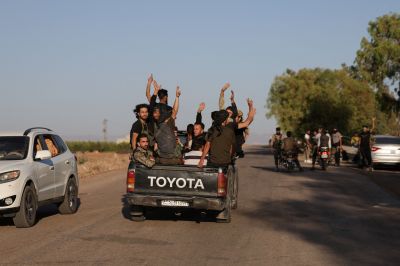
On Friday, hundreds of Sunni Arab fighters poured into Sweida from other parts of the country to support the Bedouins, according to AFP correspondents on the ground. Clashes erupted at the city’s northern entrance as they encountered Druze defenses.
“I came from Hama in response to the Bedouins’ call for help,” tribal leader Anas al-Enad told AFP.
In Walgha, north of Sweida city, homes, shops and vehicles were seen burning. The area has since fallen under tribal and Bedouin control, reporters said.
The International Organization for Migration estimated that nearly 80,000 people have been displaced in recent days.
“People lack everything. Hospitals are struggling to treat the wounded and the sick,” said Stephan Sakalian, head of the International Committee of the Red Cross delegation in Syria.
Before the war, Syria’s Druze population numbered around 700,000, primarily in the Sweida region. The community also has a significant presence in Lebanon and Israel.

