


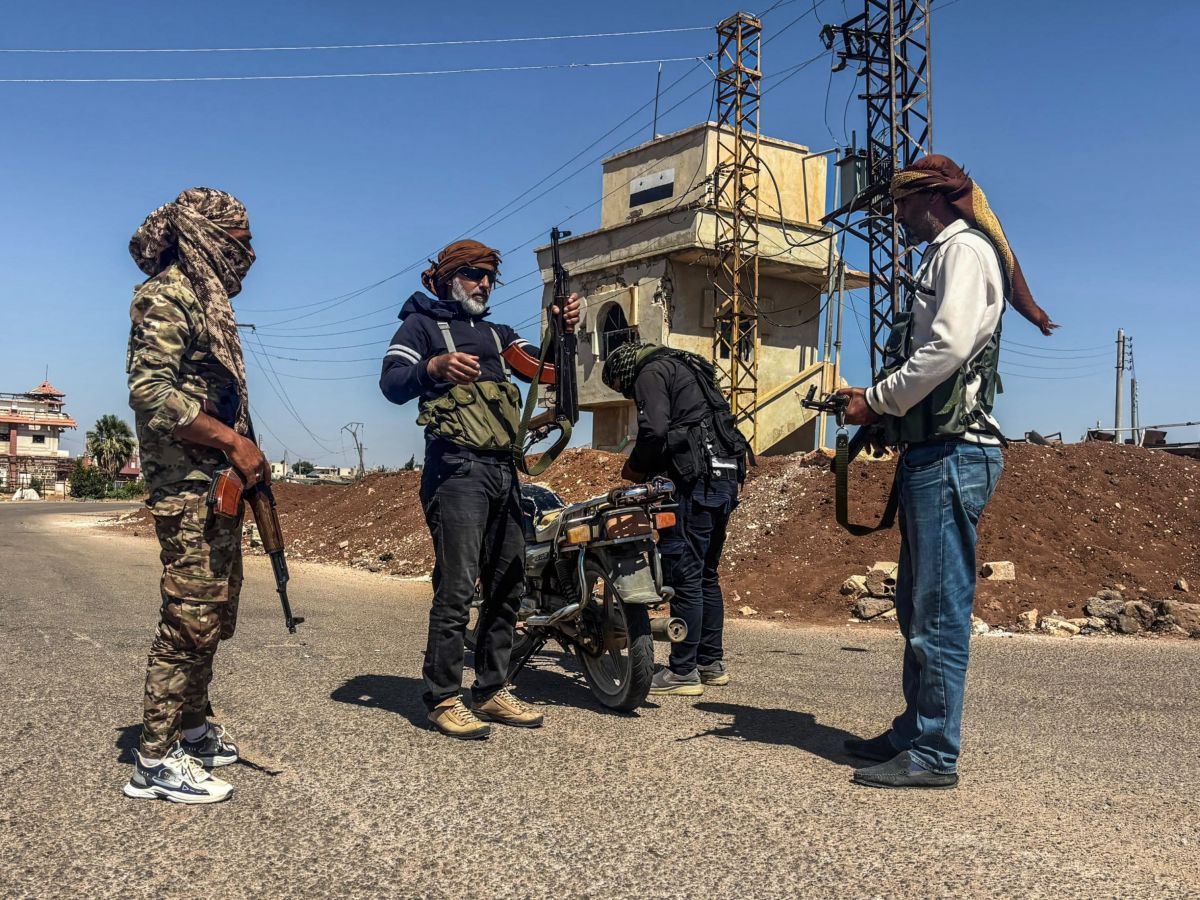
Abu Oussama and his brothers-in-arms, from the village of Naamer in the province of Daraa, are preparing to join the fighting against Druze factions from Sweida, on Friday, July 18. (Credit: Caroline Hayek/L’OLJ)






Abu Oussama stood at an intersection in Naamer, a small town in Syria’s Daraa province, gathering a few men under the searing Friday sun. It was July 18, and they were preparing to ride their battered motorbikes eastward toward Sweida — just 40 kilometers away — to join the front lines. Answering a fazaa, or general mobilization call, issued overnight by tribal leaders across the country, they were heading to support their fellow Bedouins in clashes against Druze fighters.In a widely circulated video the previous day, a tribal sheikh had symbolically joined the fight by overturning a rakweh of coffee onto the ground — a gesture that, in Bedouin tradition, signifies the end of hospitality and the beginning of conflict. “In our customs, responding to the fazaa is about honor and loyalty,” said Abu Oussama, a man in his 50s who claimed he...
Abu Oussama stood at an intersection in Naamer, a small town in Syria’s Daraa province, gathering a few men under the searing Friday sun. It was July 18, and they were preparing to ride their battered motorbikes eastward toward Sweida — just 40 kilometers away — to join the front lines. Answering a fazaa, or general mobilization call, issued overnight by tribal leaders across the country, they were heading to support their fellow Bedouins in clashes against Druze fighters.In a widely circulated video the previous day, a tribal sheikh had symbolically joined the fight by overturning a rakweh of coffee onto the ground — a gesture that, in Bedouin tradition, signifies the end of hospitality and the beginning of conflict. “In our customs, responding to the fazaa is about honor and loyalty,” said Abu Oussama, a man in his 50s who...
