






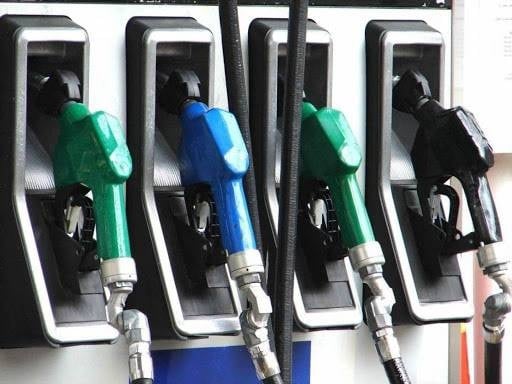
(Illustrative photo: NNA)






The decision, made Wednesday by the State Council, to temporarily suspend the tax imposed by the government on fuels to finance military aid, sparked a drop in fuel prices Friday that prompted a strong reaction from gas station owners.
According to the new rate published by the Energy Ministry, fuel prices saw a sharp decline, about LL 100,000 for gasoline and LL 161,000 for diesel. The price for a domestic gas cylinder remained unchanged from the price list published Tuesday. This significant drop in gasoline and diesel prices was caused by the State Council’s suspension of the fuel tax increase on July 16, as confirmed by Georges Brax, president of the gas station owners' syndicate, to L'Orient Today. The appeal against this tax, decreed by the Salam government to finance aid for active-duty and retired military, who have been heavily affected by the economic crisis, was brought before the State Council by, among others, the Lebanese Forces (LF). However, the council’s decision is only a suspension, not an outright cancellation, with the highest administrative court having ruled at this stage that the appeal was admissible. It will still need to rule on the substance of the case.
Here are the new rates released by the Energy Ministry:
- 20 liters of 95-octane gasoline: LL 1,456,000 (-LL 100,000)
- 20 liters of 98-octane gasoline: LL 1,496,000 (-LL 99,000)
- 20 liters of diesel (for vehicles): LL 1,405,000 (-LL 161,000)
- Domestic gas cylinder: 1,004,000 LL (no change)
- Kiloliter of heating oil (used to power private electric generators): $722.96 (+$4.39)
Reacting to these rates, Brax expressed regret in a statement to the state-run National News Agency (NNA), citing financial "losses" due to the price adjustment. According to him, the ministry should have taken into account that “gas station owners had bought quantities of diesel and gasoline in recent days and had stocks, on which they had paid the tax.” For Brax, these owners should have been allowed to clear these stocks before the price changes went into effect.
In a brief statement, the Finance Ministry's press office said that the question of passing on the tax on aid to the military was “under review,” and that Minister Yassine Jaber raised this decision and its consequences at Thursday's Cabinet meeting.
Military aid still in effect
A State Council magistrate denied information circulating in certain media about the cancellation of the LL 14 million in military aid that was to be funded by this tax. On condition of anonymity, this judge told "Fact Check Lebanon," the information verification platform of the Information Ministry, that Wednesday’s decision concerns the tax only. On Wednesday, a high-level judicial source confirmed to L’Orient Today that the provisional suspension applies to the second of three articles from the executive’s decision, i.e. the one concerning the tax increase, with the first discussing the military aid.
According to the same source, the decision was made by the State Council based on a report written by one of the judges and presented to the other two magistrates. It is a "before ruling on the merits" decision, which is not definitive. However, according to another judicial source, the report presented generally resembles a draft final judgment. The State Council now has two weeks to issue a final decision, according to Article 72 of the law, although this period is indicative only.
On May 29, the Salam government decided to increase fuel taxes: LL 100,000 levied on every 20 liters of gasoline sold (about $1.1 at the market rate) and LL 174,000 on every 20 liters of heating oil ($1.94), to finance, starting July 1, 2025, aid for the army of 1LL 4 million per month for active-duty soldiers and LL 12 million for retirees.
The decision, challenged by several unions, political parties and civil society actors, resulted in a rise in the prices of the affected fuels, as well as generator tariffs for June electricity bills.