


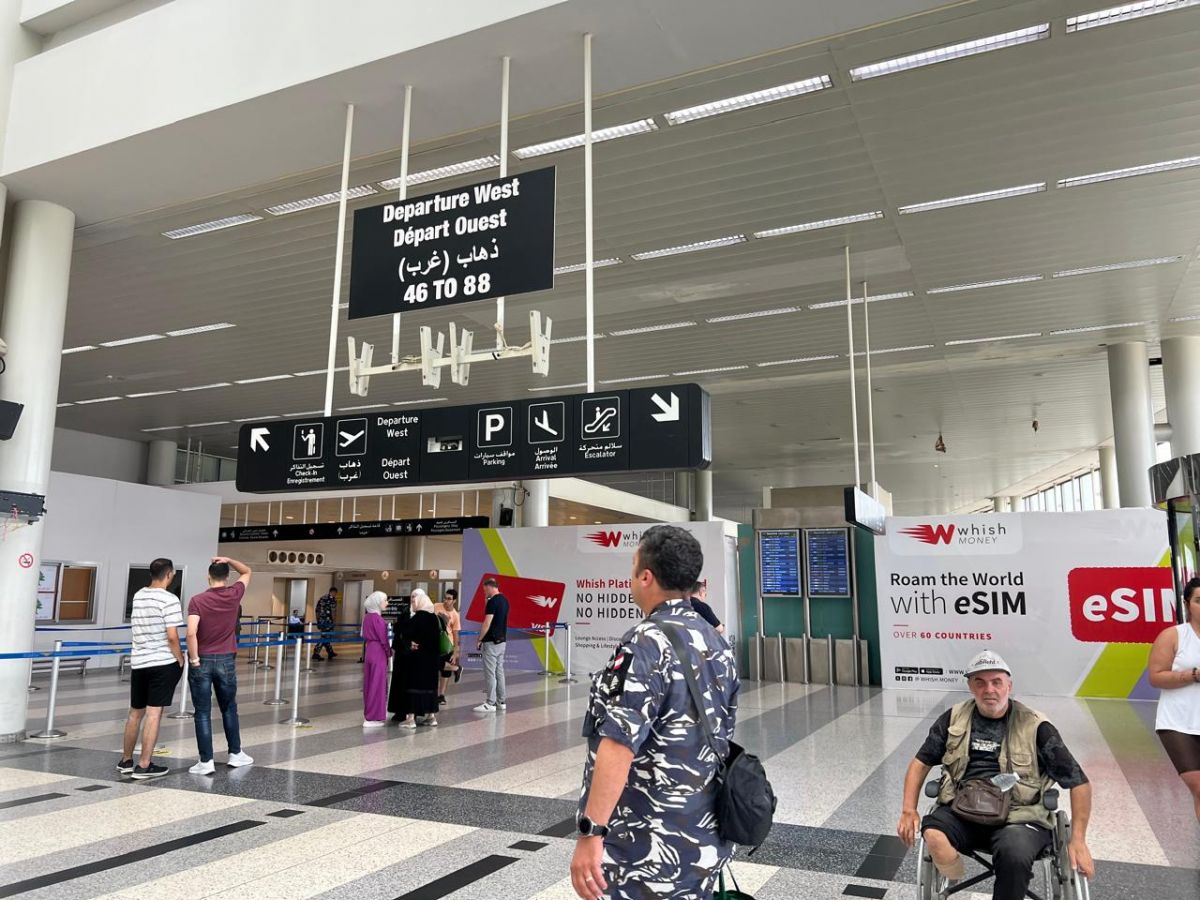
The departure hall at Beirut airport, June 16, 2025. (Credit: Layal Dagher)






The Public Works Ministry launched on Tuesday a campaign to regulate public taxi fares from Rafic Hariri International Airport to all regions of Lebanon, after 11 years without unified pricing.
This initiative, which carries the slogans "From now on ... the price is clear" and "The airport taxi ... it's not a price game!" seeks to end a "situation of fare chaos marked by a lack of clarity and unjustified price discrepancies," according to a statement by the ministry. The ministry said that the official fare is now set in advance in U.S. dollars, or its equivalent in Lebanese Lira according to the current market exchange rate, warning of the risk of legal action in the event of violations.
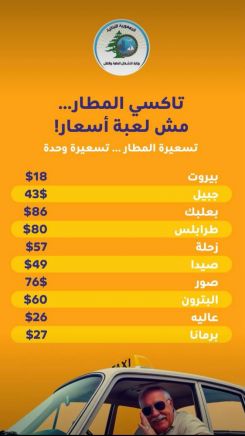
The statement said that to make the fare schedule easily accessible, passengers can now scan a QR code displayed on screens installed at the airport as well as on leaflets distributed at the passport control post, to consult a detailed list of fares from the airport to all regions of Lebanon. "The price chaos is over ... fares are here!" the ministry added, noting that "this initiative is part of a comprehensive reform plan aimed at strengthening transparency and organizing the transport sector at one of the country's vital hubs."
This decision comes as a large-scale project to rehabilitate the road connecting the airport to the capital was officially launched last April. This road, which passes through Beirut's southern suburbs, was severely damaged by the Israeli offensive in 2023–2024. The project involves restoring eight kilometers of infrastructure between the airport and downtown. The work includes road and sidewalk resurfacing, replacing damaged barriers, installing new traffic signs, traffic lights, reflective road markings, and crash absorption systems, to make the route safer and more modern.
The government also decided last Friday to step up health and environmental checks in farms and slaughterhouses located near the airport, in Shoueifat, and in neighboring areas.
This article was originally published in French in L'Orient-Le Jour.

 7 p.m. recap: Netanyahu seeks mastermind behind Flydubai incident; Washington sanctions 2 French nationals; Ben Gvir's 'I want to kill you' threat