






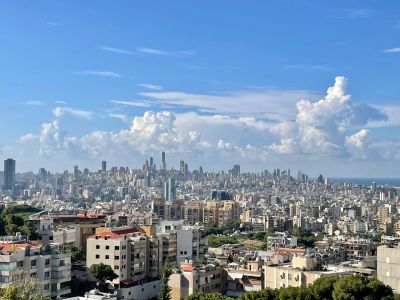
Overview of Beirut. Photo taken on Nov. 20, 2024. (Credit: Philippe Hage Boutros/L’Orient-Le Jour)






A month after being included on the European Commission's list of high-risk jurisdictions for money laundering and terrorist financing, Lebanon has now officially been designated as such by the European Union (EU), following the European Parliament's adoption of this measure on July 9. As a result, EU entities covered by the anti-money laundering framework are required to exercise increased vigilance in transactions involving countries included on what is also known as the "blacklist."
Along with Lebanon, Algeria, Angola, Ivory Coast, Kenya, Laos, Monaco, Namibia, Nepal and Venezuela have been added to this list, while Barbados, Gibraltar, Jamaica, Panama, the Philippines, Senegal, Uganda and the United Arab Emirates have been removed.
In concrete terms, this announcement will have "no greater negative effects on Lebanon compared to those already imposed by its inclusion on the Financial Action Task Force's (FATF) ‘grey list,’ which groups countries deemed insufficiently cooperative in combating money laundering and terrorist financing," tax lawyer Karim Daher said in June. He added: "It is, however, a warning to remind Lebanon that things must move forward."
The FATF placed Lebanon under increased monitoring on Oct. 25, 2024, after the country committed to quickly resolving the identified strategic deficiencies within agreed timeframes, to avoid being included on the "blacklist" of non-cooperative countries, after which it could be excluded from the global financial system.
The update of this list "takes into account the work of the FATF," and "in particular its list of jurisdictions under increased monitoring," stated the European Commission's statement published a month ago. It added: "As a founding member of the FATF, the Commission is closely involved in monitoring the progress of jurisdictions on the list, helping them to implement their respective action plans fully agreed with the FATF. Alignment with the FATF is important to uphold the EU's commitment to promote and implement global standards."
This decision comes as Lebanon is trying to regain the trust of its international partners, notably the International Monetary Fund (IMF), with which it has resumed negotiations since the election of Joseph Aoun as president and the formation of Nawaf Salam's government. Strengthening the anti-money laundering and counter-terrorist financing framework is a central pillar of the reform program required by the International Monetary Fund.
This article was translated from L'Orient-Le Jour.

 Evening recap: Netanyahu announces West Bank offensive; 7 killed in Jordan church shooting; tents burned in south Lebanon
 US strike on Iran this weekend? ‘Absolutely,’ says Barrack; ‘I have no idea,’ says Trump