






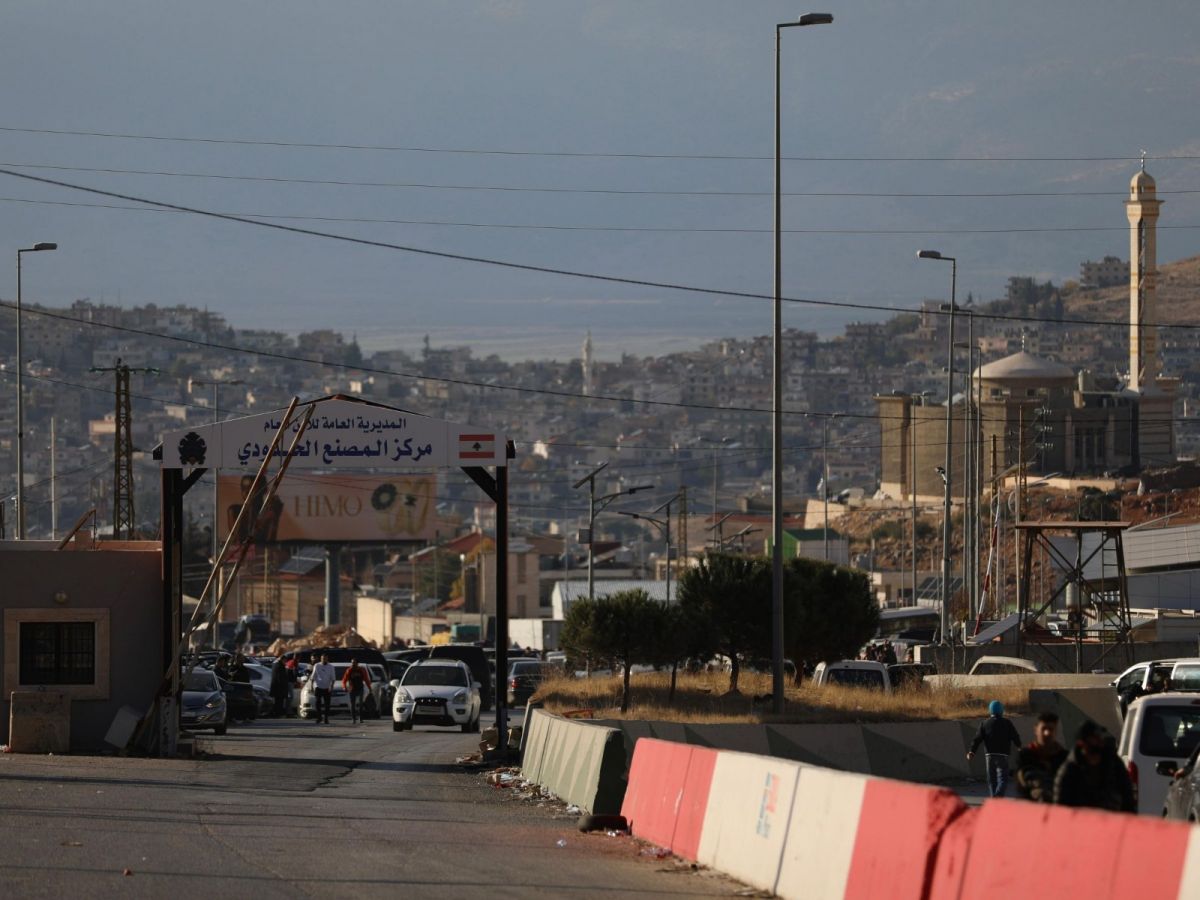
The Masnaa border crossing, Dec. 8, 2024. (Credit: Matthieu Karam/L'Orient Today)






BEIRUT — In a controversial interview on Spot Shot TV’s program "Wajhat Nazar" Monday, Syrian writer and politician Kamal Labwani called for the annexation of parts of Lebanon to Syria, claiming it is Syria’s “natural and historical right” to reclaim territories such as Tripoli, Saida, and the Bekaa.
Labwani is a Syrian doctor and artist born in 1957 in Zabadani, near the Lebanese border. Once known as a leading voice for democratic reform, he was repeatedly imprisoned by the Assad regime for his opposition activities, including a 15-year sentence for advocating foreign support for democratic change.
Labwani asserted that Syria “does not recognize Lebanon as a state,” describing it as “Syrian land taken away due to French colonial decisions.” He added, “Tripoli, Saida, and the Bekaa are Syrian territories, and we have the right to reclaim them, by force if necessary.”
After World War I and the fall of the Ottoman Empire, the Middle East was divided by European powers under agreements like Sykes-Picot. France received the mandate over Syria and Lebanon and, in 1920, created Greater Lebanon by expanding Mount Lebanon to include Tripoli, Saida, and the Beqaa Valley — territories formerly part of Ottoman Syria.
This was driven by French colonial aims to establish a Christian-majority state separate from Syria. Many Arab nationalists and Syrian leaders have long rejected this division, viewing Lebanon as an artificial creation and these areas as part of “Greater Syria.”
'Land swap' discussed with Israeli think tanks and Labwani
During the interview, Labwani said that in unofficial meetings with Israeli think tanks in 2016, the idea of a “land swap” was proposed, involving handing Tripoli and Saida to Syria in exchange for the Golan Heights to Israel.
He added, “Lebanon does not possess sovereignty to decide its own fate, it is a project of perpetual conflict. Regional powers: Israel, the U.S., and Russia, are the ones shaping the map of the region. Lebanon is just a margin on that map.”
Israeli channel I24NEWS reported last week, citing a source close to interim Syrian President Ahmad al-Sharaa, that a political settlement between Israel and Syria might involve transferring Tripoli and parts of northern Lebanon and the Beqaa Valley to Syria.

In exchange, Israel would keep two-thirds of the occupied Golan Heights, possibly leasing the remaining third to Syria. In Lebanon, Tripoli MP Ashraf Rifi denied any such plan, claiming this information was circulated by Hezbollah to justify keeping its weapons.
He continued with a warning: “If international powers decide to carve off a part of the Syrian coast, we will take Tripoli and Saida by force. If the map is going to be redrawn, then let it be done our way.”
When asked how the Lebanese would react to this proposal, he responded: “Today's Lebanese would agree to return to Syria if it were a strong Sunni Islamic state that guaranteed them rights and opportunities. The people of Tripoli are neglected, and the Sunnis in Lebanon have no real representation. We can win them over to our side.”
Labwani went even further, claiming that “the majority of Lebanon’s current population is composed of Syrian residents.” He said, “If free elections were held with the participation of current residents, we would win democratically and annex Lebanon to Syria through the ballot box, not just military force.”
'They are not refugees'
Regarding Syrian refugees in Lebanon, he stated, “They are not refugees. They are on their own land, in their own country, because we don’t recognize these lands as Lebanese in the first place.”
The United Nations High Commissioner for Refugees (UNHCR) estimates nearly a million Syrian refugees were in Lebanon before Bashar al-Assad's fall on Dec. 8. Several times since this event, Sharaa has called on the millions of Syrian refugees who fled the civil war to return to their country.
Labwani's remarks drew objections from the show’s host, who accused him of having an "aggressive and expansionist" mindset. But Labwani said “States are not built on rights but on power and tanks. Lebanon is a failed state, incapable of defending itself. There is no such thing as Lebanon anymore.”
He concluded by reiterating his belief that “the only path to Lebanon’s stability is returning to the Syrian fold,” arguing that Saudi, Iranian, and French projects in Lebanon “will fail,” and that “an alliance with Syria is the only way to protect Lebanon from division and total collapse.”
After his 2011 release during the early months of the Syrian uprising, Labwani had sought asylum in Sweden and briefly joined the Syrian National Council, composed of intellectuals who opposed Assad's regime, before splitting over internal divisions.
Labwani has been a controversial figure in opposition circles, particularly after visiting Israel multiple times — first in 2014 to attend the World Summit on Counter-Terrorism in Herzliya, and again in 2016.
He even suggested relinquishing Syria’s claim to the Golan Heights in return for Israeli support to topple the Assad regime.
